Oxford's Ashmolean Museum Restores Color to the 2,700-Year-Old Shrine of Taharqa With Digital Projections, Tracing Egyptian Blue
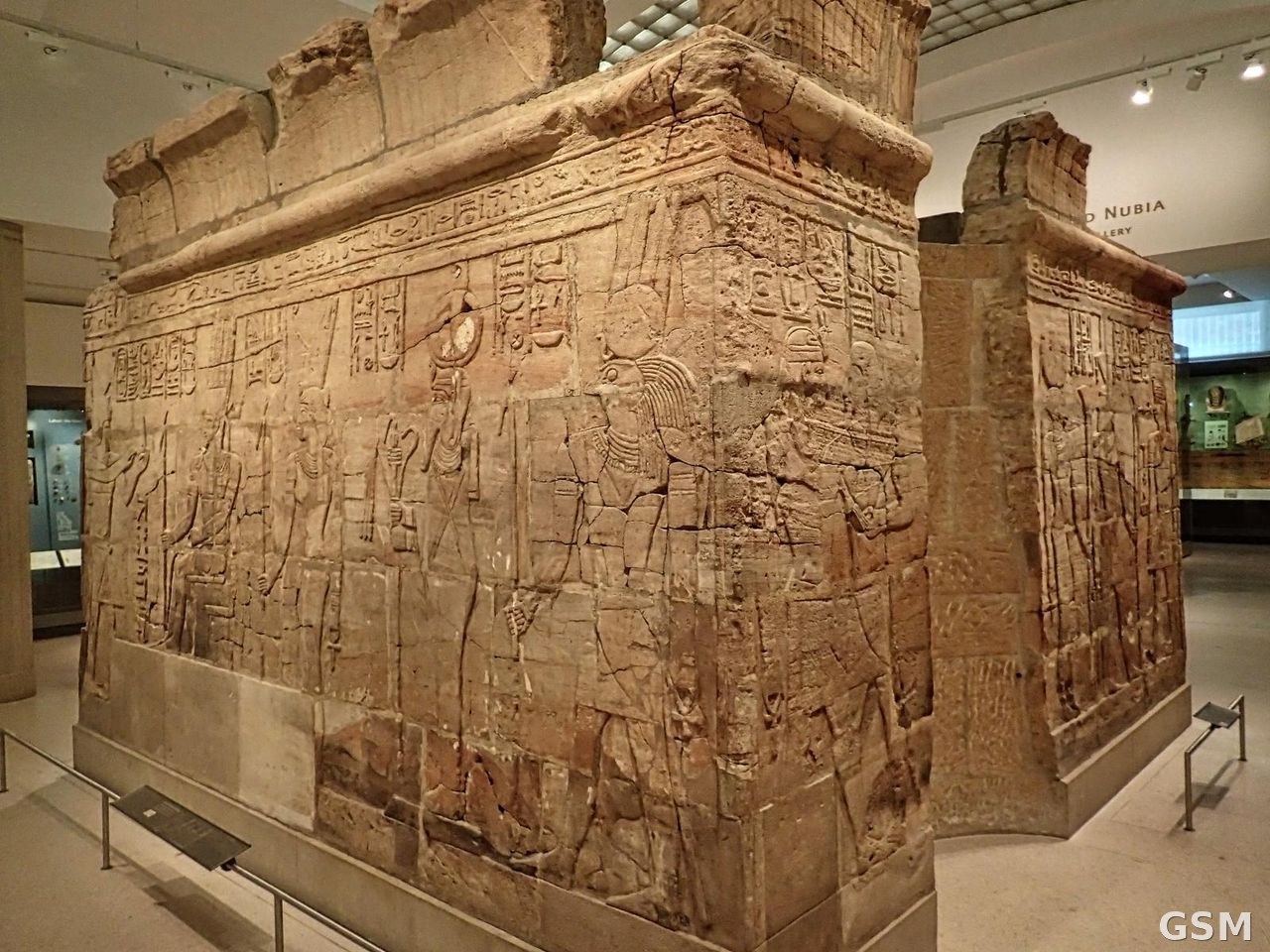
Starting November 13, the Ashmolean Museum in Oxford is restoring color to an ancient Egyptian shrine, roughly 2,700 years old, using digital light projections. The sandstone shrine was commissioned by the pharaoh Taharqa and originally stood at Kawa, in present-day northern Sudan. Its carved walls show the king making offerings to various Egyptian deities.
The shrine was excavated by British archaeologists in the 1930s and later transferred to the Ashmolean Museum. It is the only free-standing pharaonic building in Britain. For decades, visitors have seen it as intact but colorless beige sandstone, its reliefs preserved without visible pigment.
Researchers studied the shrine with infrared and hyperspectral imaging cameras and identified trace amounts of surviving pigments that are almost invisible to the naked eye. The most notable discovery was evidence of Egyptian blue, described as the world's oldest known synthetic pigment, typically reserved for depictions of deities and royals.
Based on the imaging, the museum now projects the reconstructed colors directly onto the shrine's walls, allowing visitors to see the building as Taharqa may have seen it, without touching or altering the artifact. The projection display opened to visitors on November 13.
The shrine was given to Oxford by the Sudanese government in recognition of Egyptologist Francis Llewellyn Griffith's contribution to the region's archaeology. It now serves both as physical evidence for the study of ancient Egyptian pigments and as a concrete example of digital technology in museum display.
Source: Ashmolean Museum, University of Oxford
Published by GSM · USA (original Chinese edition)
Photo: 图:收藏于牛津 Ashmolean Museum 的 Taharqa 神龛。作者:Mary Harrsch,CC BY 2.0,维基共享资源。 / Photo: The Shrine of Taharqa at the Ashmolean Museum, Oxford. Credit: Mary Harrsch, CC BY 2.0, via Wikimedia Commons.