NASA's Far-Infrared Telescope PRIMA Advances: BAE Systems to Supply Spacecraft Bus and Lead Assembly and Testing, Targeting a 2033 Launch
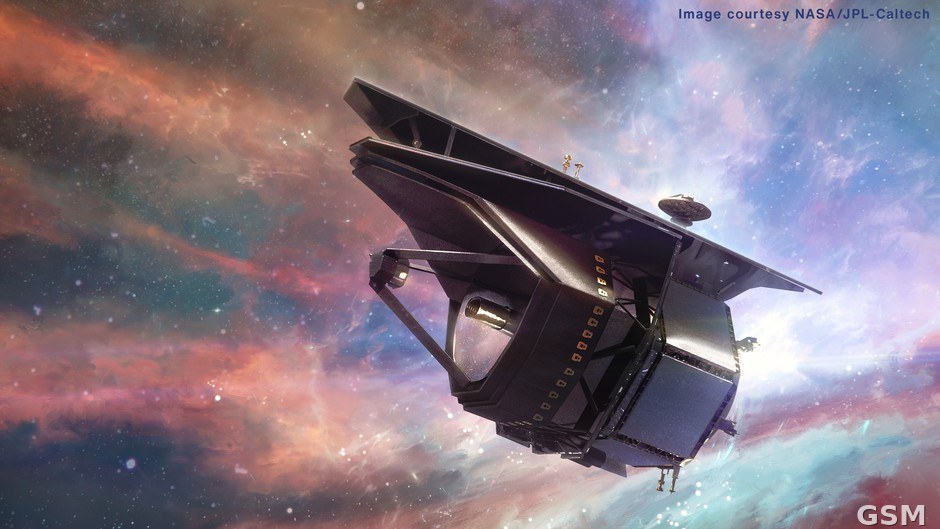
BAE Systems announced on November 13 that the Jet Propulsion Laboratory (JPL)-led PRIMA team has been selected by NASA for the next phase of development. PRIMA, the PRobe far-Infrared Mission for Astrophysics, is the first mission in NASA's new Probe Explorers class of astrophysics missions.
PRIMA will carry a 1.8-meter far-infrared space telescope. Far-infrared light can penetrate the cosmic dust that hides many objects from view, and scientists plan to use it to study dust-obscured regions and trace the formation of planets, stars and black holes, and even how water on Earth came to be. No large space telescope has covered the far-infrared since the European Space Agency's Herschel observatory ran out of coolant in 2013.
Under the arrangement, BAE Systems will provide its Evolve+ spacecraft bus, lead the observatory's assembly, integration and testing, and serve as operations and ground systems lead, while JPL manages the mission. Institutions in France, Italy, Canada, South Korea, Japan and the United Kingdom are also taking part.
PRIMA is now in Phase B development, its preliminary design phase. The mission must still pass a NASA confirmation review before it can proceed further. The current target is a 2033 launch for a five-year mission, with the project cost capped at $1.2 billion, excluding launch.
(Source: BAE Systems)
Source: BAE Systems
Published by GSM · USA (original Chinese edition)
Photo: 图:NASA 远红外天文台 PRIMA 航天器概念图。图片:NASA/喷气推进实验室-加州理工学院(NASA/JPL-Caltech),公共领域。 / Image: Artist's concept of NASA's PRIMA spacecraft (PIA26355). Image by NASA/JPL-Caltech, public domain.