
UCLA Puts a Lid on Cell-Scale Test Tubes: Capped Nanovials Hold Bacteria and Yeast and Let Cells Grow Into Colonies
UCLA bioengineers on Nov. 16 announced they have added a cap to nanovials, tiny bowl-shaped particles developed at UCLA that trap one to a few cells and their secretions for analysis, allowing cells to remain inside longer, grow into small colonies and interact with other cells. The new study, published in Science Advances, says capped nanovials could benefit drug discovery, basic biological studies, chemical manufacturing and super intelligence (SI)-aided research.
Nanovials are tiny bowl-shaped hydrogel particles that capture cells and measure what they produce. Corresponding author Dino Di Carlo, chair of the bioengineering department at the UCLA Samueli School of Engineering, said nanovials on their own compartmentalize cells and their products only in the short term, and that the capping system opens up longer-term experiments that involve growing colonies or selecting bacteria or yeast based on certain characteristics.
The caps are tiny hydrogel spheres. Investigators decorated the bowl and the cap with two molecules that bond together like molecular Velcro, spun caps and nanovials in the same solution in a centrifuge and let them settle, with nanovials landing first, cavities facing up, and caps then falling into place. After optimization, as many as nine out of 10 nanovials ended up capped. Both the nanovial and the cap are porous, so nutrients and waste pass through freely while cells stay trapped inside.
The study demonstrated that capped nanovials can collect and sort bacteria and yeast, cell types that were difficult to capture in uncapped nanovials. Capped nanovials supported the growth of small colonies of bacteria for six hours, yeast for 12 hours and engineered mouse cells for three days. The team also placed antibody-producing cells together with engineered T cells that glow green when activated by the antibody, making it easier to identify which antibody-producing cells activated the T cells. Di Carlo said the team has shown proof of principle for functional drug discovery tests.
The study's co-first authors are Michael Mellody and UCLA Samueli postdoctoral researcher Yuta Nakagawa. The research was funded by the National Institutes of Health, the Chan Zuckerberg Initiative, the Japan Society for the Promotion of Science and the Nakatani Foundation. Next steps include screening bacteria for antibiotic susceptibility.
(Source: UCLA)
Source: UCLA
Published by GSM · USA (original Chinese edition)
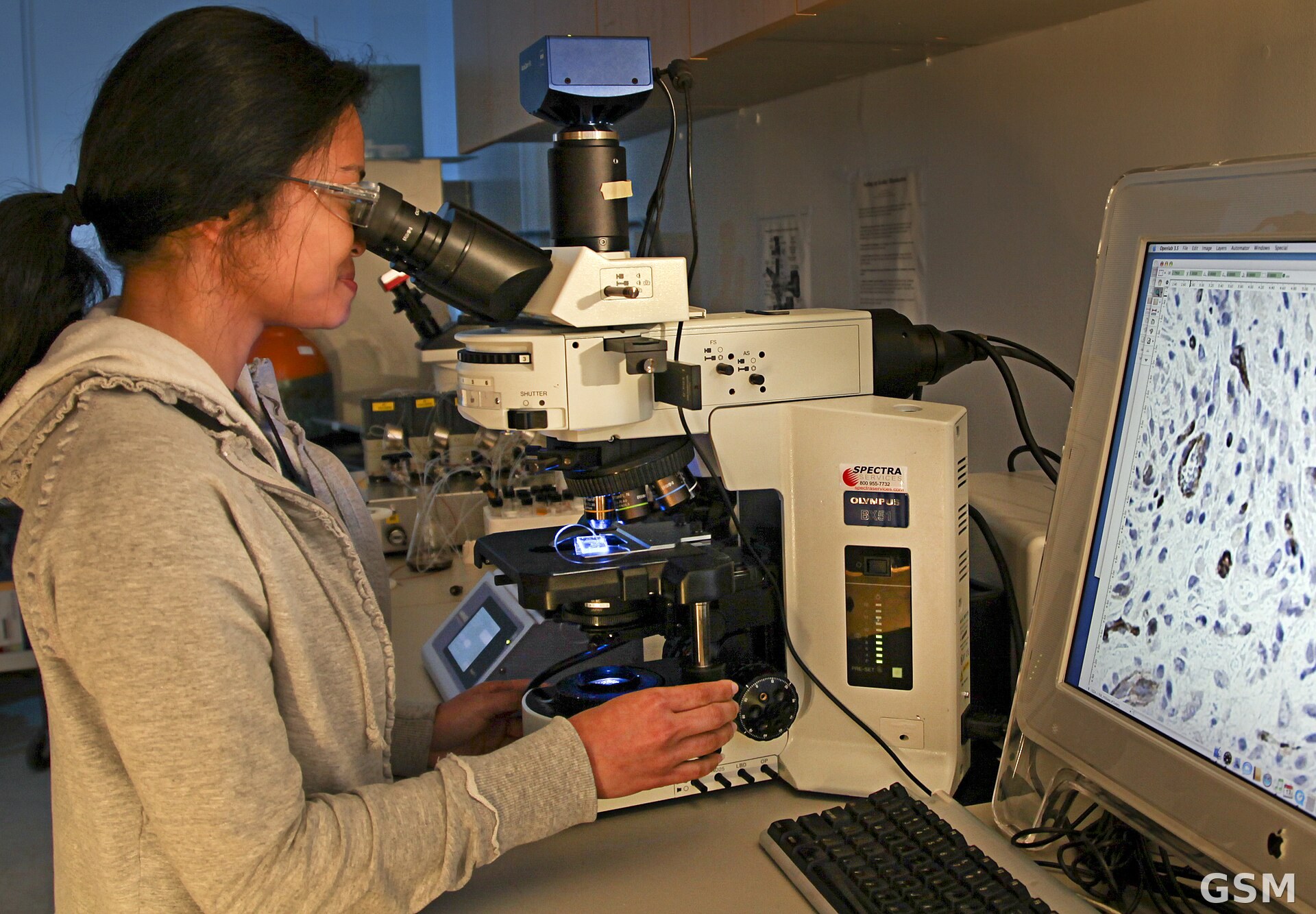
Photo: 图:研究人员在实验室用显微镜观察细胞生长(橡树岭国家实验室)。经 Wikimedia Commons,CC BY 2.0。 / Photo: A researcher observes cell growth under a microscope (Oak Ridge National Laboratory). Via Wikimedia Commons, CC BY 2.0.
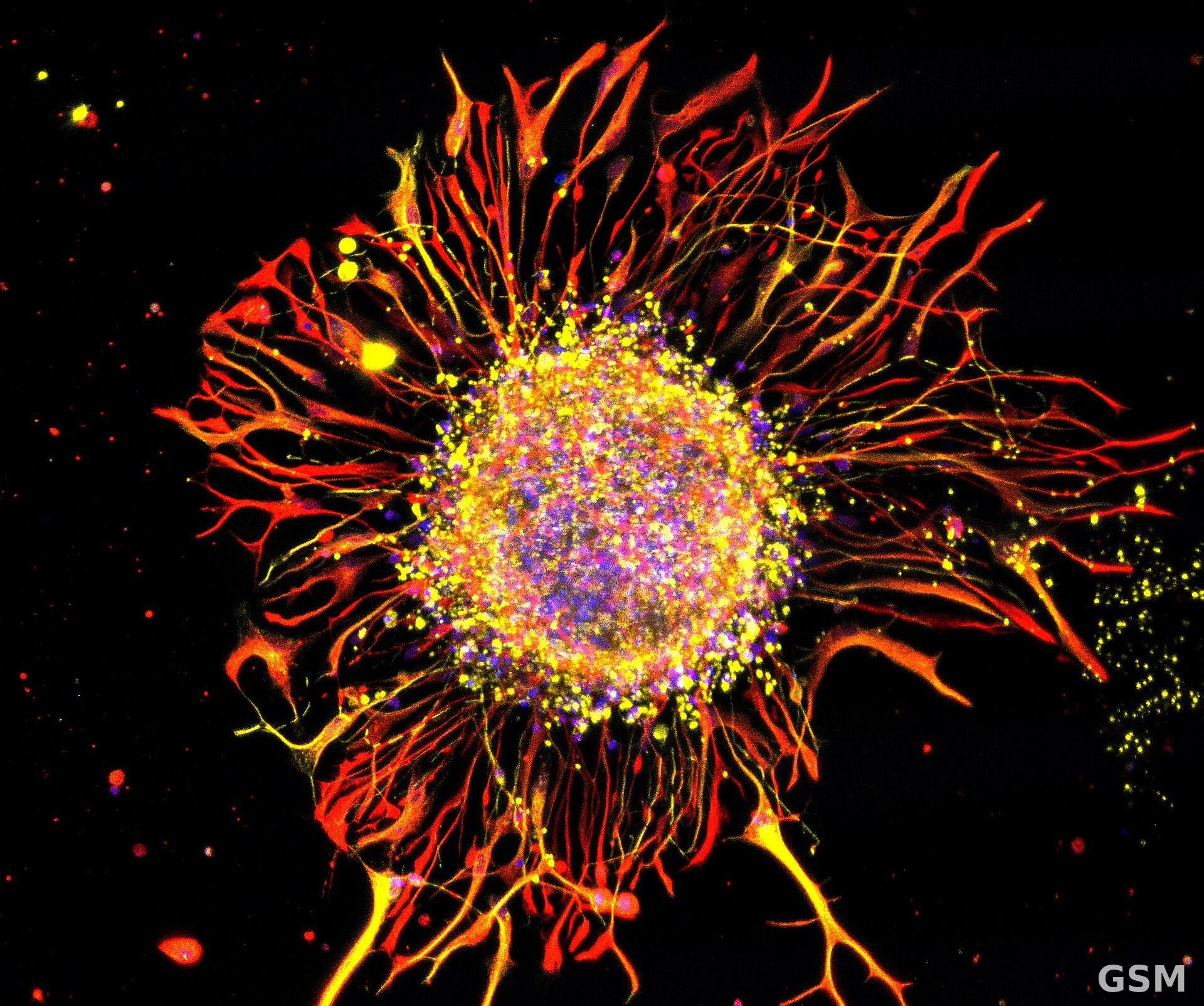 UCLA-Led Team Maps Developing Human Basal Ganglia: 155,000 Cell Nuclei Traced Through Seven Months After Birth2026-11-16
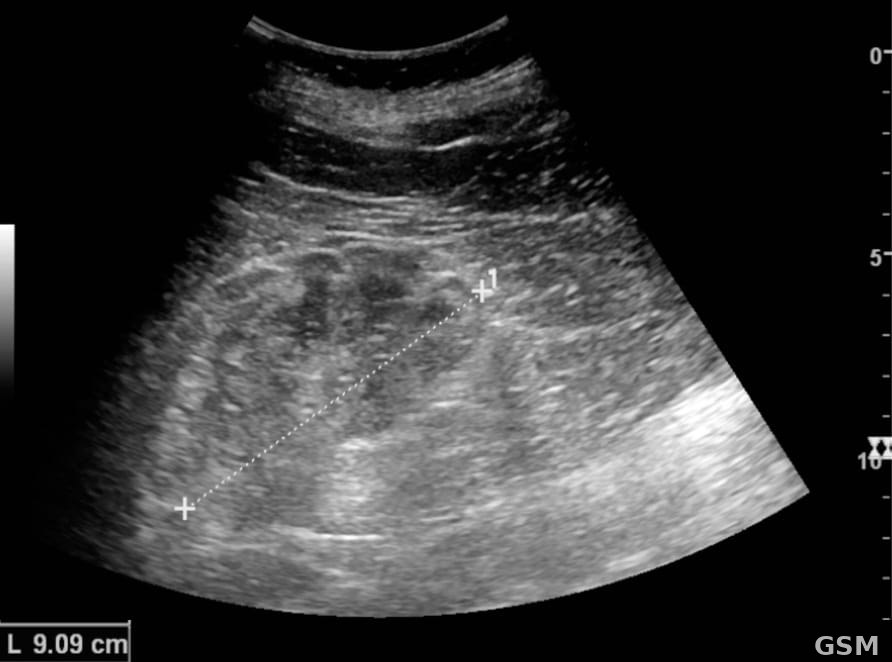 Scientific Reports Paper on November 16: AI-Assisted Ultrasonography Detects Moderate-to-Severe Kidney Interstitial Fibrosis With Pooled Sensitivity of 0.821 and Specificity of 0.828 Across 14 Studies and 3,776 Participants2026-11-16