
UC San Diego Team in Nature Communications, November 16: Mitochondrial Network Morphology and Motility Predict Developmental Stage Across Human Lung and Intestinal Organoid Development
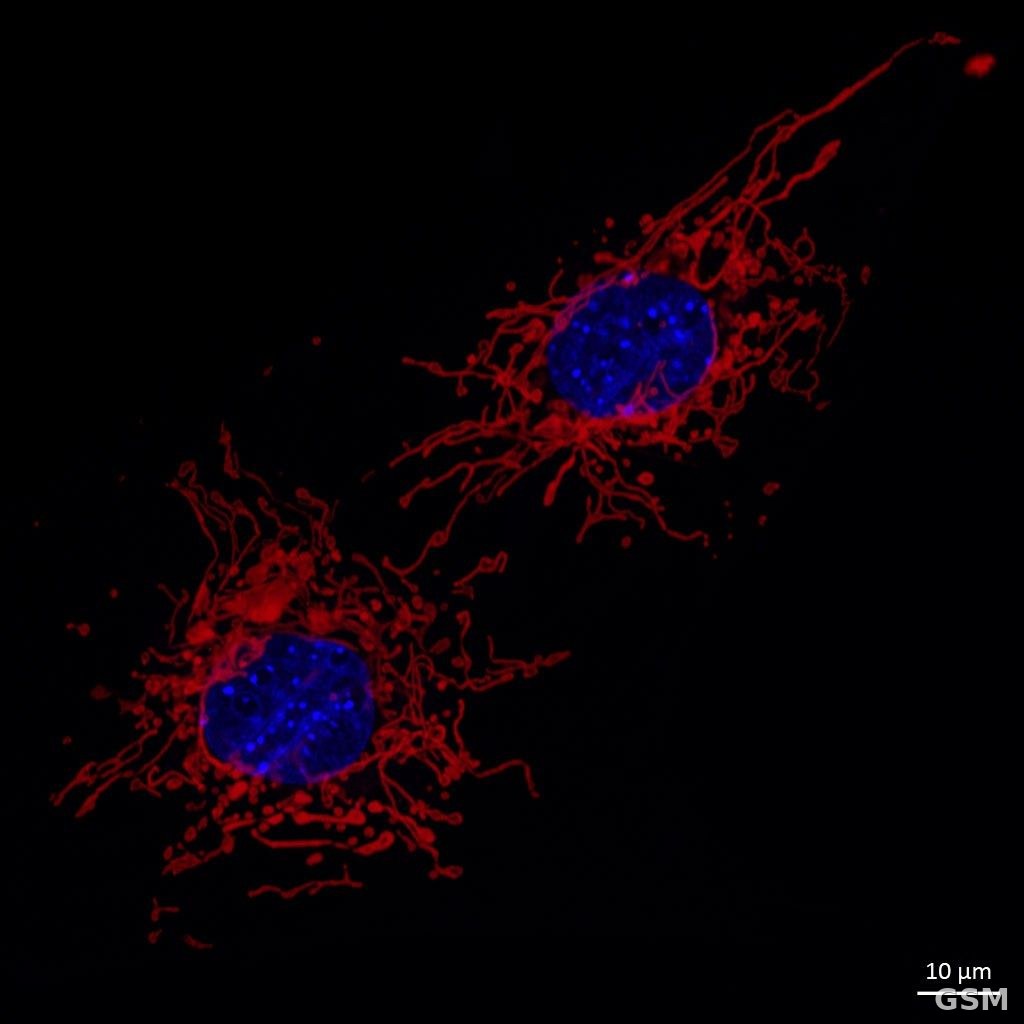
A team led by Johannes Schöneberg at the University of California, San Diego, in the United States has published a paper in Nature Communications on November 16, with Gillian McMahon and Dhruv Agarwal among the lead authors and affiliations in the university's Department of Pharmacology and its Department of Biochemistry and Molecular Biophysics.
Mitochondria form dynamic three-dimensional networks whose morphology and motility vary with cell state, cell type and cell fate, but phenotypes had previously been described only for isolated states, and how mitochondrial form and movement change across the full course of human tissue development was unclear. The team used human stem cell-derived branching lung and intestinal organoids, which mimic developing human organs, to make the process accessible in the laboratory.
Using lattice light-sheet microscopy, the team imaged the organoids at key developmental time points from stem cell to mature tissue, tracking mitochondrial networks in three dimensions over time. The networks adopted morphology and motility signatures that varied with developmental stage, and mitochondrial and cellular features together could be used to predict which developmental stage a sample was in.
The team also found that two-dimensional measurements obscure features that are resolved only in three dimensions over time, and it assembled the results into an integrated map of mitochondrial phenotypes across human tissue development. The study was supported by an NIH Director's New Innovator Award (GM150022) and an NIH National Institute of Biomedical Imaging and Bioengineering training award (T32EB009380). The authors frame the work as a phenotypic map and a predictive relationship for development, not as a disease treatment finding.
Published by GSM · USA (original Chinese edition)
Photo: Wikimedia Commons, File:MEF cell mitochondria.jpg — Author: Institute of Molecular Medicine I, University of Düsseldorf. Licensing: CC BY 4.0.
 Edinburgh and Bristol Teams, Released November 15: Bisphosphonates and Calorie Restriction Reduce Spinal Ligament Mineralization and Vertebral Fusions in col9a1b-Deficient Zebrafish2026-11-16
 University of Otago Paper in PLOS ONE, Released November 14: About 27,800 Erect-Crested Penguin Pairs on the Bounty Islands Rival About 29,800 on the Antipodes, Where Numbers Fell Over 40% Since 19952026-11-16