Canada Overhauls Express Entry: High-Pay Occupations Gain Up to 150 Points in Change Affecting Chinese Applicants
Immigration, Refugees and Citizenship Canada (IRCC) has carried out the biggest scoring change of the year to its Express Entry Comprehensive Ranking System (CRS). Announced on October 16 and effective November 3, the reform directly affects the permanent-residence prospects of Chinese international students and work-permit holders in Canada.
At its core is a new "Labour Market Integration" category worth up to 150 points (140 for candidates with a spouse or common-law partner). Candidates score through one of two routes — whichever is higher, with no stacking. Under the work-experience route, 12 months (1,560 hours) in a high-paying occupation adds 20 to 70 points on top of points for years worked. Under the job-offer route, a qualifying offer adds 50, 70 or 100 points depending on the occupation's pay level. A "high-paying" occupation is one whose national median wage is at least 1.3 times the overall national median, tiered in three bands.
Points for job offers also return in a new form: abolished in March 2025 to combat the buying and selling of Labour Market Impact Assessments (LMIA), offer points no longer require an LMIA, and holding one brings no extra points or priority. Officers will still verify that offers are genuine when assessing permanent-residence applications, including whether the employer is actively operating and able to honour the offer.
IRCC says scores for all candidates in the pool will be recalculated automatically, a process taking up to two weeks, with invitations paused in the meantime. The changes apply to the Federal Skilled Worker, Federal Skilled Trades and Canadian Experience Class programs and to part of the Provincial Nominee Program.
(Source: Immigration, Refugees and Citizenship Canada)
Source: Immigration, Refugees and Citizenship Canada
Published by GSM · USA (original Chinese edition)
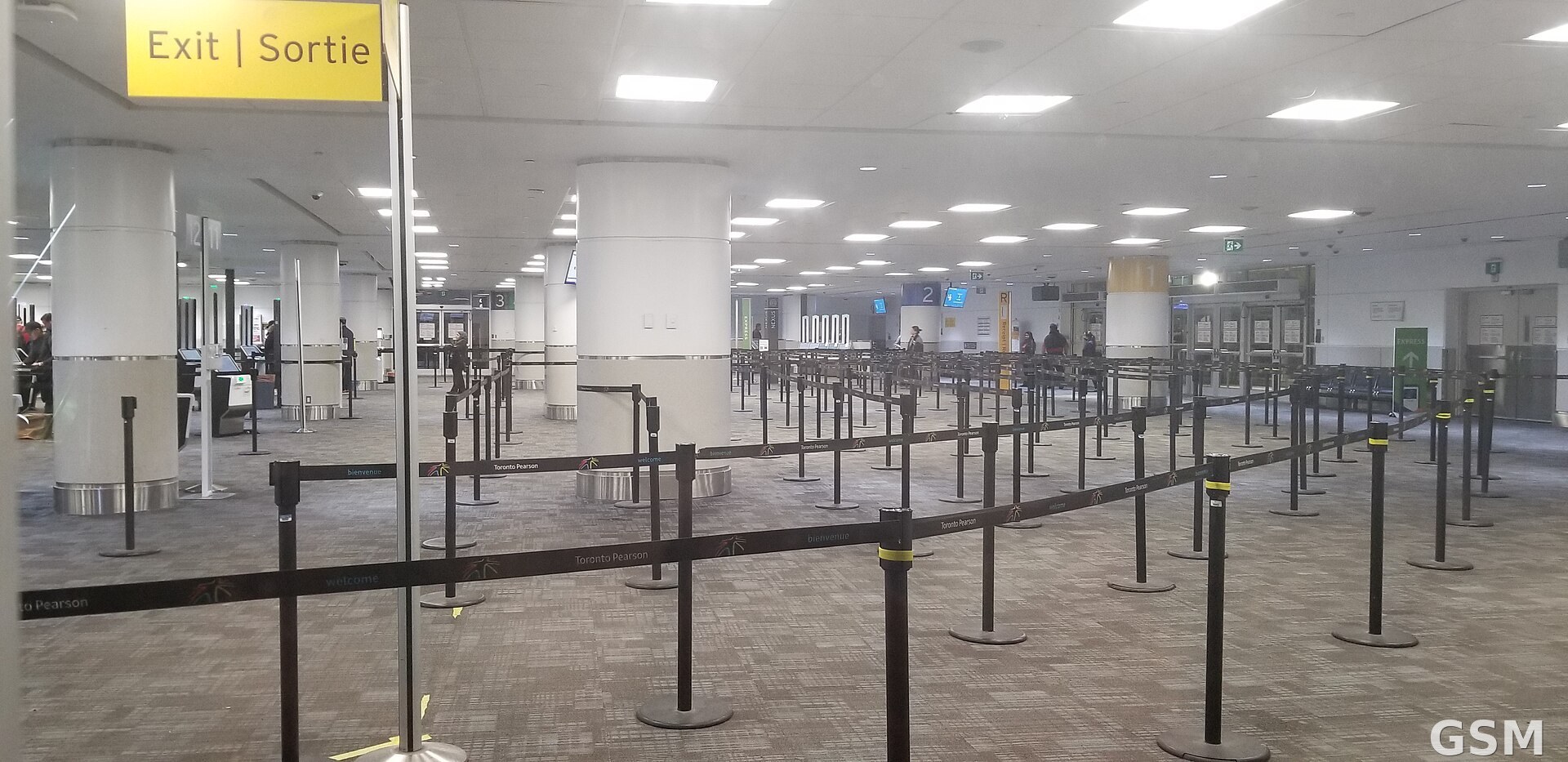
Photo: 图:多伦多皮尔逊国际机场入境大厅。The arrivals hall at Toronto Pearson International Airport. (Wikimedia Commons, CC BY-SA 4.0)