Sea Near Pacific Garbage Patch Has Turned More Cyan Over 20 Years; Microplastics May Be Why
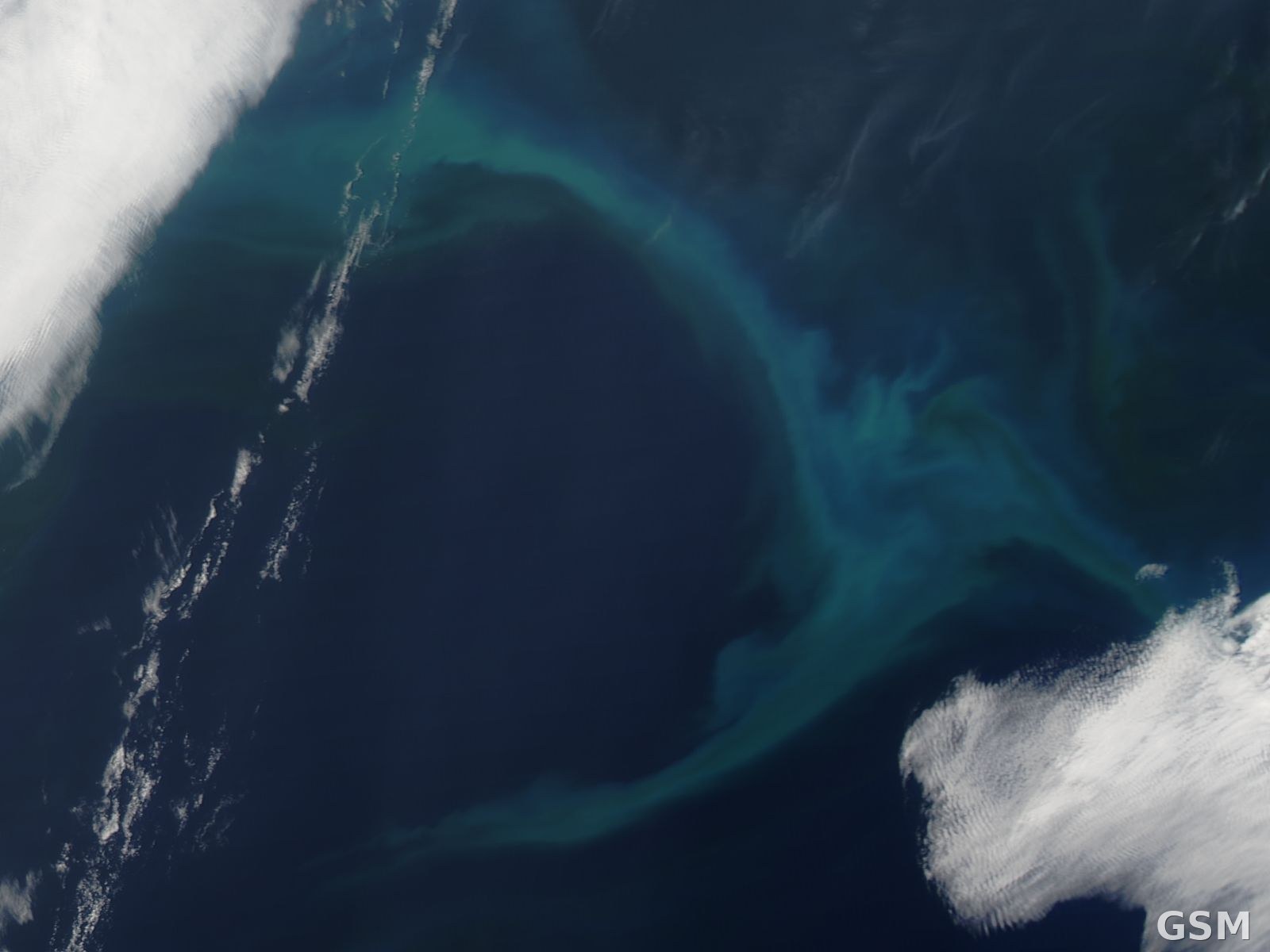
The sea near the Great Pacific Garbage Patch has slowly changed colour over twenty years. Researchers at the University of Bergen in Norway analysed three satellite ocean-colour datasets spanning 2002 to 2022 and found that waters in and around the garbage patch had become significantly brighter in blue and green light, shifting toward cyan, while waters farther away showed no such shift. The study was published in Communications Earth & Environment.
The team — PhD candidate Shea Cheatham, ocean-optics researcher Daniel Koestner and Børge Hamre — stresses that satellite images alone cannot prove microplastics caused the change. But their simulations strengthened the suggestion: brightening of this kind appeared in only about 3% of simulations with natural changes alone, compared with about 13% when suspended microplastics were included. The models also show that roughly 5 milligrams of microplastic per cubic metre of seawater is enough to produce a colour change a satellite can detect; in-situ measurements in 2016 found larger microplastic particles near the patch's surface at over 17 milligrams per cubic metre.
The researchers caution that the link remains a hypothesis. Confirming whether the colour shift is directly and exclusively caused by plastics will require going to the garbage patch to measure water samples and quantify the microplastics present. Currents and plankton can also affect the light reflected by seawater, and the three satellite datasets did not agree perfectly on the size of the change.
(Source: Communications Earth & Environment)
Source: Communications Earth & Environment
Published by GSM · USA (original Chinese edition)
Photo: 图:北太平洋海域的卫星海洋颜色影像(NASA MODIS,公共领域)。A satellite ocean-colour view of the North Pacific. (NASA MODIS, public domain)