Tel Aviv University Study in Evolutionary Anthropology Proposes Early Humans Collected Keepsakes 500,000 Years Ago
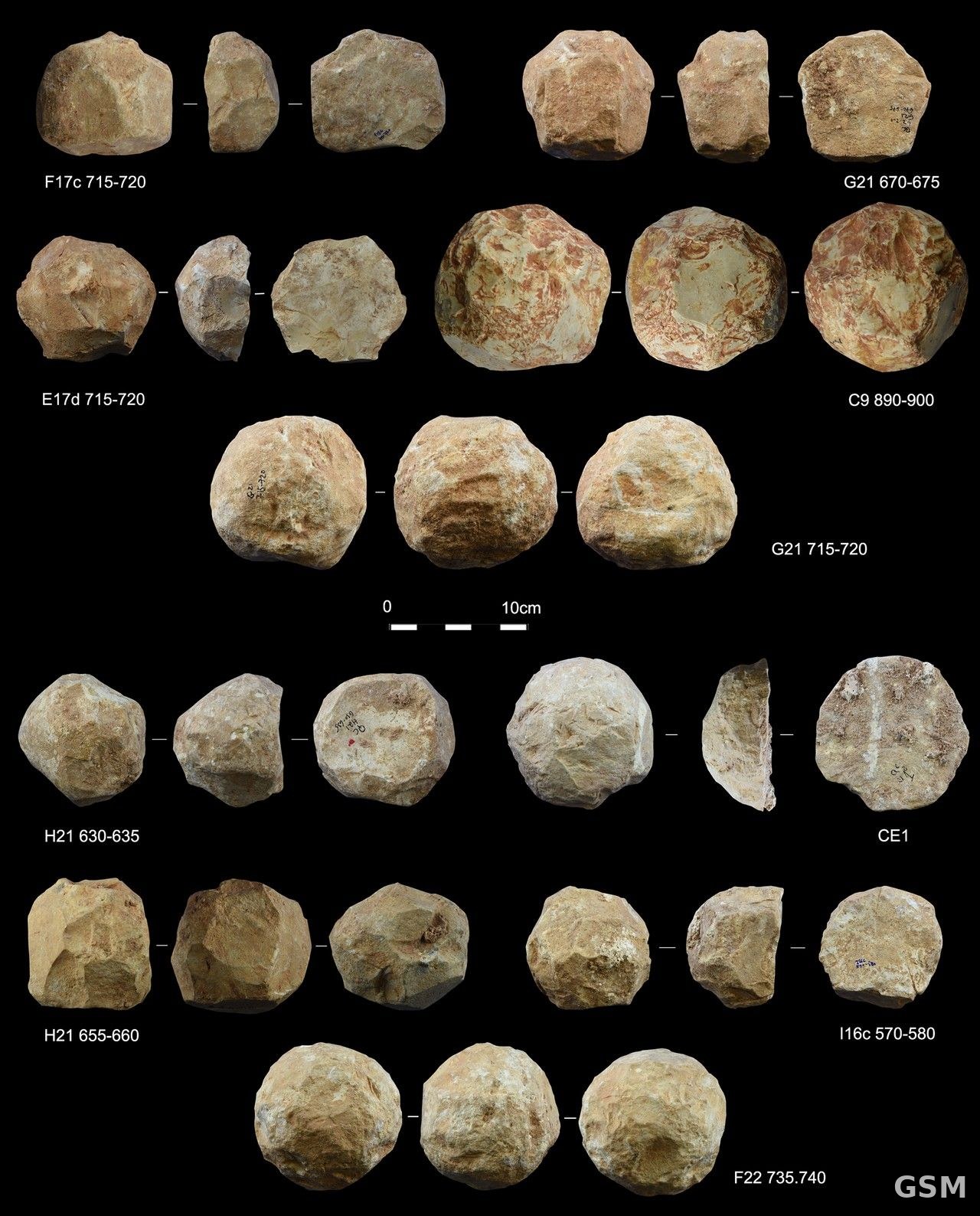
A new study from Tel Aviv University proposes that collecting keepsakes and holding onto memories — habits often seen as modern — may go back as far as 500,000 years. The paper, published in Evolutionary Anthropology, examines stone and shell items from two archaeological sites in the Middle East, concluding that early humans, including Homo erectus, deliberately gathered, kept and reworked objects that carried sentimental value, reflecting symbolic thinking and emotional memory.
Among the cases examined are shaped stone balls found at Qesem Cave in Israel, dated to 400,000 to 200,000 years ago. These balls were repeatedly refined and reused through the late Paleolithic, perhaps held on to as keepsakes. At another site in the Jordan Valley, shells were strung repeatedly into necklaces. The paper also links this hypothesis to an earlier discovery at Qesem Cave: the wing bone of a swan dating to about 400,000 years ago, whose feathers may have been taken for decoration. Researchers say collecting and displaying keepsakes acted as a vehicle for social relations and cultural identity, making it a significant clue in understanding the origins of human self-awareness.
图中是以色列 Qesem Cave 出土的成形石球,该洞穴是本研究列举的早期人类收藏与再加工物件遗址之一。
Source: Tel Aviv University
Published by GSM · USA (original Chinese edition)
Photo: 图为以色列 Qesem Cave 出土的成形石球。Assaf et al., CC BY-SA 4.0, via Wikimedia Commons