DR Congo's Ex-President Kabila Takes over Eastern Rebel Alliance, Renamed 'Refoundation of the Nation'; Group Says It Assumes Doha Talk Commitments
DAKAR — The former president of the Democratic Republic of Congo, Joseph Kabila, took over leadership of rebel forces occupying eastern regions this week, in the most significant shake-up of the uprising in years, Reuters reported on October 16.
The move gives the rebels a highly prominent Congolese figurehead and could boost their efforts to present themselves as a national movement rather than a Rwandan proxy, diplomats, rebel sources and analysts said. After Monday's announcement of Kabila's new role, the rebels — an alliance of the Alliance Fleuve Congo coalition and the M23 armed group — said they would now be known as the Refoundation of the Nation (FRN). The name suggests a greater focus on national Congolese, not regional, affairs.
Much of the rebel leadership remains in place. Kabila takes over as president, while former Alliance Fleuve Congo coordinator Corneille Nangaa and M23 political leader Bertrand Bisimwa become vice presidents. Veteran M23 leader Sultani Makenga also takes a vice-presidential role, and remains chief of the rebel armed wing.
Even before the leadership change, the rebels said their main aim was to remove Congo's current president, Felix Tshisekedi, from power, accusing his administration of corruption, discriminatory policies and crackdowns on opponents. But UN experts and analysts said the violence has been primarily driven by long conflicts over power, identity and resources dating back to the 1990s genocide in neighbouring Rwanda and even earlier. Western countries and UN experts have accused Kigali of backing M23. Rwanda denies the allegations, but has acknowledged coordinating with the rebels on security matters.
Kabila — who led Congo from 2001 to 2019 — is from the southern Katanga region, where there is mounting resentment towards the administration of his successor Tshisekedi, but the rebellion has not yet reached the province. He also brings influential connections in Namibia, Kenya, South Africa and other parts of the region. But after remaining in power for two years beyond his mandate, Kabila left office deeply unpopular in much of Congo, including in Katanga; his political network has weakened in recent years, many former allies have switched allegiance to Tshisekedi, gone into exile or been imprisoned, and since Monday's announcement several prominent figures from his political camp have publicly broken ranks with him. A Congolese court sentenced Kabila to death in absentia for treason a year ago after allegations that he had joined the rebels. He was also placed under US sanctions in April for providing material support to the rebels and destabilizing eastern Congo.
The AFC/M23 had been negotiating with the Congolese government in Qatari-mediated talks and signed a declaration last year committing both sides to a permanent ceasefire and broader peace negotiations. The FRN said on Wednesday it "assumes all of the rights, obligations, and commitments" of AFC/M23, "including those undertaken in the context of the Doha negotiations." At a UN Security Council meeting on Tuesday, Congo stressed the need for all parties to make good on promises, while the US called for the pursuit of negotiations. It remains unclear how much either side is committed to the peace process, with both blaming the other for the continued fighting. (GSM, from Reuters reporting)
Published by GSM · USA (original Chinese edition)
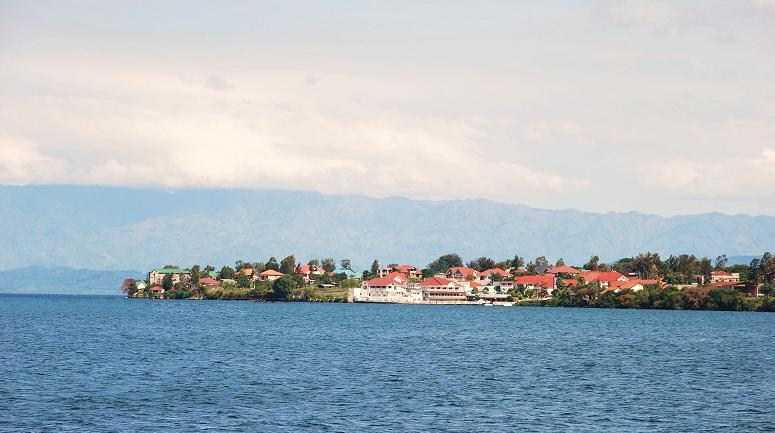
Photo: 图:刚果(金)东部戈马与基伍湖资料照片。照片:Sascha Grabow,Wikimedia Commons,CC BY-SA 3.0。Photo: Goma and Lake Kivu in eastern DR Congo (file photo). Photo by Sascha Grabow via Wikimedia Commons, CC BY-SA 3.0.