Syria Achieves Its First DNA-Based Identifications of the Missing: At Least Three Cases This Year, Including a Raqqa Family of Seven Killed in a 2017 Airstrike
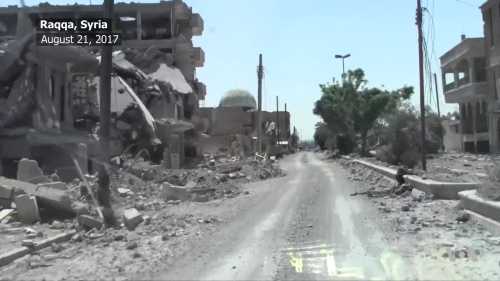
Raqqa — DNA testing has helped identify the remains of missing people in at least three cases in Syria this year, the country's first such identification cases and a breakthrough in efforts to establish the fates of people missing after years of war, Reuters reported.
Two of the cases were completed by Syria's National Commission for Missing Persons, while the third was the work of Syrian and international non-governmental organisations, which used genetic analysis to help identify the remains of a family killed in a suspected airstrike during the war to oust Islamic State from Syria's Raqqa in 2017. The three cases, reported by Reuters for the first time, offer a possible path towards answers for families across Syria, where tens of thousands of people remain missing after decades of repression under Assad family rule and a nearly 14-year civil war.
Former President Bashar al-Assad's overthrow in late 2024 opened access to detention centres and burial sites long beyond the reach of independent investigators. But efforts to identify the missing have been complicated by constraints including a lack of access to sites during the war, logistical challenges to gathering DNA swabs from families and a shortage of forensic expertise and equipment.
At the centre of the Raqqa investigation was the household of Manar Aliwi. In August 2017, Aliwi and seven of her relatives were sheltering from airstrikes on the first floor of a building in central Raqqa,
where US-led airpower was helping a Kurdish-led Syrian fighting force battle Islamic State militants. Aliwi's family outside Raqqa lost contact with her that month, according to testimony to SJAC. Satellite imagery showed the building she had been sheltering in reduced to a mound of rubble between August 19 and 25, 2017, but the family spent years wondering if their relatives had died in there or fled and perished elsewhere. In 2024, a demining organisation working in Raqqa at the same building discovered decomposing remains and Syrian forensic investigators recovered them later that year. Identity papers recovered in the building helped track down Aliwi's sister, who confirmed the family had been hiding there. Clothes found alongside the remains matched what members of the Aliwi family were wearing in an August 2017 photograph supplied by one of their relatives. Investigators then collected genetic reference samples from relatives. After analysing the different DNA samples and relatives' accounts, the Forensic Anthropology Foundation of Guatemala (FAFG) confirmed the remains belonged to Aliwi, her husband and their five children, including a 3-year-old. The surviving family members were informed in September 2026. The fate of Aliwi's father, the other member of the family who was in the building, is unclear.
The identification work for the Raqqa family was carried out by SJAC, the Syrian Missing Persons and Forensic Team — an independent humanitarian group based in the city that investigates the fate of people who disappeared in territory under Islamic State control — and FAFG, a non-profit formed to investigate unresolved killings during internal conflict in the Central American country. "The result raises the expectations of the families because it shows what's actually possible," SJAC's director Mohamed al-Abdullah told Reuters.
In the two other cases, the national commission confirmed identities through DNA matching and informed the families after experts from the International Committee of the Red Cross reviewed the findings, the commission told Reuters. It did not provide details about the victims or the circumstances of their deaths. The commission said it had collected around 96,000 files from Syrian ministries and NGOs, around 2,000 samples from human remains recovered at suspected mass grave sites and 29 DNA samples from relatives in cases where evidence suggested a possible match; two of those cases resulted in confirmed identifications. "This is an important step but it is only the beginning of a long path", the commission said in a written statement. It said it was receiving a daily average of 100 new missing-person reports under a national programme launched on August 30, which would eventually expand DNA collection from families. It is working with the ICRC to establish a DNA laboratory by May 2027, and a second laboratory with the International Commission on Missing Persons, supported by the European Union. But a national database of the missing is yet to be launched.
The United Nations body tasked with clarifying the fate of missing persons in Syria and supporting their families has cited estimates ranging from 130,000 to 300,000 people missing in Syria. For Mohamed Hamadah, Aliwi's son and the only surviving member of her immediate family, the identifications have answered questions that long haunted him. "Now we can bury them, have marked graves and visit them, and at least put our minds a little more at rest," he said. "For about nine years, we kept thinking: Did they get out? Did they go to another city? Did they reach Assad government-held areas?"
Published by GSM · USA (original Chinese edition)
Photo: 叙利亚拉卡2017年8月遭战火损毁的街景,画面左上字样为原视频自带标注。照片:美国之音(VOA),公共领域,经维基共享资源。 / A destroyed street in Raqqa, Syria, in August 2017; the on-screen text is burned into the original footage. Photo: Voice of America, public domain, via Wikimedia Commons.