Zelensky Adviser Tells BBC U.S. Missile Warnings Remain Unreliable: "People Have Already Died"; White House Says Intelligence Sharing Is Unchanged
Kyiv — Ukrainians have died because Kyiv is still not receiving reliable U.S. warnings of incoming Russian attacks, according to a key adviser to President Volodymyr Zelensky, the BBC reported.
Serhii "Flash" Beskrestnov told the BBC that lives had been lost because there had not been time to warn citizens about ballistic missile strikes, saying: "It's dangerous… I think it's really very bad… People [have] already died." The adviser also said restrictions to Ukraine's use of the Starlink internet network were ongoing. The White House said there had been no changes to intelligence sharing with Ukraine. Secretary of State Marco Rubio also told reporters on Monday that intelligence sharing had "never paused," adding that he understood there had been a software problem with Ukraine's early-warning system a few nights earlier.
Ukraine first reported an interruption to U.S. intelligence sharing last week, as a row with the Trump administration over its controversial deal to import Russian oil sent relations to new lows. Despite the denials from Washington, many in Kyiv suspect the issues are not a coincidence.
On Monday morning, Zelensky wrote on social media: "Overnight two ballistic missile attacks were reported on the capital, one without warning, the second with only minimal time to take shelter." Hours earlier, an interview the president did with NBC was published, in which he said intelligence sharing had been restored after a three-day pause. "We are very thankful for this," he said. "Only [the] United States has this unique intelligence to tell our side when Russia uses ballistic missiles."
But Beskrestnov told the BBC that American intelligence continued to be incomplete and inconsistent, and that the U.S. had failed to provide a clear explanation for the issue. "This looks very strange," he said. "Sometimes we receive this information before the attack, another time we [do] not." He continued: "And for example, last night we received it, but… one minute before the attack." However, he said other collaboration with the U.S. continues, adding: "Intelligence data keeps flowing, and the issue is solely with the air raid alert component."
Source: GSM · USA (original Chinese edition)
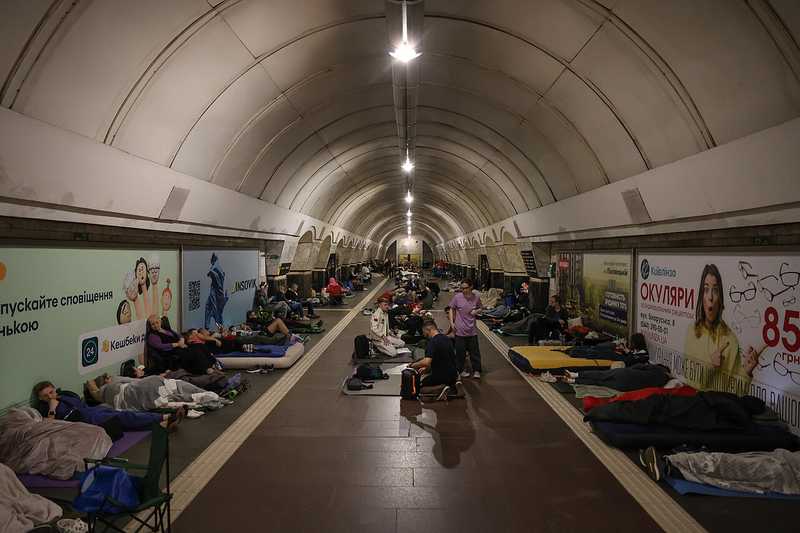
Photo: 图:基辅市民在空袭警报期间于地铁站内避险(2025年7月28日资料图,非本次袭击现场)。摄影:Сергій Нужненко/基辅市国家管理局,CC BY 4.0(经维基共享资源)。 / Kyiv residents sheltering inside a metro station during an air alert (file photo, July 28, 2025; not the latest attack). Photo by Serhii Nuzhnenko / Kyiv City State Administration, CC BY 4.0, via Wikimedia Commons.
- 2026-10-18Zelenskiy Confirms US Has Resumed Intelligence Sharing With Ukraine After Three-Day Pause
- 2026-10-19Follow-Up: Rubio Denies the U.S. Ever Paused Intelligence Sharing With Ukraine, Contradicting Zelenskiy's Account
- 2026-10-20Zelensky Adviser Tells BBC U.S. Missile Warnings Remain Unreliable: "People Have Already Died"; White House Says Intelligence Sharing Is UnchangedThis story
- 2026-10-20Follow-Up: In Mumbai, Rubio Denies Any Cut in Intelligence Sharing or Military Aid to Ukraine: "Nothing Has Changed"