UNEP Emissions Gap Report 2026: 1.5°C Overshoot Now Inevitable, Return Path Needs 18% Cut by 2030
The United Nations Environment Programme (UNEP) released its Emissions Gap Report 2026: The Point of Return in Nairobi, Kenya, on October 21. The report finds that a rise in global temperatures above 1.5°C over pre-industrial levels is now inevitable, and that the opportunity to hold warming to 1.5°C with no or limited overshoot has been lost. The overshoot need not be permanent, however: the report sets out a “lowest possible” overshoot scenario in which peak warming around the middle of the century is limited to 1.7–1.8°C and temperatures are returned to or below 1.5°C by 2100, with about a 50 per cent chance.
Getting onto that pathway would require global greenhouse gas emissions to fall, relative to 2025 levels, by 18 per cent by 2030, 45 per cent by 2035 and 69 per cent by 2040 — an average annual reduction rate of about 5.7 per cent between 2025 and 2035. By contrast, full implementation of countries' current Nationally Determined Contributions (NDCs) would cut emissions by only 5–8 per cent by 2030 and 11–15 per cent by 2035. The report estimates global greenhouse gas emissions in 2025 at about 58.4 billion tonnes of carbon dioxide equivalent, broadly unchanged from 2024, and says it is too early to conclude that emissions have peaked; carbon dioxide emissions from fossil fuels rose, while methane emissions were broadly flat.
On current policies, the report projects warming of 2.8°C within this century and rising thereafter; if all NDCs are delivered and similar efforts continue, warming would be limited to 2.6°C; and even in the most optimistic scenario, where all NDCs plus additional net-zero targets are achieved, warming would still reach 2.1°C this century. The projections are worse than last year's, the report says, partly because of the withdrawal of the United States from the Paris Agreement and revised estimates of historical emissions, while new NDCs submitted since last year's report have made a negligible difference. The lowest-overshoot scenario would also require removing and permanently storing roughly 320 gigatonnes of carbon dioxide over the course of the century — about eight years of 2024's global CO2 emissions — which the report says faces uncertain socioeconomic and technological prospects.
“Overshoot is not surrender. We can still keep it as small and as short as possible – and bring temperatures back below 1.5 degrees by the end of the century,” UN Secretary-General António Guterres said in a message on the report. UNEP Executive Director Inger Andersen said every additional fraction of a degree and every additional year of warming above 1.5°C increases climate impacts and risks, such as the deadly floods, heatwaves and wildfires that have plagued many nations this year, and that nations must pull out all the stops to minimize peak warming. The report also finds more opportunities than ever to accelerate action: since the Paris Agreement was adopted, renewable energy has boomed, coal and oil supply has grown more slowly than projected, and climate policies have delivered real reductions — across more than 220 policy evaluations, electricity-sector policies cut emissions by an average of 9 per cent, and economic instruments such as carbon cap-and-trade schemes and carbon taxes achieved reductions of 5–13 per cent.
Published by GSM · USA (original Chinese edition)
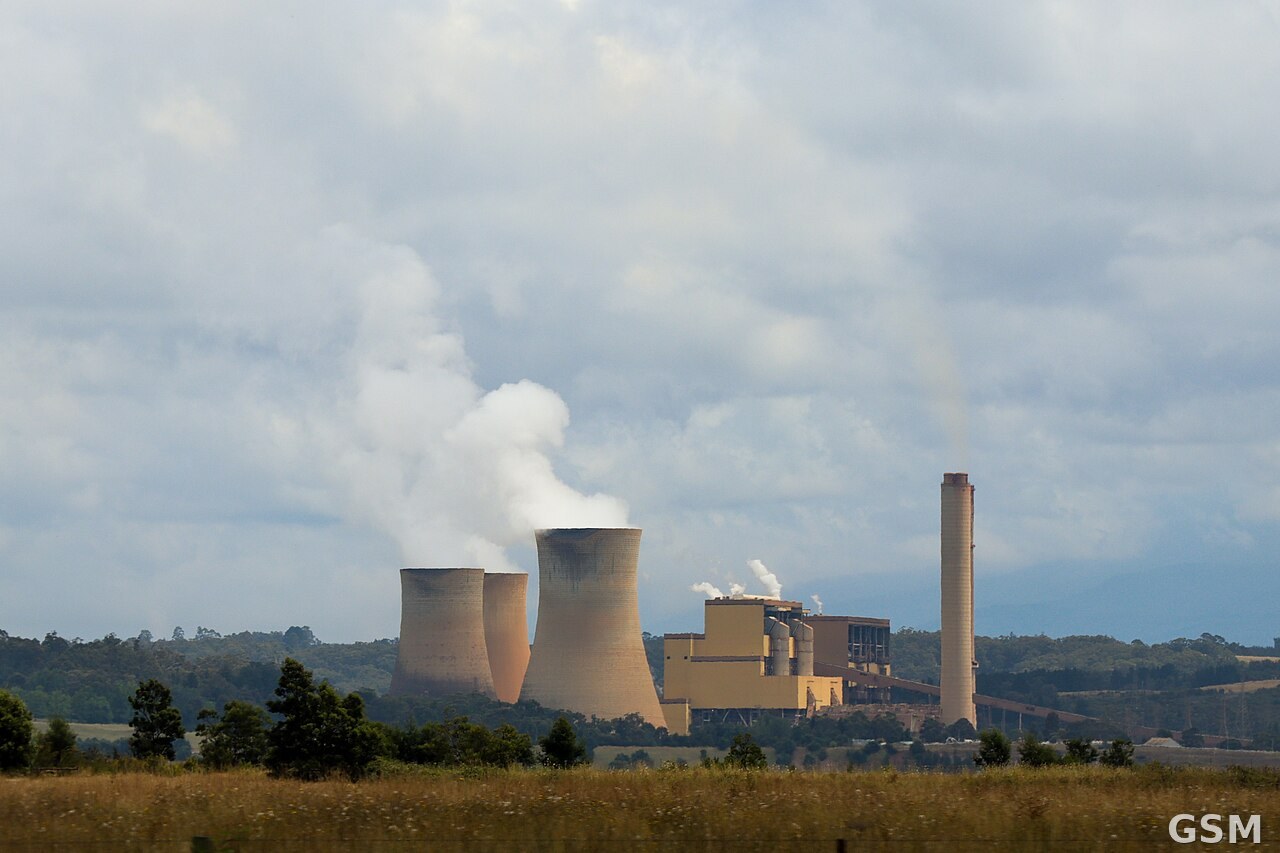
Photo: 图:澳大利亚 Victoria 州 Yallourn 褐煤发电站冷却塔与烟囱(资料图,非报告发布现场)。Joel200716 摄,CC BY 4.0,经维基共享资源。