What Is on the Ballot in the 2026 Midterms: All 435 House Seats, 33 Senate Seats and California's 14 Propositions
The 2026 midterm election takes place on November 3, and the ballot is a long one: Congress in Washington, the governor and legislature in Sacramento, and 14 statewide propositions that will set California policy directly. This overview — the first installment of GSM's Decision 2026 midterm feature — explains what is on the ballot. For how to vote and where to find Chinese-language ballots, see the feature's Chinese Voter Guide.
1. Federal: all 435 House seats, 33 Senate seats
U.S. House members serve two-year terms, so all 435 House seats are up in every election year, 2026 included; every California voter will see their own House district on the ballot.
The Senate renews roughly a third of its seats each cycle. The 33 seats up in 2026 are the Class II seats, in 33 states: Alabama, Alaska, Arkansas, Colorado, Delaware, Georgia, Idaho, Illinois, Iowa, Kansas, Kentucky, Louisiana, Maine, Massachusetts, Michigan, Minnesota, Mississippi, Montana, Nebraska, New Hampshire, New Jersey, New Mexico, North Carolina, Oklahoma, Oregon, Rhode Island, South Carolina, South Dakota, Tennessee, Texas, Virginia, West Virginia and Wyoming. Neither of California's two U.S. senators is up this cycle.
Which party controls Congress shapes the federal legislative agenda — why the midterms are often called a midterm exam for the sitting president.
2. California state offices: nine statewide posts, plus the legislature
Nine statewide constitutional offices are on California's ballot this cycle: Governor, Lieutenant Governor, Attorney General, Secretary of State, Treasurer, Controller, Insurance Commissioner, Superintendent of Public Instruction, and Member of the Board of Equalization. Voters will also decide retention of California Supreme Court justices, their state senator and Assembly member, and county, city and school-district offices, which vary by address — see your county voter guide.
3. Fourteen statewide propositions: voters as legislators
Californians will also vote on 14 statewide propositions; those that pass become law directly. Numbers and official titles (types as labeled in the Official Voter Information Guide):
Prop. 1: Authorizes $11.25 billion in state general obligation bonds for housing affordability programs (legislative statute).
Prop. 2: Increases the state's rainy day fund (legislative constitutional amendment).
Prop. 3: Provides permanent funding for schools and health care by extending the existing tax on high incomes (initiative constitutional amendment).
Prop. 4: Repeals the prohibition against public funding of election campaigns (legislative statute).
Prop. 5: Changes the recall election process for statewide officers (legislative constitutional amendment).
Prop. 37: Creates a loan program for middle-income buyers of qualified new homes (initiative statute).
Prop. 38: Authorizes bonds for immunology medical research (initiative statute).
Prop. 39: Prohibits citizens from voting unless they present government-issued identification (initiative constitutional amendment).
Prop. 40: Imposes a one-time tax on certain taxpayers, summarized by the Legislative Analyst at up to 5 percent (initiative constitutional amendment and statute).
Prop. 41: Prohibits new state taxes that exclude revenues from the state spending limit and requires audits for new state special taxes (initiative constitutional amendment).
Prop. 42: Prohibits new state personal property taxes and certain retroactive state taxes (initiative constitutional amendment).
Prop. 43: Limits voters' ability to raise revenues for local government services (legislative constitutional amendment).
Prop. 44: Requires community health clinics to spend 90 percent of revenue on program services (initiative statute).
Prop. 45: Modifies environmental review for certain projects (initiative statute).
Five of the 14 come from the Legislature and nine from citizen initiatives. The next installment of this feature will walk through the propositions closest to Chinese-American voters, with the arguments for and against as printed in the official guide.
4. One ballot, three levels of government
In short: federal offices set Washington's agenda, state offices and the Legislature set Sacramento's, and propositions let voters legislate directly. Election Day is November 3; mail ballots are out and vote centers are open. For voting methods and key dates, see the Chinese Voter Guide.
Source: GSM·USA (Sources: U.S. Senate, USAGov, California Secretary of State, Official Voter Information Guide)
Related: AAPI Voter Poll: Trump's Approval at 25% Among Asian American Adults
Source: GSM · USA (original Chinese edition)
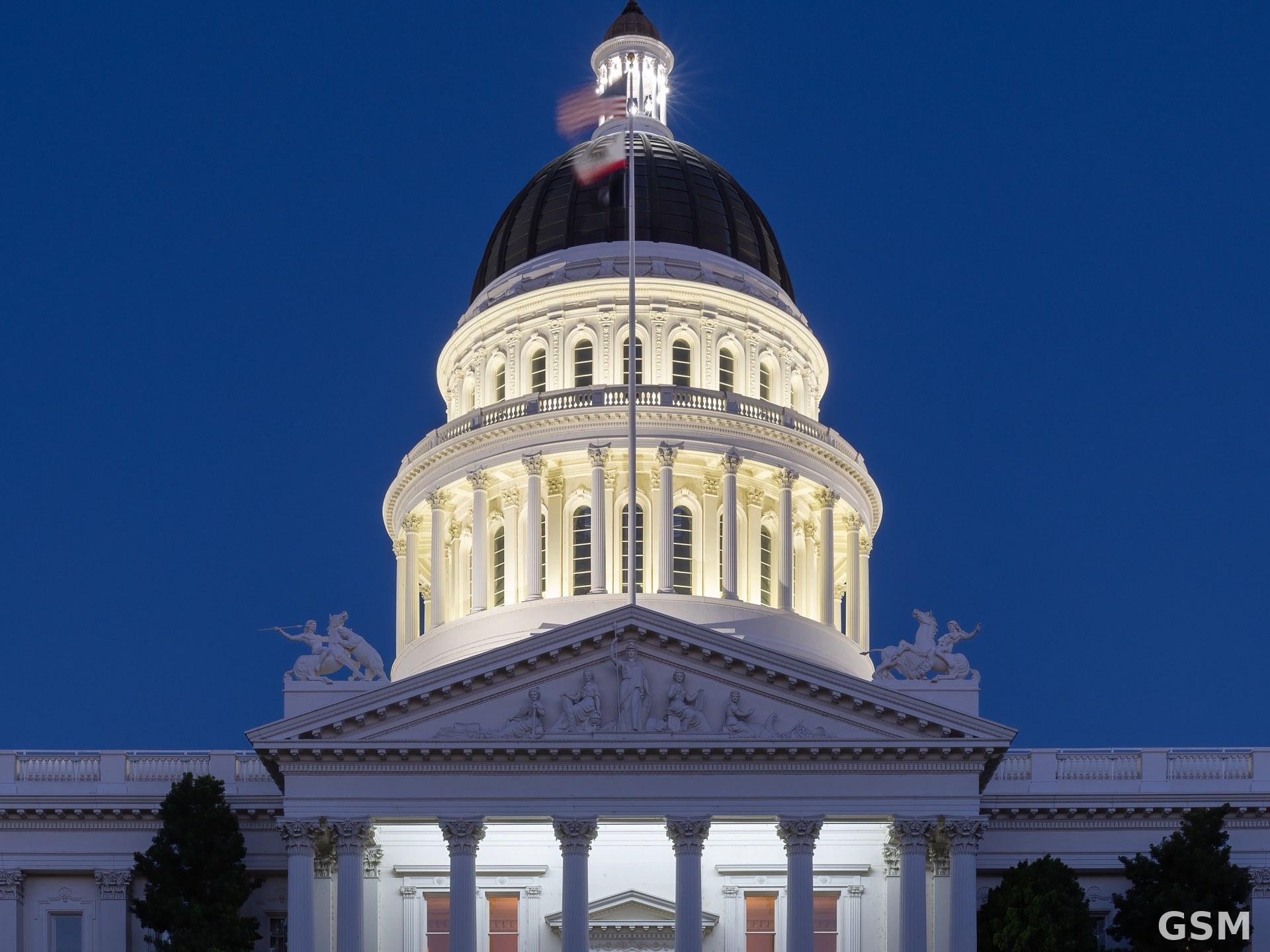
Photo: 加利福尼亚州议会大厦(位于萨克拉门托)蓝调时刻夜景(Frank Schulenburg 摄,CC BY-SA 4.0,裁切)— via Wikimedia Commons / The California State Capitol in Sacramento at blue hour (Frank Schulenburg, CC BY-SA 4.0, cropped) — via Wikimedia Commons
- 2026-10-25Chinese Voter Guide to California's 2026 Midterm Election: Mail Ballots, Chinese-Language Ballots and Vote Centers
- 2026-10-25What Is on the Ballot in the 2026 Midterms: All 435 House Seats, 33 Senate Seats and California's 14 PropositionsThis story
- 2026-10-25How to Read Election Night: California Results Start at 8 p.m. on Nov. 3, Mail Ballots Count Through Nov. 10, Final Certification Dec. 11
- 2026-10-25California's 14 Ballot Propositions Explained: The $11.25B Housing Bond, Permanent High-Income Tax, Voter ID and the Clinics' 90 Percent Rule