California's 14 Ballot Propositions Explained: The $11.25B Housing Bond, Permanent High-Income Tax, Voter ID and the Clinics' 90 Percent Rule
Besides the offices on the ballot, California voters will decide 14 statewide propositions on November 3. A proposition passes with a simple majority — including constitutional amendments — and becomes law or part of the state constitution. Drawing on the official voter guide's ballot titles and the Legislative Analyst's Office (LAO) fiscal estimates, this piece explains, measure by measure, what each one changes, what it costs, and who put it on the ballot. GSM reports the facts and endorses no measure.
Housing and bonds
Proposition 1 (Legislature, statute): Authorizes $11.25 billion in bonds for affordable housing and veterans' housing programs. The LAO estimates total repayment costs of roughly $500–600 million a year for about 25 years.
Proposition 37 (initiative, statute): Creates a loan program for middle-income buyers of qualified new homes, backed by $25 billion in revenue bonds. The LAO finds no direct state cost; the bonds are repaid from the loans.
Proposition 38 (initiative, statute): Authorizes $8.4 billion in bonds for immunology medical research. The LAO estimates repayment of about $500–600 million a year for roughly 20 years.
Taxes
Proposition 3 (initiative, constitutional amendment): Makes the existing additional tax rates on high incomes permanent, providing ongoing funding for schools and health care. The rates are otherwise set to expire after 2030; the LAO estimates permanence would preserve about $5–15 billion a year.
Proposition 40 (initiative, constitutional amendment and statute): Imposes a one-time 5 percent tax on the wealth of a small number of the highest-net-worth taxpayers. The LAO estimates a one-time gain in the tens of billions of dollars, offset by up to about $1 billion a year in reduced income tax revenue.
Proposition 41 (initiative, constitutional amendment): Prohibits new state taxes that exclude revenues from the state spending limit, and requires audits for new state special taxes. Fiscal effect unknown.
Proposition 42 (initiative, constitutional amendment): Prohibits new state personal property taxes and certain retroactive state taxes. The LAO notes future state revenues may not rise as much.
Proposition 43 (Legislature, constitutional amendment): Raises the bar for local tax increases — voter-initiated local special taxes would require a two-thirds vote. The LAO notes local revenues may not rise as much.
Election rules
Proposition 2 (Legislature, constitutional amendment): Raises the cap on the state's rainy-day fund (Budget Stabilization Account) from 10 to 20 percent of general fund revenues, allowing larger reserves.
Proposition 4 (Legislature, statute): Repeals the prohibition against public funding of election campaigns, allowing public campaign financing. The LAO estimates costs starting at a few hundred thousand dollars a year.
Proposition 5 (Legislature, constitutional amendment): Changes the recall election process for statewide officers, removing the simultaneous replacement question so the recall and any replacement election are separate.
Proposition 39 (initiative, constitutional amendment): Prohibits citizens from voting unless they present government-issued identification, with citizenship verification. The LAO estimates administration costs from tens of millions to the low hundreds of millions of dollars a year.
Health and environment
Proposition 44 (initiative, statute): Requires community health clinics to spend at least 90 percent of revenue on program services. The LAO estimates regulatory costs in the low tens of millions, fee-funded.
Proposition 45 (initiative, statute): Modifies environmental review for certain projects, creating an expedited CEQA track for nine project types. The LAO estimates initial costs from the high tens of millions to over $100 million a year.
How to use this list
The official analysis, arguments for and against, and full text of all 14 measures are in the Secretary of State's Official Voter Information Guide; a Chinese-language guide is available from the Secretary of State's office (Chinese hotline (800) 339-2857). This series' voter guide explains how and where to vote, and the election-night explainer lays out the results and certification timeline.
2026 Midterm Chinese Voter Guide: California Mail Ballots, Chinese Ballots and Vote Centers
Source: GSM·USA (Sources: California Secretary of State Official Voter Information Guide; Legislative Analyst's Office fiscal estimates)
Source: GSM · USA (original Chinese edition)
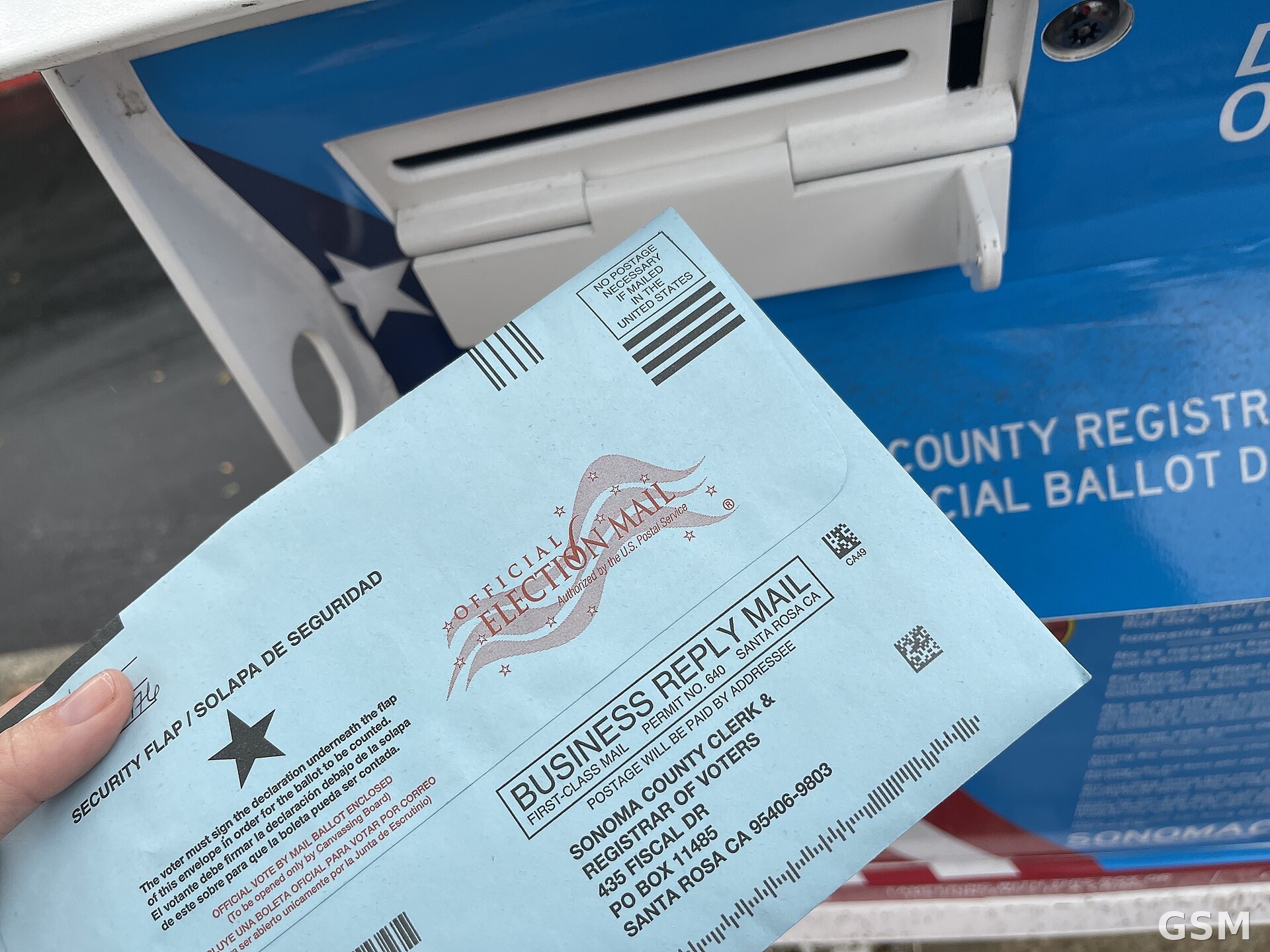
Photo: 加州选民把选票投入票箱(资料图,Sonoma)。图片:Sarah Stierch,CC BY 4.0,取自维基共享资源。
- 2026-10-25Chinese Voter Guide to California's 2026 Midterm Election: Mail Ballots, Chinese-Language Ballots and Vote Centers
- 2026-10-25What Is on the Ballot in the 2026 Midterms: All 435 House Seats, 33 Senate Seats and California's 14 Propositions
- 2026-10-25How to Read Election Night: California Results Start at 8 p.m. on Nov. 3, Mail Ballots Count Through Nov. 10, Final Certification Dec. 11
- 2026-10-25California's 14 Ballot Propositions Explained: The $11.25B Housing Bond, Permanent High-Income Tax, Voter ID and the Clinics' 90 Percent RuleThis story