FDA Approves Rhapsido as the First Treatment for Symptomatic Dermographism
Novartis announced in East Hanover, New Jersey, on October 7 that the U.S. Food and Drug Administration has approved Rhapsido (remibrutinib) as the first treatment for adults with symptomatic dermographism (SD) whose disease is inadequately controlled by H1 antihistamines.
Symptomatic dermographism is the most prevalent type of chronic inducible urticaria: everyday skin friction, scratching or rubbing triggers hives and itching. More than 50 percent of patients remain symptomatic despite taking H1 antihistamines. Rhapsido is an oral, highly selective Bruton's tyrosine kinase (BTK) inhibitor that blocks the pathway involved in the release of histamine, a key driver of hives and swelling. It is taken as a 25 mg tablet twice daily.
The approval is based on the SD cohort of the Phase III RemIND trial, which enrolled 115 adults who remained symptomatic on second-generation H1 antihistamines. At Week 12, 29.3 percent of patients treated with Rhapsido achieved complete resolution of hives compared with 14.0 percent on placebo (p=0.0229), with responses seen as early as Week 2. Novartis said the safety profile in SD was consistent with its experience in chronic spontaneous urticaria, with no routine lab monitoring required.
Rhapsido was first approved in September 2025 for chronic spontaneous urticaria (CSU) and is now the only prescription treatment approved in the United States for both of the two most common forms of chronic hives. "Today's approval marks an important milestone for people living with SD," said Victor Bultó, President, US, at Novartis.
Source: GSM · USA (original Chinese edition)
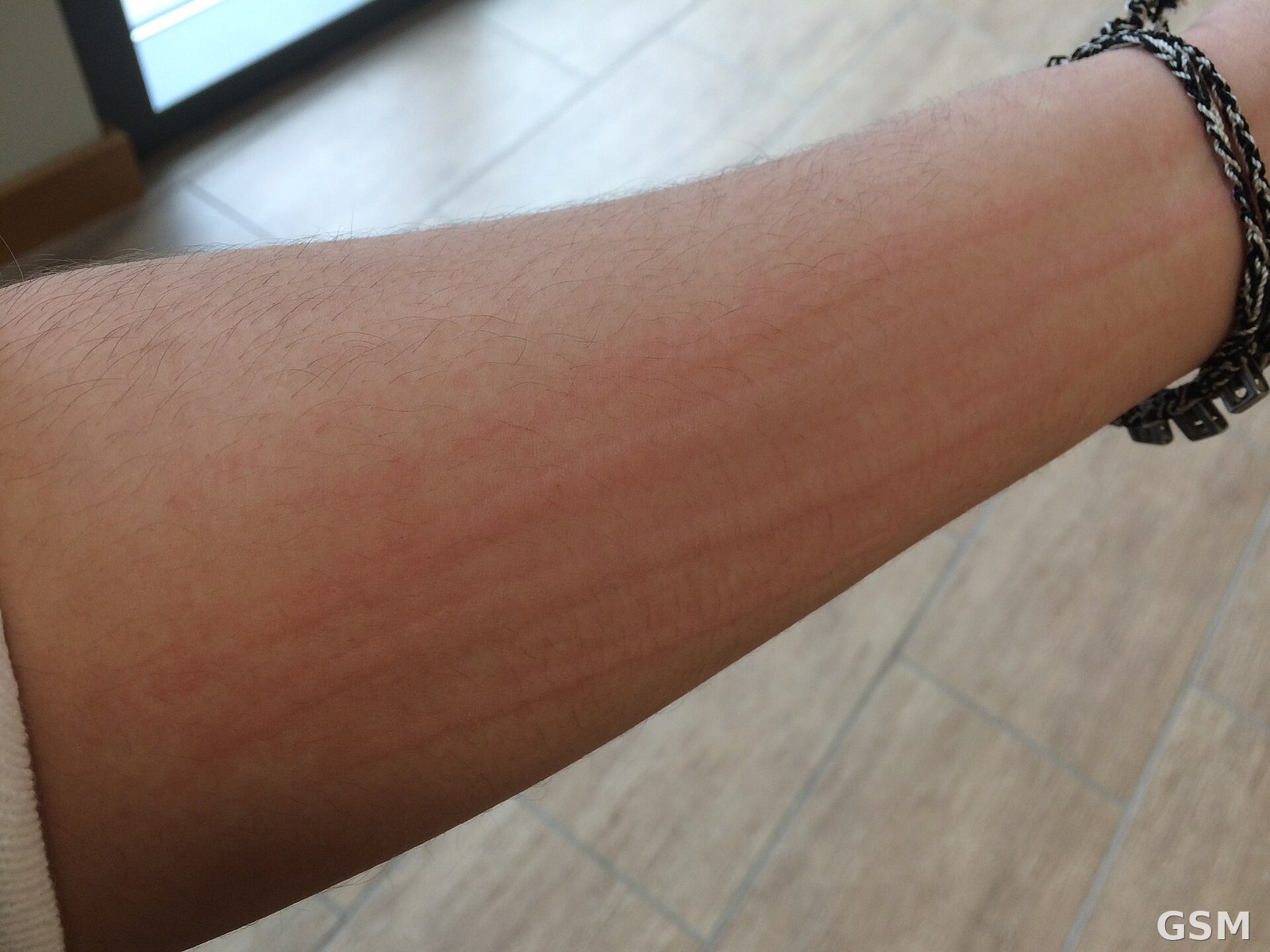
Photo: 皮肤划痕性荨麻疹的风团(资料图)。JAguayo18 摄,CC BY-SA 4.0,经 Wikimedia Commons。 / Wheals of symptomatic dermographism (file photo). Photo by JAguayo18, CC BY-SA 4.0, via Wikimedia Commons.