Novartis Remibrutinib Beats Teriflunomide in Phase III Relapsing MS Trials, Cutting Relapses by About a Third
Novartis on October 23 presented positive results from the pivotal Phase III REMODEL-1 and REMODEL-2 trials showing that its oral BTK inhibitor remibrutinib delivered superior relapse control and a clinically meaningful delay in disability progression versus teriflunomide in relapsing multiple sclerosis (RMS), with no liver safety signal. The results were presented in a late-breaking session at MSToronto2026, the 10th Joint ACTRIMS-ECTRIMS Meeting, and published simultaneously in The Lancet.
The two identical trials randomized about 2,000 patients worldwide 1:1 to remibrutinib or teriflunomide. On the primary endpoint, annualized relapse rate, remibrutinib posted 0.073 versus 0.112 in REMODEL-1 (a 35.2 percent relative reduction) and 0.080 versus 0.116 in REMODEL-2 (31.2 percent), translating to roughly one relapse every 13 years. The risk of six-month confirmed disability progression fell by 29.2 percent, and more than 92 percent of remibrutinib patients remained free of progression over 24 months. On the composite NEDA-3 measure of no evidence of disease activity, 55.0 percent of remibrutinib patients qualified versus 32.1 percent on teriflunomide. MRI outcomes also favored remibrutinib, with annualized T2 lesion activity reduced by 65 and 70 percent in the two trials and gadolinium-enhancing T1 lesions by 66 percent.
Safety was a headline finding. There was no liver safety signal and no cases of Hy's law, which has been reported in other late-stage BTK inhibitor programs. Liver enzyme elevations above three times the upper limit of normal occurred in 2.0 percent of remibrutinib patients versus 7.4 percent on teriflunomide, and discontinuations due to adverse events were nearly 50 percent fewer (3.1 versus 5.8 percent). Two deaths in the remibrutinib group were assessed by investigators as unrelated to treatment. Heinz Wiendl, professor of neurology at the University of Freiburg, said the efficacy findings, together with the favorable safety profile, suggest remibrutinib could deliver a meaningful, differentiated option for people with relapsing MS. Unlike approved B-cell therapies, remibrutinib works without chronic B-cell depletion.
Multiple sclerosis is a chronic inflammatory disease of the central nervous system affecting nearly 3 million people worldwide, and relapsing MS is its most common form. Remibrutinib is already approved under the brand name Rhapsido for two forms of chronic hives. Novartis said it plans to seek regulatory approval for the RMS indication globally.
Source: GSM · USA (original Chinese edition)
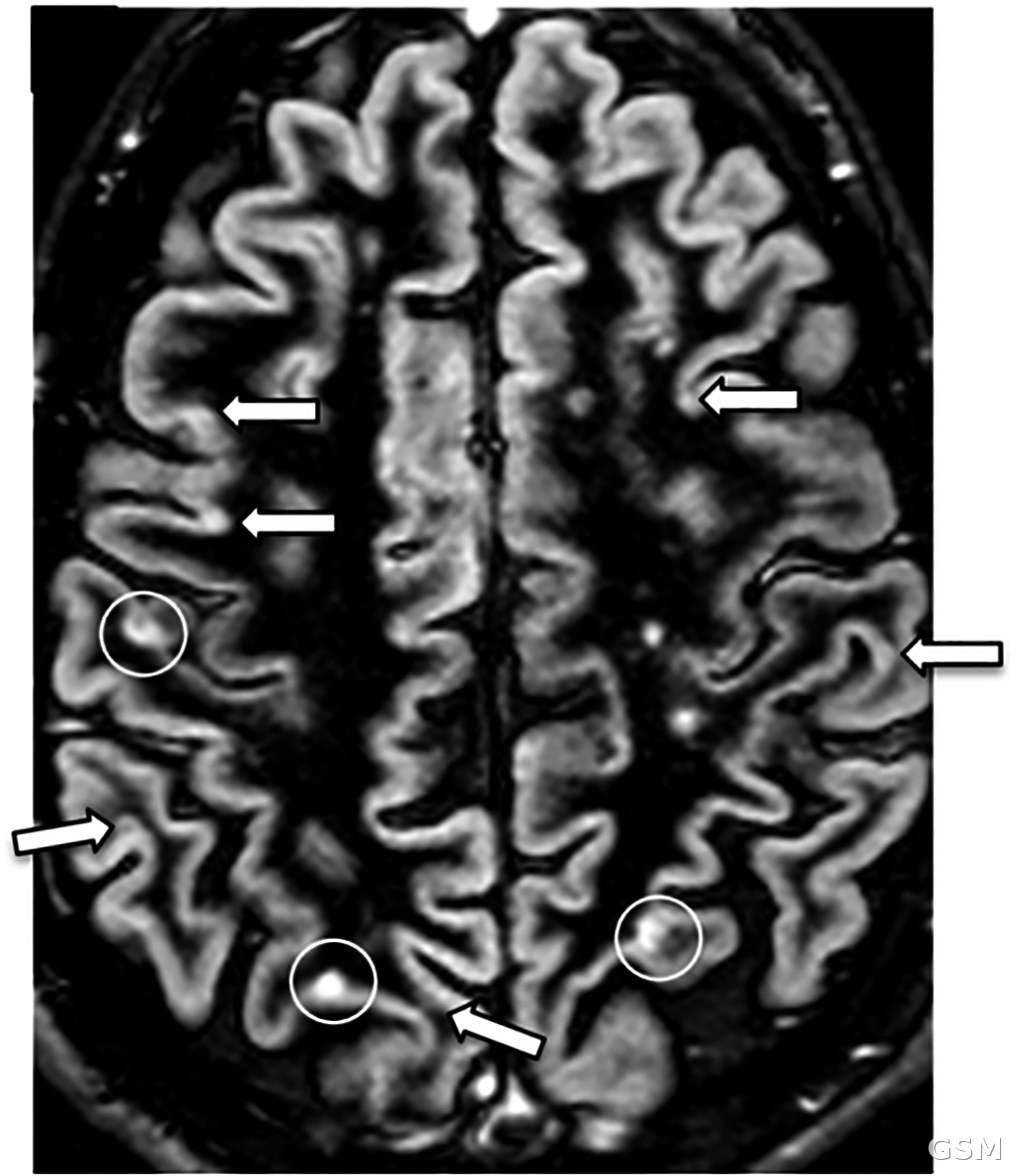
Photo: 多发性硬化患者的脑部MRI影像(资料图)。Favaretto 等摄,CC BY 4.0,经 Wikimedia Commons。 / A brain MRI showing multiple sclerosis lesions (file photo). Image by Favaretto et al., CC BY 4.0, via Wikimedia Commons.