[Feature] 《240 Years, Ten Generations: How Chinese Americans Went from Landing in America to Holding Office》
By The Star, GSM's features desk
Starting in Colorado
On the night of the 2026 midterm elections, the race for Colorado's 30th State Senate District was called for Kevin Leung. By his own account, he immigrated to the United States from Hong Kong 38 years ago. Thirty-eight years — from landing and making a living, to defeating an incumbent and walking into a state senate. That is one immigrant's road.
This year, there are 22 people like him across the country. They sit in seven states: 12 in California, three in New York, three in Maryland, and one each in Colorado, Connecticut, Rhode Island and Texas. Their offices run from the U.S. House of Representatives, a lieutenant governorship and a state attorneys general office, down through mayors to county supervisors. To tell the story of these 22 people, the clock has to be turned back — back to the first time Chinese people set foot on this land. Counted from that landing, the line runs more than 240 years; the first entry with names attached that can still be checked was written in 1785, at the end of the 18th century.
The first generation: making a living first, putting down roots second
On August 9, 1785, the merchant ship Pallas sailed from Guangzhou into Baltimore with three Chinese sailors aboard, their names recorded as Ashing, Achun and Accun. Her captain, John O'Donnell, unloaded his cargo, married and retired, leaving the whole crew stranded ashore. The three sailors petitioned the Continental Congress for help getting home — the earliest page in the surviving record of Chinese people setting foot on American soil. That year, the United States itself was not yet ten years old.
For nearly a century after that, Chinese arrivals were a trickle. The scale came in the second half of the 19th century: gold mines, railroads, plantations, restaurant kitchens and laundries. By 1880 there were about 105,465 Chinese people in the United States. They were the first generation: land, earn, send money home, and slowly put down roots. But there was one thing that generation could not do — vote. Running for office was out of the question.
The Chinese Exclusion Act, signed on May 6, 1882, was the first federal immigration law aimed at a specific ethnic group. Its Section 14 said it plainly: no state or federal court could permit a Chinese person to become a citizen. No naturalization meant no vote. The names of the parents' generation were never going to appear on a ballot. That door stayed shut for sixty years.
The first to slip through the crack were the children born in America. On March 28, 1898, the Supreme Court ruled 6–2 in United States v. Wong Kim Ark that a child born in the United States to Chinese parents domiciled here was a citizen at birth — even though the parents themselves could not legally naturalize.
Hiram Fong was of that generation. His father had come to Hawaii's plantations in 1872; his mother had arrived at age ten to work as a domestic servant. He was the seventh of 11 children; as a boy he sold newspapers, shined shoes and caddied to help the family, then put himself through the University of Hawaii and Harvard Law School. In 1938 he was elected to the Hawaii Territorial House of Representatives, later serving as its speaker, for 14 years in the territorial legislature. The vote his parents were denied — the son not only cast it, he stood on the counting side of it.
The first step on the mainland came in Arizona, where Chinese people were few. Wing F. Ong was born in China and came to America as a boy, moving from San Francisco to Phoenix in 1918. In 1935 he opened a grocery store at 1246 East Jefferson Street, serving the Mexican American and Black neighborhoods around it; in 1938 he founded the Phoenix Chinese Chamber of Commerce; in 1943 he graduated first in his class from the University of Arizona law school — at a time when there were only eight Chinese American lawyers in the entire country. In 1946 he won election to the Arizona House, 1,100 votes to 693, becoming the first Chinese American elected to a state legislature; in 1966 he was elected to the state senate, another first. Chinese-language newspapers in California, Oregon and Washington all gave his election prominent coverage.
The doors open, one by one
The first door opened in 1943. The Magnuson Act, signed on December 17, repealed exclusion, and Chinese people in America could naturalize for the first time in 60 years — but the annual quota was 105, and the door had opened only a crack. By 1940, six decades of exclusion had shrunk the Chinese American population to about 72,000; the voter base itself was thin.
The second door opened in 1952. The McCarran-Walter Act, effective June 27, removed race as a basis for naturalization eligibility, and all Asian people could become citizens. A naturalized generation followed — when they could become voters, and when they could become candidates, was set by the year on that law.
The third door opened in 1965. The Voting Rights Act, signed on August 6, barred denying the vote on grounds of race and suspended screening devices such as literacy tests. The same year, the Immigration and Nationality Act (the Hart-Celler Act) abolished the national-origins quota system — two laws from the same year with different subjects, one about voting, one about immigration, not to be confused.
Once the doors opened, four lines grew together. Population: 237,292 in 1960, and 5,465,428 in the 2022 American Community Survey, counting multiracial Chinese Americans. Voters — the following figures are for Asian Americans and Pacific Islanders as a whole, not Chinese Americans alone: 16,170,000 eligible AAPI voters in 2024, up 19 percent between 2020 and 2024, against 3 percent growth for all voters. Organizations: a Chinese American civic association founded in San Francisco in 1895 was the oldest Asian American civil rights organization of the exclusion era; OCA, founded in 1973, does voter registration and now has 80 chapters; in the late 1990s, S. B. Woo and others founded the 80-20 Initiative, the first attempt to organize the Asian Pacific American vote as a swing-vote bloc. Naturalization first, then voters; voters first, then candidates.
The first to walk into a state capitol was March Fong Eu, the daughter of Chinese immigrants. In 1966 she was elected to the California Assembly, the first Asian American woman elected to a state legislature; in 1974 she was elected California secretary of state, the first Chinese American elected to a state constitutional office, serving one 19-year stretch from January 6, 1975 to May 17, 1994. The work she took on was voting itself: mail voter registration, a shorter registration deadline, registration counters at the DMV, an absentee ballot for any voter who asked. On July 14, 1976, with every official ahead of her in the line of succession out of state, she served as acting governor — the first woman and the first Asian American to hold the California governorship. In 1978 she carried all 58 California counties, including the Republican stronghold of Orange County. She was also known for the law banning pay toilets in public buildings, on the grounds that they were unfair to women. In 2019 the California secretary of state's building was named for her — the first state-owned building named for an Asian American woman.
On the East Coast came S. B. Woo. Born in Shanghai, a physics professor at the University of Delaware, he became an American citizen, by his own account, of his own free will. In 1984, in his first run for office, he was elected lieutenant governor of Delaware: he beat two veteran state senators in the primary and won the general election by 429 votes — 121,095 to 120,666. A naturalized immigrant winning statewide office in a small East Coast state: the map of Chinese American officeholding had crossed the Mississippi for the first time. His two later runs for federal office both failed, and in the late 1990s he co-founded the 80-20 Initiative with Chang-Lin Tien and others, spending part of his later years organizing the vote instead.
Then came the one mile. Gary Locke was born in Seattle in 1950, a third-generation Chinese American who spent his first five years in Yesler Terrace public housing — the first racially integrated public housing project in the country — and did not start learning English until kindergarten. His grandfather had come from Taishan in the 1890s and worked as a servant in Olympia, the state capital, in exchange for English lessons, a few blocks from the capitol building; his father, born in Taishan, came in 1931, served in World War II, and afterward ran a restaurant and a grocery store in Seattle. Locke was elected King County executive in 1993 and governor of Washington in 1996, taking office on January 15, 1997 — the first Chinese American governor in American history, and still the only one. In his inaugural year he said: "My grandfather came to this country from China nearly a century ago, and worked as a servant. Now I serve as governor, just one mile from where my grandfather worked. It took our family 100 years to travel that one mile."
On Capitol Hill, the line reaches back a generation earlier. In 1959, when Hawaii became a state, Hiram Fong was elected to the U.S. Senate — the first Chinese American elected to Congress and the first Asian American senator — serving nearly 18 years; in 1964 he became the first Asian American to receive votes for a presidential nomination at the Republican National Convention. He remains the only senator of solely Chinese descent: since he left office in 1977, the Senate has had no other.
David Wu, elected in 1998, was the first Chinese American elected to the House of Representatives. Born in Hsinchu in 1955 to parents from Suzhou, he arrived with his family in 1961 and settled in Latham, New York — then the town's only Asian American family. The Oregon 1st District he later won was only about 7 percent Asian Pacific American: from the very beginning, a Chinese American candidate's votes did not come from Chinatown alone.
On July 14, 2009, Judy Chu won a special election and became the first Chinese American woman elected to Congress. She then carried through Congress a resolution expressing regret for the 1882 Chinese Exclusion Act — the descendants of the people that law had shut out, sitting in the chamber that passed it, closing the file.
Beyond the statehouses and Congress runs an appointed line, to be recorded separately from elected office: Julia Chang Bloch became ambassador to Nepal in 1989, the first Asian American ambassador; Elaine Chao became secretary of labor in 2001, the first Chinese American cabinet secretary, and later served as secretary of transportation from 2017 to 2021; Steven Chu, a 1997 Nobel laureate in physics, became secretary of energy in 2009; Gary Locke became secretary of commerce in 2009 and then ambassador to China from 2011 to 2014, the first Chinese American to hold that post. Three Chinese Americans have served as Senate-confirmed cabinet secretaries. Katherine Tai, U.S. trade representative from 2021 to 2025, was cabinet-level but not a secretary; Julie Su, acting secretary of labor from 2023 to 2025, was never confirmed by the Senate. Both are listed separately, outside the count of secretaries.
City halls opened in the same period. Jean Quan, elected in 2010 and seated in 2011, became mayor of Oakland — the first Chinese American elected mayor of a major city, and the first Asian American woman to lead one. In 2011, Ed Lee was first appointed interim mayor of San Francisco and then elected that November, the city's first Asian American mayor. On November 2, 2021, Michelle Wu was elected mayor of Boston, ending a 199-year run of white male mayors — born in Chicago's South Side in 1985 to Taiwanese immigrant parents, she had applied at age 22 for legal guardianship of her 11-year-old sister after their mother fell ill, then brought her mother and sister back to Boston while she finished law school. She joined the Boston City Council in 2013, became its president in 2016, and was reelected to a second term as mayor in November 2025.
The 22 of 2026
This year's list is what that line looks like today. The standard, stated plainly: sitting officeholders count; the reelected and the newly elected are listed together, and so are incumbents not up for election this cycle; those who lost are not on the list. Twenty-two people, one at a time.
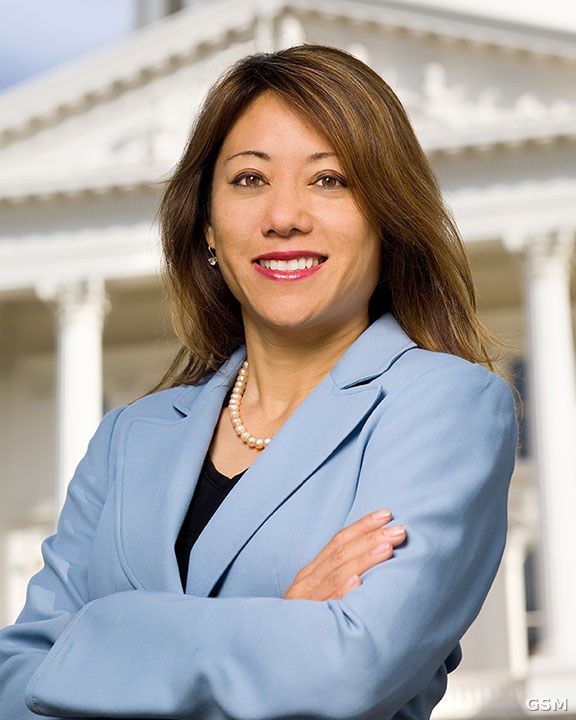
Fiona Ma: Lieutenant Governor of California
Newly elected — the highest office held by anyone on this year's list. Her road climbed one rung at a time: accountant, San Francisco supervisor, state assemblymember, member of the State Board of Equalization, state treasurer, and now the state's second-ranking official. This paper told her life story in a standalone feature on November 4; on this list, she is the new mark at the statewide level.
Richard Pan: U.S. House of Representatives, California's 6th District
Newly elected, defeating incumbent Representative Kevin Kiley. Of the American-born generation, newly arrived in Congress this year. Counting him, six people of solely Chinese descent have served in the House in history; five of them, with the members below, sit in the current Congress.
Judy Chu: U.S. House of Representatives, California's 28th District
Reelected. Born in Los Angeles in 1953, she taught psychology for 20 years. In the 1980s, when an "English-only" campaign in Monterey Park sought to ban Chinese-language signs, she built a multiethnic coalition of residents and defeated it — her road into politics began with that neighborhood fight: school board, city council, three terms as mayor, the state assembly, the State Board of Equalization, and then, in 2009, Congress, as its first Chinese American woman. She chaired the Congressional Asian Pacific American Caucus (CAPAC) for 14 years and is now its Chair Emerita; by her office's count, Asian Pacific American members of Congress have grown from eight when she was first elected in 2009 to 25 in the 119th Congress — an AAPI-wide figure.
Ted Lieu: U.S. House of Representatives, California's 36th District
Reelected. He is of the naturalized generation — himself a person the immigration law was done to: before 1952, an immigrant like him had no door into citizenship at all; after the door opened, he walked to Congress.
Vince Fong: U.S. House of Representatives, California's 20th District
Reelected. Seated on June 3, 2024, he is one of the six people of solely Chinese descent who have served in the House, and this year he sits in Congress alongside Richard Pan.
Alex Lee: California State Assembly, 24th District
Reelected. In 1966, March Fong Eu entered this whole story through a state legislature; sixty years on, the chamber still seats Chinese American members reelected term after term — Alex Lee is one of them.
Mike Fong: California State Assembly, 49th District
Reelected. The state assembly is the oldest battlefield on this line, and the ladder most newcomers climb first; Mike Fong's reelection is the footnote to how Chinese American presence there has moved from "the first" to "there every term."
Phillip Chen: California State Assembly, 59th District
Reelected. Together with Alex Lee and Mike Fong, he holds a bloc of three Assembly seats among California's 12 names this year.
Helen Tran: Mayor of San Bernardino
Reelected. In this June's primary she took more than half the vote and was reelected outright under the local rules, without waiting for November. A mayor is the level of office closest to residents — and her return was settled at the primary stage.
Karen Goh: Mayor of Bakersfield
Not up for election this cycle; in office, her term running to 2029. She is on this list because the list counts officeholders: this was not her election year, and her term simply continues.
Alan Wong: San Francisco Board of Supervisors, District 4
Elected, winning a full term. A county board of supervisors runs the daily business of a county — at this level, the line runs on being known street by street.
Lena Tam: Alameda County Board of Supervisors, District 3
Reelected unopposed. In an official statement of the board, she describes herself as the daughter of immigrants from China: the parents' generation crossed the ocean; her generation is reelected, and reelected again, at the county hall.
Grace Meng: U.S. House of Representatives, New York's 6th District
Reelected. In office since 2013, she is one of the Chinese American members of the current Congress. Of the American-born generation, she has now held a seat on Capitol Hill for 13 years.
Larry He: New York State Senate, District 17
Newly elected, defeating an incumbent. A first-time candidate who took the seat from the person holding it.
Joyce Xiaoqiong Xie: New York State Assembly, District 49
Newly elected, also defeating an incumbent. No Chinese characters for her name appear in public reporting, so this piece uses her English name — how a name is written is her own affair; the seat was voted in by her district.
Chao Wu: Maryland House of Delegates, District 9A
Reelected, born in China. Of the naturalized generation, reelected to a state legislature — one of Maryland's three this year.
Lily Qi: Maryland House of Delegates, District 15
Reelected, born in Shanghai. She chairs the Maryland legislature's Asian Pacific American Caucus — from officeholder to organizer, doing the work the OCA generation began: gathering scattered voters and candidates into an organization.
Clarence Lam: Maryland State Senate, District 12
Reelected unopposed. He describes himself as a second-generation Chinese American: his mother from Taiwan, his father from Hong Kong. He is now the only Asian American in the Maryland Senate.
Kevin Leung: Colorado State Senate, District 30
The man from the opening. Newly elected, defeating an incumbent; by his own account he immigrated from Hong Kong 38 years ago. This year, the map of Chinese American officeholding pushed one state further inland.
William Tong: Attorney General of Connecticut
Reelected, to a third term. He is the first Chinese American elected as a state attorney general in the country, and the first Asian American elected to statewide office in Connecticut. The attorney general runs law enforcement — with this level reached, the line widened again.
Allan Fung: Rhode Island House of Representatives, District 15
Newly elected, running unaffiliated. He had served as mayor of Cranston, the first Chinese American mayor in Rhode Island; this year he changed tracks, from city hall to the statehouse.
Gene Wu: Texas House of Representatives, District 137
Reelected. He came to the United States from Guangzhou as a small child with his family, was first elected in 2012, and has led the Texas House Democratic Caucus since 2024. Unofficial returns from the Texas secretary of state show him defeating Republican Helen Zhou by about 71 percent to 29 percent, and major outlets are reporting the race as won. No Asian American has ever been elected to the Texas Senate — the seat he holds is in the House.
What can be counted, and what cannot
Two figures this piece states plainly that it cannot give: the all-time total of Chinese American elected officials at the state and local level, and the total number of Chinese American candidates including those who lost. There is no unified database; ethnic identity is mostly self-reported and the historical record is incomplete. Any total would be an estimate, and this piece invents none. What can be counted are a few lines: six people of solely Chinese descent in the House in history, one in the Senate, one governor, and three Chinese American cabinet secretaries, by appointment. Members of mixed Chinese descent are listed separately: in the House, Daniel Akaka, Charles Djou, Tammy Duckworth and TJ Cox; in the Senate, Daniel Akaka and Tammy Duckworth, who sits today. Japanese Americans and Korean Americans are not Chinese Americans and are not counted.
The spread has its limits, and they belong beside the map: no senator of solely Chinese descent since Hiram Fong left office in 1977; no Chinese American governor since Gary Locke left office in 2005; and no Asian American ever elected to the Texas Senate.
And one who leaves
Off the list, one name has to be written down: Angie Chen Button, the sitting member for Texas House District 112, a Chinese American of the naturalized generation. By the Texas secretary of state's unofficial returns, with all polling places reporting, she lost to Democrat Zach Herbert, 37,499 votes and 46.4 percent to 43,251 and 53.6 percent, ending nearly 18 years in office. Asian residents make up only about 12 percent of her district — she won there for nearly 18 years, and this year she lost. Losing, like winning, is part of this history.
Among earlier losses stands Andrew Yang. In 2020 he ran in the Democratic presidential primary, carrying a proposal for a $1,000-a-month universal basic income onto the national debate stage, and withdrew after the New Hampshire primary; in 2021 he ran for mayor of New York, taking more than 135,000 votes and finishing fourth in the Democratic primary. He won neither race, but from then on a Chinese American candidate stood in the front rank of national campaigns. This cycle's other losses include Lily Tang Williams in New Hampshire and Lester Chang in New York; Kimberly Yee of Arizona, running this cycle for state superintendent of public instruction, trailed and had not been declared, and is likewise not counted.
Three officeholders of another minority community are listed separately, by their own self-identification, and are not in the 22: Hmong Americans Yee Leng Xiong (Wisconsin state treasurer), XP Lee (Minnesota House, District 34B, reelected) and Samantha Vang (Minnesota House, District 38B, reelected). Results in every state still await formal canvass and certification — California on December 11, Maryland on December 3, Texas thereafter — and the official word is final.
The new generation: people this country grew
Look back at where this line begins. The first generation's days were plantations, railroads, restaurant kitchens and the counters of grocery stores. Hiram Fong's father worked a plantation and his mother was a servant; Gary Locke's grandfather was a servant and his father ran a restaurant; Wing F. Ong kept a grocery store and read his way through law school at night. That generation spent its strength on making a living and putting down roots; and sending the children to school was how many families turned the page.
Counting a generation at 25 to 30 years, the oldest families who landed here have now run eight to ten generations — the oldest family stories, told today, run to about ten generations. But the people active in politics today are mostly not the descendants of those oldest families. They are the second and third generations of the immigration waves of recent decades.
Where this second and third generation came from can be checked in the numbers: between 1960 and 2006, nearly 1.8 million people from China, Hong Kong and Taiwan obtained lawful permanent residence in the United States — more than four times the total for 1850 to 1959. By 2006, the foreign-born made up about two-thirds of the Chinese American population; 56 percent of them had arrived after 1990, and 59 percent had naturalized. In other words, the parents of today's second and third generations were, in the main, the immigration wave of the 1990s — the parents landed in the 1990s, the children grew up in the 2000s, and by the 2020s they are appearing on ballots and in seats. The timing lines up.
This year's 22 put the two side by side. One kind was born and raised in America: Judy Chu, born in Los Angeles; Grace Meng — now Chair of CAPAC — Fiona Ma and Richard Pan, born in the United States; Clarence Lam, who calls himself second generation — his mother from Taiwan, his father from Hong Kong; and Lena Tam, an immigrant's daughter. The other kind crossed the ocean themselves, the naturalized generation: Gene Wu, who came from Guangzhou as a child; Lily Qi, born in Shanghai; Chao Wu, born in China; Kevin Leung, who landed from Hong Kong 38 years ago; and Ted Lieu. Two generations stand on the same list, but their starting points are no longer the same.
"Sending the children to school" is not an empty phrase on this line. Hiram Fong sold newspapers, shined shoes and caddied, and read his way through Harvard Law School; Gary Locke grew up in public housing, started learning English in kindergarten, and read his way to a governorship. The children the first generation put through school walked out holding two things their parents never had: a ballot, and a profession — Ong the lawyer, Woo the professor, Judy Chu the teacher, Fiona Ma the accountant. A profession was that generation's first rung into public life.
And the rungs were climbed one at a time. The second and third generations rarely leap straight to the top; most start with the office closest to home — school board, city council, mayor, state assembly, the Board of Equalization — and climb from there to Congress and state office. Judy Chu took 24 years from her election to a school board in 1985 to entering Congress in 2009; Fiona Ma climbed from San Francisco supervisor to lieutenant governor of California without missing a rung. The exception is Woo — elected lieutenant governor on his first run in 1984, without climbing the local ladder. But that is the exception, not the rule.
Count one step further and there is a third generation. Gary Locke is one: grandfather a servant, father running a restaurant, himself a governor — one mile, walked by three generations over 100 years. Behind the second-generation names on this year's list stands the same family ledger: what the parents earned on plantations, in restaurants and at grocery counters was traded for the children's degrees, ballots and seats.
For the second and third generations, running for office is no longer "immigrants entering politics." They were born in the United States and grew up in its schools, and the voters they face are, in the great majority, not Chinese American: the district David Wu won was only about 7 percent Asian Pacific American; S. B. Woo won a whole state with almost no Chinese American voters in it, by 429 votes; this year Richard Pan beat a sitting member of Congress. The people they have to persuade were never only Chinatown — they are the whole district, the whole community. The places they govern are the places they grew up in.
The unspoken first line of the 1882 law was that Chinese people were not to become part of this country. In 2026, 22 Chinese Americans hold elected office across seven states, and the highest of them is the lieutenant governor of California. The road has run more than 240 years, and ten generations have walked it; its next page has been taken up by a new generation born and raised in America. And the road still runs on.
Reference: Congressional Asian Pacific American Caucus
Published by GSM · USA (original Chinese edition)
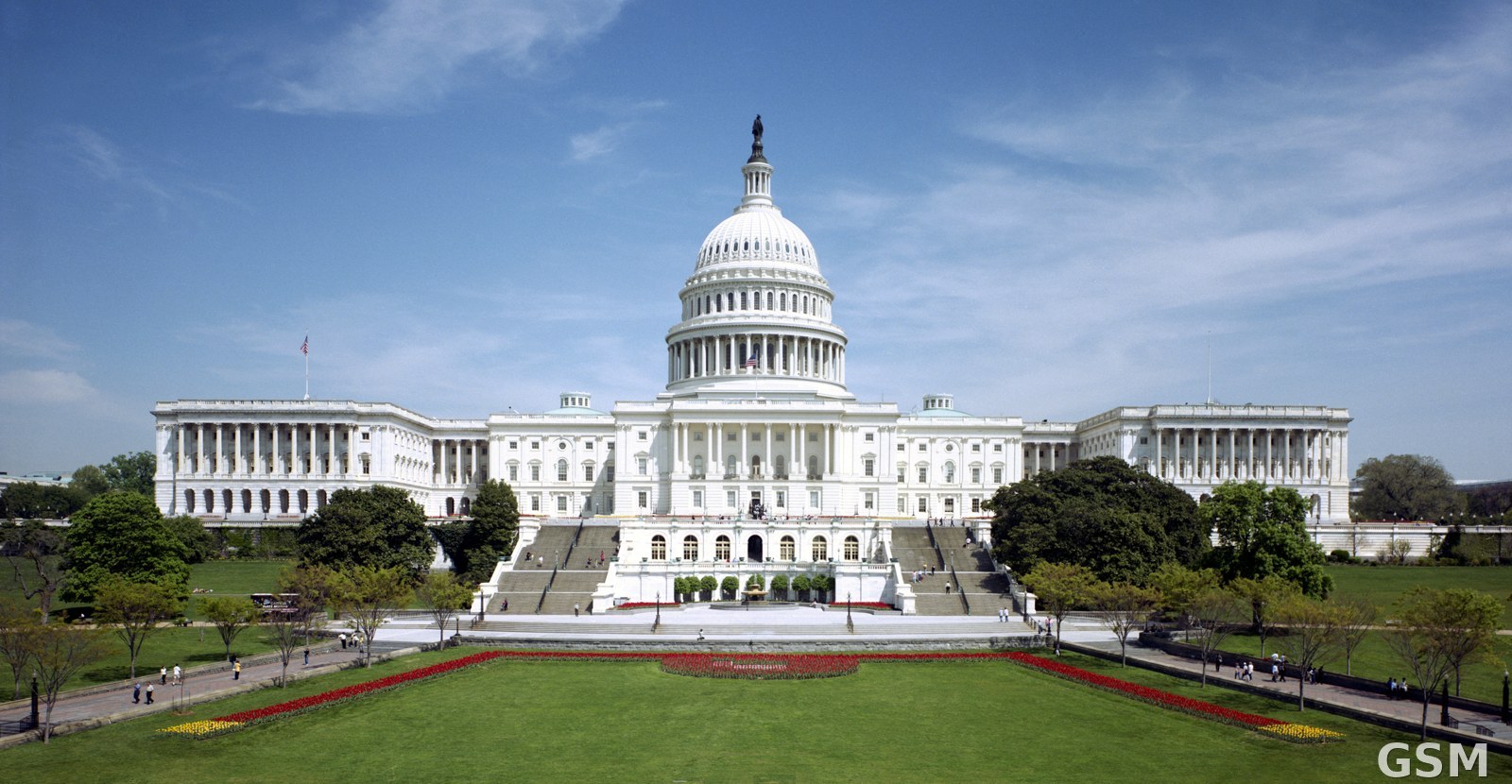
Photo: 图:美国国会大厦西立面。公共领域,经 Wikimedia Commons。 / Photo: The west front of the U.S. Capitol. Public domain, via Wikimedia Commons.