NASA's Swift Observatory Re-enters After Nearly 22 Years, Burning Up Over North Sumatra
After nearly 22 years of service, NASA's Neil Gehrels Swift Observatory re-entered Earth's atmosphere on November 4 at 7:39 a.m. EST over the North Sumatra region of Indonesia, burning up on re-entry like a shooting star and ending a mission built to study the universe's most violent explosions.
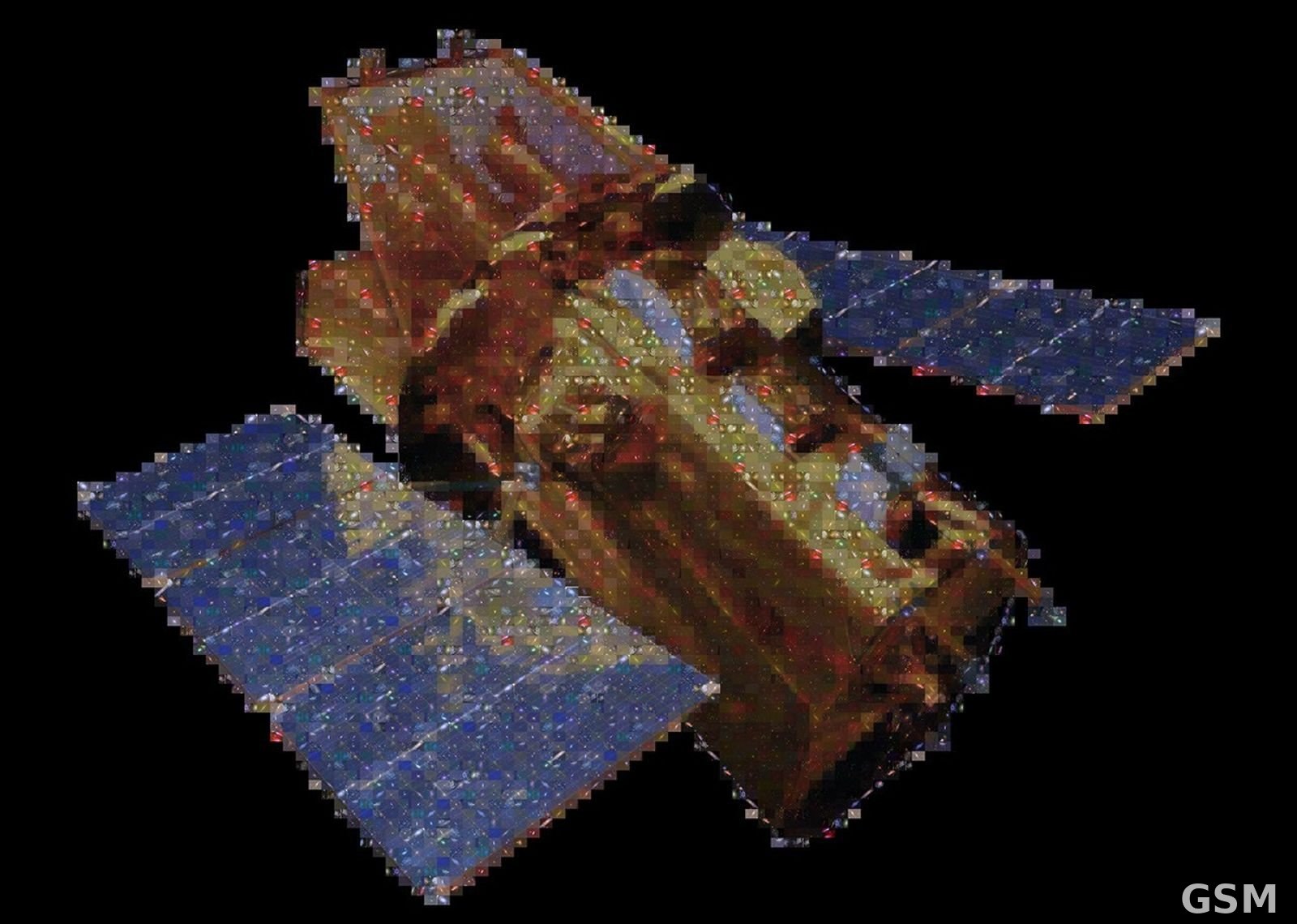
Swift carried a combination of instruments, including an X-ray telescope and a gamma-ray telescope, that worked together to let humanity study, in unprecedented detail, the fastest and most energetic explosions in the universe. The farewell image released by NASA is a mosaic created in 2018 using some of the first million images captured by the satellite's Ultraviolet/Optical Telescope.
NASA says the most recent solar maximum accelerated the decay of the satellite's orbit, and an innovative mission to rescue Swift by boosting its orbit was not successful. Although the spacecraft has burned up, the impressive data it acquired over its mission will continue to shed light on the mysteries of the cosmos for years to come. (Source: NASA)
Source: NASA
Published by GSM · USA (original Chinese edition)
Photo: 图片来源:Swift卫星拍摄的首批一百万张图像拼图(NASA/Swift and AndreaMosaic,NASA Science) / Image: Mosaic of the first million images from the Swift satellite, by NASA/Swift and AndreaMosaic, NASA Science (Public domain)
- 2026-11-01Swift Observatory Expected to Re-enter Around Nov. 6 After 22 Years and 2,000+ Gamma-Ray Bursts
- 2026-11-07NASA's Swift Observatory Re-enters After Nearly 22 Years, Burning Up Over North SumatraThis story