
University of Tokyo Team Uses High-Density Radiocarbon Dating to Reveal Hidden Earthquake Traces in Kumano Sea Sediments; 40-Centimeter Core Reaches Back to Abo
TOKYO, Japan — Researchers at the University of Tokyo have used a new type of radiocarbon analysis to study a sediment core taken from the Kumano Sea off the coast of Japan, revealing multiple hidden traces of previously unknown earthquakes in the Nankai Trough. The work, by A. Omura, Yusuke Yokoyama, S. Hirabayashi and co-authors, was published in the journal Radiocarbon under the title "Sequential high-density radiocarbon dating to detect invisible event layers in marine sediments."
According to the research report, the ocean sediment core, extracted in 2012 from the Kumano Trough off the southeast coast of central Japan, is a 40-centimeter-long cylinder of fine-grained clayey silt. The team took radiocarbon measurements of total organic carbon at 0.5- to 1.0-centimeter intervals along the core, at a resolution of 1 centimeter or less, and dated the oldest part of the core, at a depth of 37–38 centimeters, to approximately A.D. 1440.
The team found instances of older organic carbon mixed between layers of younger sediment, which it interpreted as evidence of seafloor sediment disturbed, shifted and repositioned by severe floods, storms or submarine earthquakes. Professor Yusuke Yokoyama of the university's Atmosphere and Ocean Research Institute said the team found several new geological layers that were not visible before, derived from submarine landslides possibly triggered by earthquakes in the Nankai Trough. Because the redeposited sediments are the same as the materials below, the event layers were indistinguishable in chemical and structural features and invisible to visual observation, X-ray or CT analysis; by identifying differences in total organic carbon ages along the core and converting them to calendar years using ages from forams, the team determined the occurrence of multiple events and correlated some of them with written historical records of submarine earthquakes from the 13th to the 20th century. The report said the team also compared the hidden event history with recorded major earthquakes dating back to 1498.
Yokoyama said the technique is useful not only for Japan but also for other regions with a history of geological activity seeking more data to improve predictions, and that he intends to look more widely across the Kumano Sea and beyond to piece together a broader picture of Japan's hidden history of disaster.
—-
Source: Marine Geology (ScienceDirect
Published by GSM · USA (original Chinese edition)
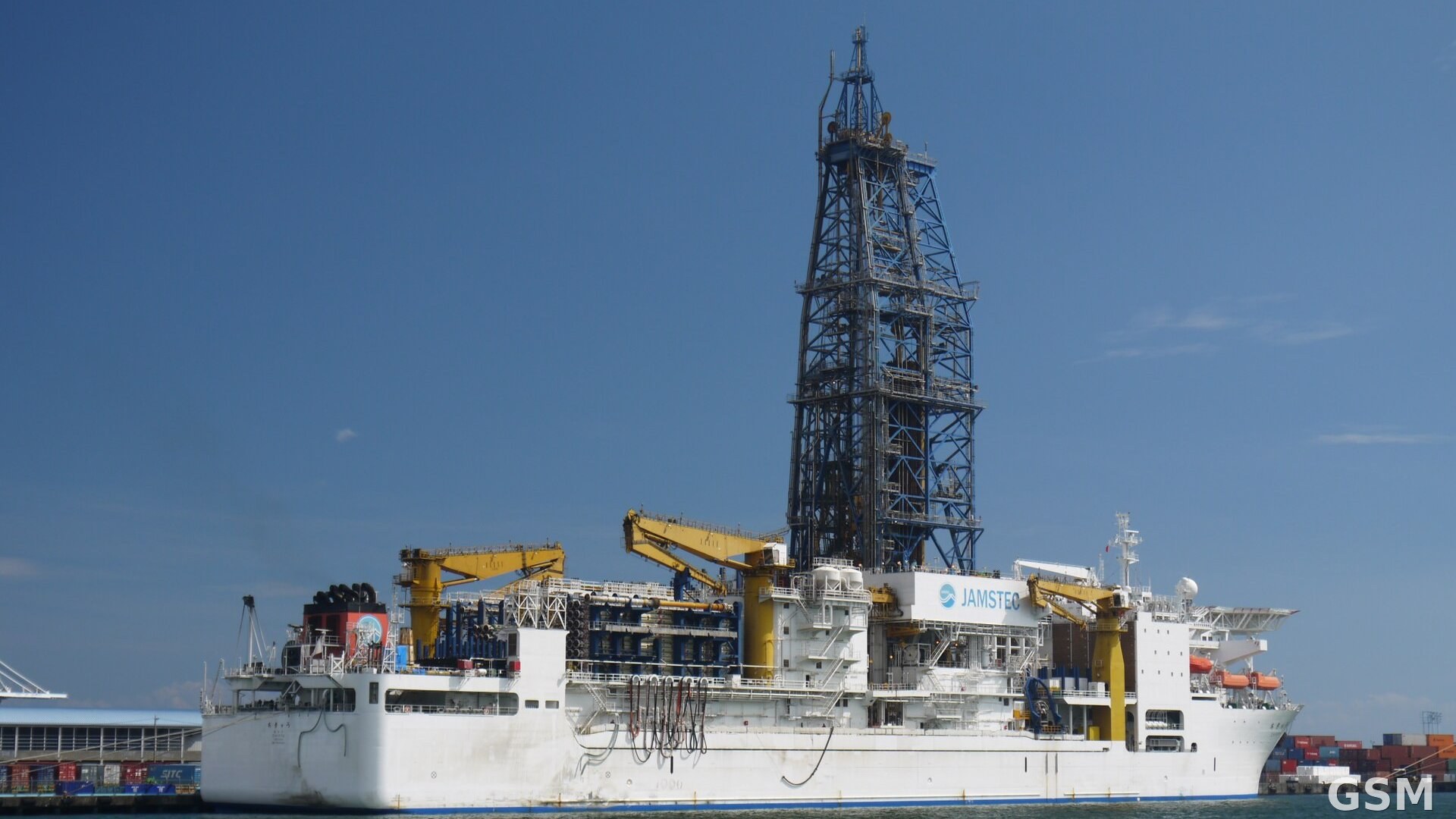
Photo: 国际大洋发现计划(IODP)科考船从海底钻取岩芯(示意)。(图/JAMSTEC·IODP,Wikimedia Commons,CC BY 4.0)| An IODP research vessel retrieving sediment cores from the seafloor (illustrative). (Photo: JAMSTEC/IODP, Wikimedia Commons, CC BY 4.0)
 Nature Communications Study Shows DNA Binding Drives Ku70/Ku80 Dimerization, Exposing a Hidden Site That Lets APLF Bridge Broken DNA Ends2026-11-09
 Rose Coral Colony Mapped at 1.56 Kilometers Along Outer Reef of Cocos (Keeling) Islands: 36.5 Meters Average Width and 56,940 Square Meters, Among the Largest K2026-11-09