
Science Study: Volatile Eutectic Method Gives Perovskite Films a Carrier Lifetime of About 295 Microseconds, With Solar Cells at 26.5% Efficiency and LEDs at 26
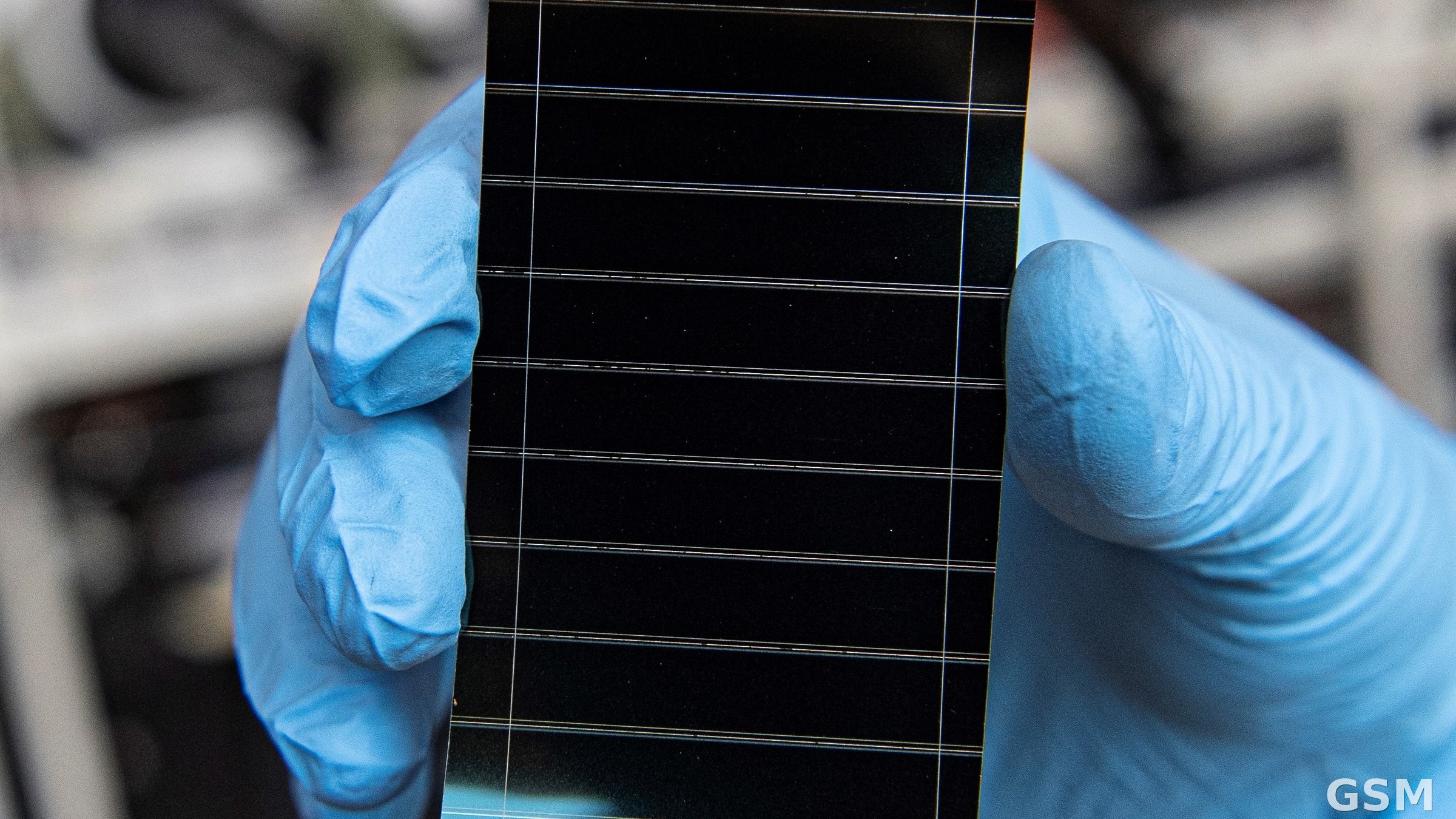
A team led by Professor Seong Sik Shin of the SKKU Advanced Institute of Nanotechnology (SAINT) at Sungkyunkwan University in South Korea, working with the Korea Research Institute of Chemical Technology, the University of California, San Diego, and Princeton University, has published in Science a crystal-growth method that dramatically reduces defects in perovskite semiconductor thin films, and demonstrated both high-performance solar cells and light-emitting diodes (LEDs) on the same material platform. Phys.org reported the study on November 8.
Perovskites are regarded as a key material for next-generation electronics because of their low manufacturing costs and relatively simple processing, serving both in solar cells that convert light into electricity and in LEDs that convert electricity into light. But when a liquid precursor solidifies into a thin film, microscopic crystal grains join together and create numerous defects at grain boundaries and surfaces, which trap or eliminate photogenerated charge carriers and reduce device performance and lifetime. The team's solution came from the eutectic phenomenon, in which a mixture melts at a substantially lower temperature than its components: methylammonium chloride (MACl) and a zinc halide (ZnX₂), each with a relatively high melting point on its own, begin to melt much lower when combined. When the film was gently heated to around 100 °C (212 °F), the mixture at the grain boundaries turned into a thin liquid layer in which atoms diffuse roughly 10,000 times faster than in a solid, letting small grains rapidly merge into larger, cleaner crystals. The MACl then evaporates during thermal annealing, while the remaining zinc segregates toward the grain boundaries and helps suppress defects.
The team said the resulting films showed the highest quality reported to date for perovskite thin films: a charge-carrier lifetime of approximately 295 microseconds, among the longest ever reported, and a surface recombination velocity of 0.3 cm/s, the lowest reported value for lead halide perovskites and comparable to the best values reported for passivated silicon. Solar cells made with the new films achieved a power conversion efficiency of 26.5% (certified 25.9%) with an open-circuit voltage of 1.208 V, a certified record for solar cells with the same n-i-p architecture. An LED with the same device architecture as the solar cell reached an external quantum efficiency of 26.1%, showing that a single device structure can function both as a power-generating device that absorbs light and as a light-emitting device. Co-first author Seongsik Nam said the work reduced surface recombination velocity to the lowest reported for perovskite films and showed strong performance over large areas, while Professor Shin said the study is the first to develop a crystal-growth method based on a volatile eutectic mixture and that the process requires no expensive specialized equipment.
—-
Source: Science paper
Published by GSM · USA (original Chinese edition)
Photo: 钙钛矿太阳能电池片特写(资料图)。(Wikimedia Commons/公共领域)|A perovskite solar cell close-up (file photo). (Wikimedia Commons / public domain)
 New Extinct Pygmy Sperm Whale From Peru's Pisco Formation, 6.3–5.6 Million Years Old: At About 2.7 Metres, Its Skull Shows the Most Extreme Asymmetry Known in A2026-11-09
 Science Advances Study: Embryos Protect the Vulnerable Y Chromosome With Finely Balanced Spindle Forces; Under Mild Stress, Y Errors Are 2.5 Times Less Likely t2026-11-09