After Four and a Half Hours, Three Questions Remain: Progress and Deadlock on Day One in Abu Dhabi
What this story is about, in plain language
In plain terms, the United States has brought Russia and Ukraine to the same table to discuss whether a war now in its fifth year can stop, how it would stop, and who would guarantee that it does not start again.
The talks are in Abu Dhabi, the capital of the United Arab Emirates, on November 10 and 11. Day one, on November 10, lasted about four to four and a half hours. Day two follows on November 11.
It was not the first trilateral meeting, but it was the first in that format since February, after a gap of about nine months. The fact that the sides sat down again at all became a signal in itself.
Readers should keep one clear expectation. Day one produced no ceasefire, no peace agreement and no formal outcome document. It produced statements, a reported but officially unconfirmed large prisoner exchange, and an agreement to keep talking.
How day one unfolded
The UAE Ministry of Foreign Affairs said on November 10 that Deputy Prime Minister and Foreign Minister Abdullah bin Zayed attended the launch of this round of trilateral talks. The ministry said hosting the talks was part of UAE support for United States efforts to promote dialogue and reach a political solution, and expressed hope for practical steps to end a crisis that has lasted nearly five years.
Le Monde reported on November 11 that the first day ran about four hours with no tangible results. The Europe Today, citing a source familiar with the process, put the first round at four and a half hours including a break of about 40 minutes. The Associated Press, citing RIA Novosti, also reported that day one ended after nearly four hours. This piece therefore uses the range of about four to four and a half hours.
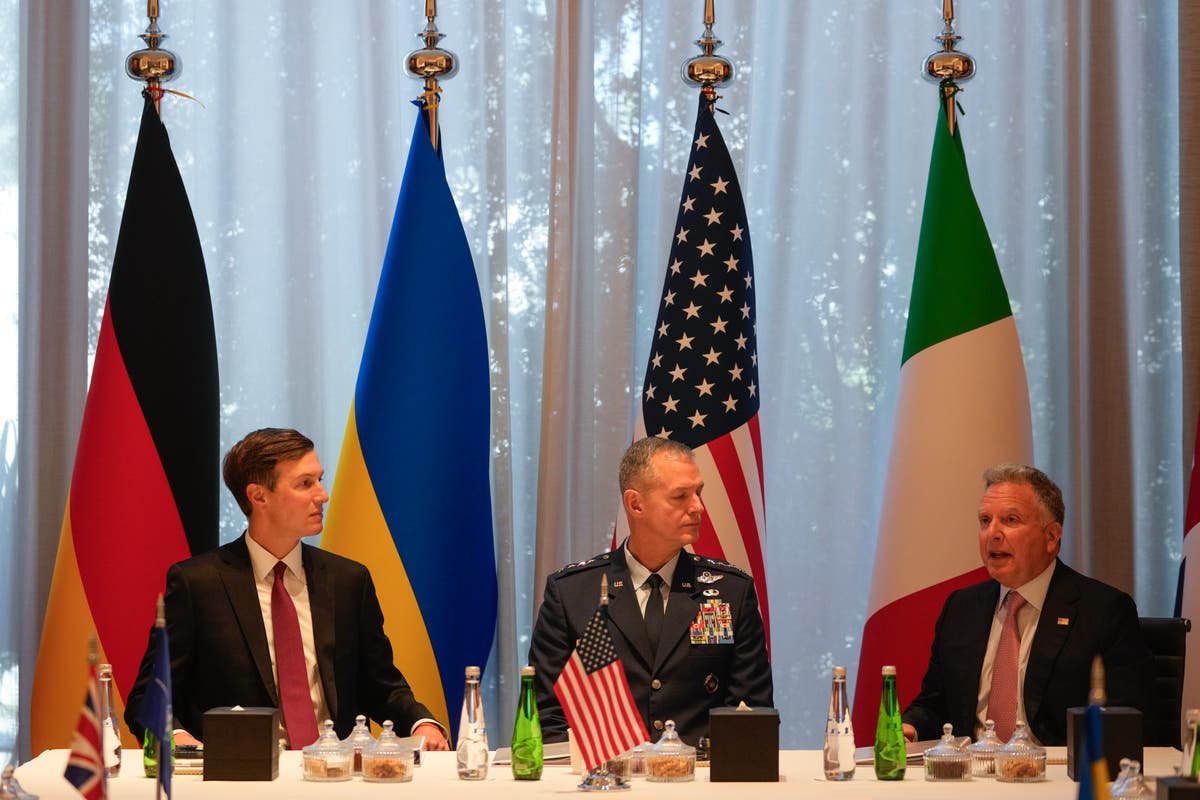
The people at the table matter. The United States was represented by special envoy Steve Witkoff and Jared Kushner, the president's son-in-law, acting as mediators. Ukraine's delegation was led by Rustem Umerov, head of the Foreign Intelligence Service, with presidential office chief Kyrylo Budanov also in the delegation. Russia's delegation was led by presidential aide Vladimir Medinsky, who has headed Moscow's team since the first direct talks in Istanbul in March 2022.
The order of the day also matters. Umerov said on social media that the day began with a meeting between the Ukrainian team, the United States envoys and representatives of the United Kingdom, France, Germany, Italy, NATO and the European Commission, and only then moved to the trilateral format of Ukraine, the United States and Russia. Europe was therefore present and coordinated first, but did not enter the trilateral room itself.
Question one: people first, prisoners and taken children
President Volodymyr Zelenskyy said on X on November 10, after receiving a report from his negotiating team, that day one addressed humanitarian steps, the release of prisoners, security guarantees for Ukraine, and the need for de-escalation measures and tools to block any recurrence of the war. He called the release of prisoners a priority, and the discussions also covered the return of Ukrainian children.
A prisoner exchange was the only topic that came close to a concrete outcome, and precision matters here. Ukrainska Pravda and Interfax-Ukraine, citing sources in Ukraine delegation, reported that the sides had agreed to carry out a large exchange in the near future. By the end of day one, no side had publicly confirmed that report, and no official numbers or date had been released.
Other reporting said Zelenskyy mentioned that a scale of 1,000 for 1,000, possibly 1,500 for 1,500, had been discussed. Our label for that figure is explicit: it is a scale said to have been discussed, not a signed exchange agreement, and it carries no execution date. It should not be read as an achieved result.
The topic came first for a practical reason. UAE figures cited for the October 23 mediated exchange put that swap at 270 people from each side, bringing the total released through UAE mediation to 8,537. Prisoner exchanges are among the few forms of cooperation in this war that have repeatedly been carried out, and they carry the lowest trust cost at the table.
Question two: security guarantees, one phrase read two ways
The White House set the focus before the talks: the two-day session would centre on security guarantees. Zelenskyy said day one discussed in detail the content of guarantees for Ukraine and the basis for their long-term functioning, stressing the need for real tools to prevent a repeat of the war. Umerov listed Kyiv priorities as ending hostilities, reliable postwar guarantees, economic recovery and humanitarian measures.
Russia reads the sequence in reverse. Foreign Minister Sergei Lavrov was reported as saying the United States initiated talks would focus on elements of a regional security framework, and that security guarantees for Ukraine and Russia should take effect only after a full and comprehensive settlement of the conflict.
Sequence is not a word game. The Ukrainian and European order is ceasefire first, guarantees second, and a broader arrangement only after that. The Russian order is a comprehensive settlement first, with guarantees to follow. Behind the two orders are two calculations about battlefield time: one side fears that talking about a grand framework before a ceasefire will push the ceasefire itself off the agenda, while the other is unwilling to surrender the card of a ceasefire while military pressure remains.
Washington is trying to widen the question further. Kushner said in opening remarks that the goal was to create a new framework and a new understanding, and wrote on X that he and Witkoff were working on a negotiated solution that can deliver lasting peace and create the conditions for a sovereign, secure and prosperous Ukraine within a more stable European security environment. In plain language, the United States wants to link ending this war to the future security arrangements of Europe as a whole, not only to a ceasefire line inside Ukraine.
Question three: territory, unspoken at the table and unavoidable beneath it
Territory was not the word placed at the centre of the public agenda on day one, but it is the hard constraint behind every statement.
The Associated Press reported that President Vladimir Putin wants Ukraine to pull its troops back from Donetsk, Luhansk, Zaporizhzhia and Kherson, the four regions Moscow annexed in September 2022 but has never fully captured. Zelenskyy, visiting Denmark on Tuesday, rejected demands to voluntarily cede territory that Russia has not taken on the battlefield.
Control of Donetsk is the most concrete point of deadlock. Moscow wants a Ukrainian withdrawal from the Donbas areas it claims, while Kyiv refuses to trade land for an arrangement that cannot guarantee the war will not resume. A briefing style report on the morning of November 11 also mentioned a reported United States idea to redraw the boundaries of Donetsk and Luhansk, allowing Russia to claim the full Donbas on paper while Ukraine retained the cities it still holds. Our label is explicit: that idea currently rests only on second hand briefing summaries, with no formal text or public confirmation from any party. It can be recorded only as a reported idea and speculation, not as a formal United States proposal.
Le Monde headlined its assessment as talks making little progress. It noted Russian resistance to the ceasefire demanded by Ukraine and its allies, Russian silence at the end of day one, and Zelenskyy welcome for a constructive discussion despite the absence of tangible results. That cooler temperature should be read alongside the warmer public wording from Kyiv and Washington.
Europe outside the room: coordinated first, admission undecided
Europe's role on day one can be summed up in one line: present, but not in the room.
Before the trilateral session, the United States and Ukraine met representatives of the United Kingdom, France, Germany, Italy, NATO and the European Commission. Representatives of the three European powers also travelled to Abu Dhabi to speak to the American mediators. Le Monde reported that Europe feared further concessions to the Kremlin in pursuit of a hasty settlement, and that Europeans restated their order clearly to Witkoff and Kushner: a ceasefire first, then security guarantees for Ukraine to prevent new aggression, and only after that a broader plan.
Europe other concern was a shift in American language. Le Monde reported that Kushner stated in Abu Dhabi that Europe's security was a United States responsibility, and that the envoys spoke of defining a new European security architecture that would correct previous shortcomings to better accommodate Russia. Europeans worried that in that language the demand for a ceasefire would be pushed aside and Ukraine's position threatened. A joint European American statement on Tuesday put shared red lines in writing, expressing support for a strong postwar European security architecture and arrangements while insisting on respect for Ukraine's sovereignty and territorial integrity.
Russia's rejection of a European seat was public. Kremlin spokesman Dmitry Peskov said on November 9 that Europe had its own channels of communication with Kyiv and Washington, and that the Abu Dhabi format remained a trilateral negotiation between Russia and Ukraine with the United States as mediator. Le Monde also quoted Lavrov in Moscow saying, let the Europeans stay at the hotel. The dispute over format is now plain: Russia insists on three parties only, Europe insists it must be present for any arrangement about European security, and the United States has left a door marked later.
What Rubio said in Paris
Secretary of State Marco Rubio was not in Abu Dhabi. He spoke to reporters on November 9 in Paris, on the sidelines of the G7 foreign ministers meeting.
Le Monde quoted Rubio as saying the United States seemed to be the only country in the world, and the president the only leader, that could get the Russians and the Ukrainians to the same table. He acknowledged the difficulty of the task and the need to try to be creative. Multiple outlets reported that Rubio called the Abu Dhabi meeting very productive while cautioning that there was obviously a lot of work to be done.
On a European seat, his wording left the door open. He was reported as saying Washington did not oppose eventual European involvement in direct negotiations, that Europe was part of solving the problem for the long term, but that the time was not yet right. He also said some progress had been made on the shape of postwar security guarantees, with nothing finalised. German Foreign Minister Johann Wadephul, who met Rubio separately in Paris, stressed that Europe must have a place in the negotiations.
Taken together, that is the current American posture: let the three parties sketch the hardest questions first, postpone a formal European seat, but do not exclude Europe from the final arrangement. Whether that posture can reassure Kyiv, Moscow and Europe at the same time is what day two will keep testing.
GSM observation: one meeting, three clocks
The following is GSM observation and interpretation based on the verified facts above. Speculation is labelled as such.
The first clock is on the battlefield. The Associated Press reported that long range strikes continued around the talks and that the two armies remained largely deadlocked on the front line. Every day of delay at the table carries a cost in the field, which is the practical reason behind the Ukrainian and European ceasefire first order.
The second clock is in Washington. Le Monde reported that President Trump, after a stinging defeat in the November 3 midterm elections, had made resolving the conflict a priority, with a new Congress due to take office in January. We label the following as background speculation: American mediators may want demonstrable progress before that political window narrows, and that urgency could push compromise forward while also feeding European fears of a rushed deal. Both possibilities remain open, and no evidence currently excludes either.
The third clock is humanitarian. An exchange is the one thing that can be carried out without first settling territory or a security architecture. If an exchange on the order of a thousand people actually takes place on day two or in the following days, it will be the first verifiable result of this round and the hardest test of whether this table works. If even the exchange stays at the stage of a reported agreement, the value of adjectives such as constructive and very productive will have to be discounted.
Our reading is that the real result of day one was not any agreement, but a reordering of the agenda: humanitarian steps were moved to the front as a test, security guarantees were confirmed as the main course, territory was left beneath the table for now, and a European security architecture was placed on the table by Washington as a larger frame. That ordering lets the talks continue. It does not make any of the hard questions smaller.
What to watch next
Day two on November 11 offers three verifiable tests.
First, whether the reported prisoner exchange receives formal confirmation from any side, including numbers, categories of people and an approximate timing. Without confirmation, it remains a report.
Second, whether security guarantees produce anything in writing, even a statement of principles. The Tuesday joint European American statement already affirmed sovereignty and territorial integrity. If day two adds no new text, guarantees remain an oral outline.
Third, whether Europe role moves even one step from the coordination meeting toward the negotiating room. Rubio left the door ajar and Russia's refusal is on the record. Whether that opening widens or closes on day two will decide the format of the next round.
In summary
Day one in Abu Dhabi lasted more than four hours. It produced reasons to keep talking, and no answer on ending the war.
For the general reader, three sentences are enough. First, the sides sat down together for the first time in nine months, and Washington counts that alone as productive. Second, the outcome most likely to land first is people going home, but by the end of day one it had not been officially confirmed. Third, of the two questions that will decide whether this war can end, territory was left beneath the table, and on security guarantees the sides have not even agreed on which step comes first.
Day two will not end this war. At most, it can move one question from adjectives to numbers and dates. GSM will judge what follows by that standard, and by formal texts rather than by any side's statements.
(Source: UAE Ministry of Foreign Affairs, Associated Press, Le Monde)
Source: UAE Ministry of Foreign Affairs, Associated Press, Le Monde
Published by GSM · USA (original Chinese edition)
Photo: 11月10日阿布扎比三方会谈前协调会:库什纳(左)、北约欧洲盟军最高司令格林克维奇(中)与美国特使威特科夫(右),美联社池照片(Altaf Qadri/AP),经 Press Association 图库发布
- 2026-11-09The Eve in Abu Dhabi: Two Deadlocks in One City — U.S.-Brokered Ukraine Talks Open on November 10 as a Comprehensive U.S.-Iran Settlement Remains Out of Reach
- 2026-11-09U.S. Officials 'Cautiously Optimistic' Ahead of Abu Dhabi Trilateral Talks: Both Sides Showing Flexibility, Post-War Security Guarantees the Focus
- 2026-11-10Russia-U.S.-Ukraine Talks Open in Abu Dhabi: Kyiv Says It Met U.S. and European Partners First Before the Trilateral Session
- 2026-11-10Abu Dhabi Trilateral Talks End First Day After Nearly Four Hours; Discussions Continue on Nov. 11
- 2026-11-10On the Eve of the Abu Dhabi Talks, Rubio Says on November 9 That Postwar Security Guarantees for Ukraine Must Also Be Acceptable to Russia, With No Final Plan Settled
- 2026-11-11After Four and a Half Hours, Three Questions Remain: Progress and Deadlock on Day One in Abu DhabiThis story