America's Government Has Been Shut for 41 Days: Why It Closed, How It Reopens, and What Comes Next
First, what this story actually is
The news at the center of this special report is simple to state: the United States federal government has been shut down for 41 days.
This is not a metaphor, and no single agency is on holiday. The federal government spends money only when Congress passes funding legislation. When that legislation fails, the government has no legal authority to keep spending, so it closes: most agencies stop their daily operations, and only core posts tied to life and property stay at work. This shutdown began on October 1. Today, November 10, is its 41st day, making it the longest government shutdown in American history.
If you are hearing about it only now, you are in plentiful company, and that is part of the story. A shutdown does not land like an earthquake or a hurricane. The armed services, the border, the mail and Social Security checks keep moving. What stops is the daily operation of a vast number of agencies, and the paychecks of the people who staff them. The pain lands first on federal employees, on families who rely on food assistance, and on air travelers. If you are in none of those groups, you can live next door to this story for weeks without feeling it. It has led the news in English-language media for weeks, yet it has barely circulated in Chinese-language information circles, because appropriations procedure is not lively material and does not travel well in group chats. Many Chinese Americans first learned the government was closed when they saw waves of flight cancellations.
But the story is not far from Chinese American life. Thanksgiving travel runs through the airports now cutting flights. Health insurance for many families runs through the federal marketplace at the center of the dispute. Benefits, documents and taxes run through federal agencies. And Chinese Americans who work for the federal government or its contractors have gone more than a month without a paycheck. What follows strings the 41 days into one line.
How it started: the money never passed, and the sticking point was health care
Start with the mechanism. The federal fiscal year begins every October 1. The money each department may spend in the new year has to be enacted by Congress and signed by the President. This year, October 1 arrived with no deal, which meant that in law the government's purse was empty, and the shutdown began.
There was exactly one sticking point: health care. During the pandemic years, the United States added enhanced subsidies to Affordable Care Act coverage, lowering premiums for people who buy insurance through the marketplaces. Those subsidies expire on December 31 of this year. Senate Democrats set a condition: write an extension of the subsidies into the funding package, or they would not vote for it. Republicans answered that the government should be reopened first and health care negotiated separately.
Democrats could enforce that condition because moving legislation through the Senate takes 60 votes, and Republicans hold only 53 seats. A stopgap built on the funding bill the House had already passed failed in the Senate 14 times. For six weeks, Washington stayed exactly there, each side waiting for the other to move first.
How the cost grew, week by week
The first cost to land was federal paychecks. About 1.4 million federal employees were affected by the shutdown: some were sent home on furlough, and others, in core posts such as air traffic control, airport security and law enforcement, kept working without pay, with back pay owed only once the government reopens. A month without income does not pause anyone's mortgage or credit card bill.
The second cost was grocery money for tens of millions. The Supplemental Nutrition Assistance Program, known as SNAP or food stamps, serves about 42 million lower-income Americans. In late October, the Department of Agriculture warned that November benefits could not be issued in full on schedule. In November, benefits went out late or in part, while the federal government and the states fought in court over whether emergency funds could be used to pay full benefits, and the Supreme Court issued a temporary stay in the dispute. For families who buy food with this money, the shutdown was not Washington news. It was a refrigerator problem.
The third cost was in the sky. About 13,000 air traffic controllers and about 50,000 airport security screeners have worked without pay since October 1, in a control system that was already short staffed: by the Federal Aviation Administration's own figures, it was roughly 3,500 controllers below target before the shutdown began. On November 5, Transportation Secretary Sean Duffy and the FAA announced flight reductions: starting November 7, domestic flights at 40 of the nation's busiest airports would be cut in stages, from 4 percent at first to 10 percent by November 14. On the first day, more than 1,000 flights were canceled nationwide. By Sunday, November 8, cancellations passed 2,100 in a single day, with more than 7,000 flights delayed. With the Thanksgiving travel peak approaching, the Secretary warned publicly that air traffic could slow to a pace the system could not bear.
In early November, the shutdown passed the previous record of 35 days, set in 2018 and 2019. The record itself says something: both sides believed the other would feel the pain first and yield, and both sides misjudged.
The weekend it broke: two votes of 60 to 40
The turn came this past weekend. Senate Majority Leader John Thune negotiated a text with Democratic Senators Jeanne Shaheen and Maggie Hassan, independent Senator Angus King, Appropriations Chair Susan Collins, and White House negotiators.
On Sunday evening, November 8, the Senate first voted 60 to 40 on the procedural step that ended the filibuster, and the ice broke. Late on Monday, November 9, the Senate completed final passage by the same 60 to 40, and the bill went to the House.
The 60 votes were assembled from 52 Republicans and eight members of the Democratic caucus: Dick Durbin of Illinois, John Fetterman of Pennsylvania, Maggie Hassan and Jeanne Shaheen of New Hampshire, Tim Kaine of Virginia, Catherine Cortez Masto and Jacky Rosen of Nevada, and independent Angus King of Maine. The only Republican no vote was Rand Paul of Kentucky. Democratic leader Chuck Schumer voted no. In plain terms, this was not a settlement negotiated by the two party leaderships. A group of centrist senators assembled 60 votes first and turned their text into the fact on the ground.
The bill is now in the House, which has been out of session since September 19. Speaker Mike Johnson has told members to return to Washington, the Rules Committee advanced the bill overnight, and a full House vote is expected on Wednesday evening.
Inside the deal: how long the money runs, who is covered, and what was left out
First, the stopgap. Most federal agencies are funded through January 30, 2027, giving Congress several months to negotiate the remaining full-year spending bills.
Second, three full-year bills. The Department of Agriculture and the Food and Drug Administration, the Department of Veterans Affairs and military construction, and the legislative branch receive full-year funding through September 30, 2027, out of reach of the next stopgap fight.
Third, food assistance exits the table. SNAP is funded in full through the end of the fiscal year, September 30, 2027. The benefits of about 42 million people no longer hang on shutdown bargaining.
Fourth, the workforce terms. All back pay withheld during the shutdown will be paid. Employees fired through reductions in force during the shutdown are reinstated. And no new reductions in force may be started before January 30, 2027. The reversal of the firings is the most concrete protection federal employees carry out of this deal.
Fifth, and most important, health care was not settled. The package contains no extension of the subsidies. What Democrats received is a commitment from Thune that the Senate will hold a standalone vote on extending the subsidies no later than the second week of December. The commitment guarantees a vote, not a result, and it does not bind the House. The very issue the shutdown was fought over has been carried, untouched, into December.
The next three steps
Step one is this week. The House votes on Wednesday evening. If the bill passes and is signed by the President, the government begins reopening the same day. But reopening is not the same as returning to normal: flight schedules have to be rebuilt, state benefit systems have to be reloaded, and agency backlogs have to be cleared. By past experience that takes days or longer, and whether Thanksgiving travel fully normalizes depends on the speed of that recovery.
Step two is in December. The Senate votes on the subsidy extension by the second week of December, and the subsidies themselves expire on December 31. If no extension passes, families who buy coverage through the marketplaces and rely on the subsidies will see materially different premiums for next year, with notices arriving before year end. The annual open enrollment period for marketplace coverage is under way right now, which makes this step a household budget question for many Chinese American families. This report sets out the dates; the conclusion waits on the vote.
Step three is January 30, 2027, when the stopgap funding expires. If the remaining full-year bills are still unfinished then, another shutdown is procedurally possible. But the terrain will have changed: SNAP already holds full-year funding and would not be interrupted in the first month, and federal employees are protected by the bar on reductions in force. The two sharpest pressure points of this round have been dismantled in advance by this very deal.
GSM's reading: how close this story actually is to overseas Chinese readers
The following is this newsroom's analysis, based on the facts above. Speculation is marked as such.
On travel: the Thanksgiving holiday is the densest travel period of the American year, and Chinese American family visits and student trips are often booked months ahead. The flight reductions apply to domestic services, not international ones, but a broken domestic connection can unravel an entire itinerary (analysis). Wednesday's House vote and the speed of recovery afterward are the two variables that decide how smooth Thanksgiving travel will be, and this newsroom will keep following both.
On premiums: among those who buy coverage through the marketplaces are many self-employed people, small business owners and early retirees, including many Chinese Americans, and the subsidies matter most to exactly this group. If December's vote fails (speculation), the premium increases this group faces next year could be substantial, though the size varies by state, income and age, and it is too early to put a responsible number on it. What is certain is the calendar: the vote by the second week of December and the December 31 expiry are the two dates that coverage decisions cannot avoid.
On federal services: by the pattern of past shutdowns, services funded mainly by application fees, such as immigration and consular processing, are relatively insulated and largely keep running, while backlogs and delays at passport, benefits, tax and other federal counters are real and take time to clear after reopening (analysis). Readers who filed applications or booked appointments during the past 41 days should leave room in their expectations for processing time.
One more layer of the bill is easy to miss. Federal employees are protected by the back pay terms of this deal, but employees of government contractors are not covered by back pay, and income lost during a contractor's shutdown is usually gone for good. A considerable number of Chinese Americans work for federal agencies and their contractors. That loss will appear in no official statistic, but it lands on household ledgers all the same (analysis).
The last observation concerns the silence itself. An event that touched tens of millions of people, lasted 41 days and rewrote an American record was nearly inaudible in Chinese-language information circles, to the point that readers of this newsroom, and people in it, learned of it late. The English-language reporting existed in abundance. What was missing was anyone arranging it into an order a Chinese reader can use: why it closed, who it hurt, how it opens, and what happens next (analysis). Procedural news is not glamorous, but it is precisely the kind that decides airfares, insurance premiums and paychecks. What overseas Chinese readers lack has never been volume of information. It is someone picking out the part that concerns them and stringing it into a line. That is the reason this special report exists.
In summary
One sentence for the whole arc: the government closed because Congress did not pass the money, and the sticking point was health care subsidies. It is opening because a group of centrist senators assembled 60 votes to reopen first and argue about health care in December.
Three dates are worth remembering. Wednesday evening, the House votes. By the second week of December, the Senate votes on the subsidies. And on January 30, 2027, the next funding cliff arrives. The 41 days are a complete story. The ledger behind them is not closed yet.
Source: 美联社
Published by GSM · USA (original Chinese edition)
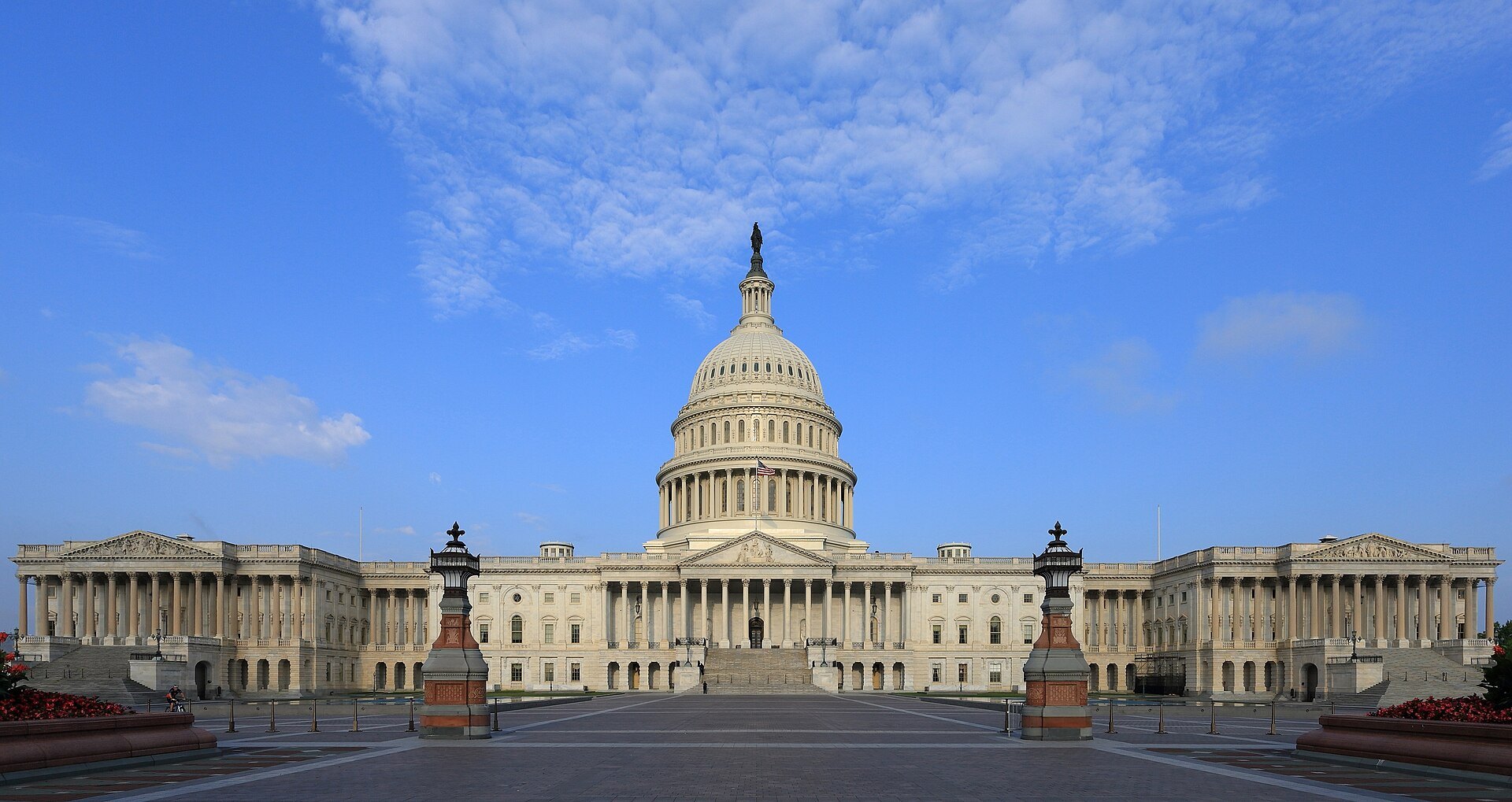
Photo: 美国国会大厦东侧(Wikipedia/Wikimedia Commons)
- 2026-11-05Shutdown Hits Record Day 36: FAA to Cut Flights at 40 Busy Airports
- 2026-11-06Shutdown Day 37: FAA Flight Cuts Take Effect November 7, Starting at 4% at 40 Busy Airports
- 2026-11-06Senate Passes Homeland Security Budget Plan 50-48, With $70 Billion for Immigration Enforcement and Border Patrol
- 2026-11-08Senate Clears 60-40 Procedural Vote on Sunday, Raising Hopes of Ending the Government Shutdown
- 2026-11-09U.S. Airlines' Daily Cancellations Top 2,100 for First Time Since Shutdown Cuts Began
- 2026-11-09FAA Data on November 9: Newark Liberty Departure Delays of 46 Minutes to One Hour and Rising, While Boston and JFK Stay at 15 Minutes or Less
- 2026-11-10Senate Passes Funding Deal 60-40 to End 41-Day Shutdown; House to Vote Wednesday
- 2026-11-10Fourth Day of Shutdown Flight Cuts: More Than 2,200 Flights Cancelled on Monday as the FAA Expands Restrictions on Private Flights
- 2026-11-10Sixty Votes and the Government Is Still Closed: What the Deal on the Longest Shutdown Settled, and What It Pushed to December
- 2026-11-10America's Government Has Been Shut for 41 Days: Why It Closed, How It Reopens, and What Comes NextThis story