
Murine Splenic CD45-Positive Erythroid Cells Carry Antigen-Presenting Cell Transcriptomic Signature, With MHC Class II Module Comparable to Monocytes, Published in Scientific Reports on November 13
Scientific Reports published on November 13 a mouse immunology study characterizing the immune-associated molecular features of CD45-positive erythroid cells in the adult spleen. These cells are an erythroid population described in mice and humans, but their molecular characteristics in the adult spleen had remained incompletely defined. The paper was received on June 24, 2026, accepted on October 29, 2026 and published on November 13, with digital object identifier 10.1038/s41598-026-78959-4. Authors include Kirill Nazarov, Saleh Alrhmoun and Olga Perik-Zavodskaia.
The researchers combined cytometric, transcriptomic, spatial and epigenetic approaches. Flow cytometry resolved CD45-positive and CD45-negative Ter119-positive erythroid cells and showed that a coordinated panel of immunoregulatory molecules, including Galectin-3, Galectin-9, CXCR4, PD-L1 and the cytokines MCP-1 and TGF-β1, was expressed by the CD45-positive fraction but was largely absent from CD45-negative erythroid cells.
Single-cell RNA sequencing revealed immune-associated transcriptional programs in CD45-positive erythroid cells, including MHC class II antigen presentation, antimicrobial and immunoregulatory genes. Expression of the MHC class II-associated module reached levels comparable to those observed in monocytes, and computational analysis predicted potential MHC-II-associated communication with T-cell populations.
Spatial transcriptomics localized CD45-positive erythroid cells predominantly to the splenic red pulp. The team concluded that the cells show a reproducible immune-associated, antigen-presenting-cell-like gene signature.
The work was supported by the Russian Science Foundation, project No. 25-25-00339. The study examined cells from mouse spleens, and its conclusions are a molecular characterization at the basic research level. Whether the same features are present in human erythroid cells was not tested in the paper.
Source: Scientific
Published by GSM · USA (original Chinese edition)
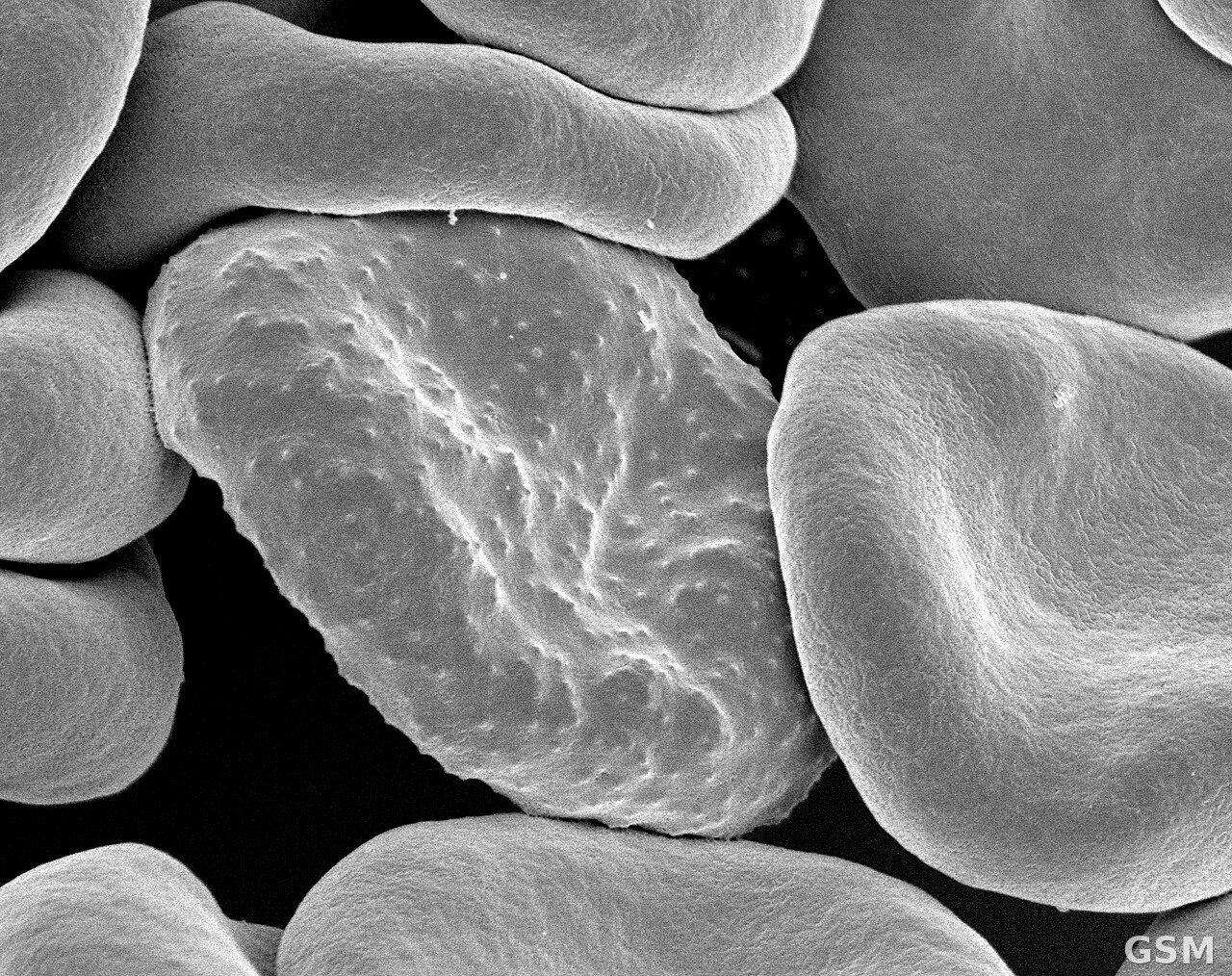
Photo: 图:红细胞扫描电子显微镜图像。作者与授权:Rick Fairhurst、Jordan Zuspann,美国国家过敏与传染病研究所(NIAID),公共领域,维基共享资源。 / Photo: Scanning electron micrograph of red blood cells. Credit: Rick Fairhurst and Jordan Zuspann, National Institute of Allergy and Infectious Diseases (NIAID), public domain, via Wikimedia Commons.
 Yamaha to Acquire London-Based Disguise: All Shares of Its Parent to Be Purchased, With Closing Expected in December 2026, Announced November 132026-11-13
 Axiom's AxEMU Moon Spacesuit Completes Critical Design Review, the First for a NASA EVA Suit in Over 40 Years, Moving into Production and Qualification Testing2026-11-13