Nature Communications Paper on November 15: EVGlyco Platform Identifies 8,435 Seminal Plasma Vesicle Glycopeptides, and a Two-Marker Panel Distinguishes Azoospermia Types
A team from Nanjing Medical University, Southeast University and Peking University Third Hospital, among others, published a paper on November 15 in Nature Communications reporting EVGlyco, a low-input workflow for site-specific N-glycan analysis of extracellular vesicle proteins from seminal plasma, applied to the molecular typing of azoospermia.
Azoospermia, a severe form of male infertility, lacks non-invasive diagnostic tools for molecular typing. Glycosylation of extracellular vesicles has diagnostic potential in various diseases, but high-sensitivity analysis of vesicle site-specific N-glycans from microliter biofluids has remained challenging.
EVGlyco is an integrated low-input workflow applicable to seven distinct human biofluids. In seminal plasma from the study's discovery cohort, the workflow identified 8,435 extracellular vesicle protein site-specific N-glycans, yielding more intact N-glycopeptide identifications than existing approaches.
Targeted evaluation confirmed that a two-marker panel composed of MPO-N355-H6N2 and ACP3-N94-H5N4F1 distinguished obstructive azoospermia from nonobstructive azoospermia, and further separated nonobstructive subtypes.
The authors say the platform offers a non-invasive route to molecular typing of azoospermia. The work is at the method and discovery-cohort stage, and the marker panel still requires validation in larger clinical cohorts before routine testing.
Published by GSM · USA (original Chinese edition)
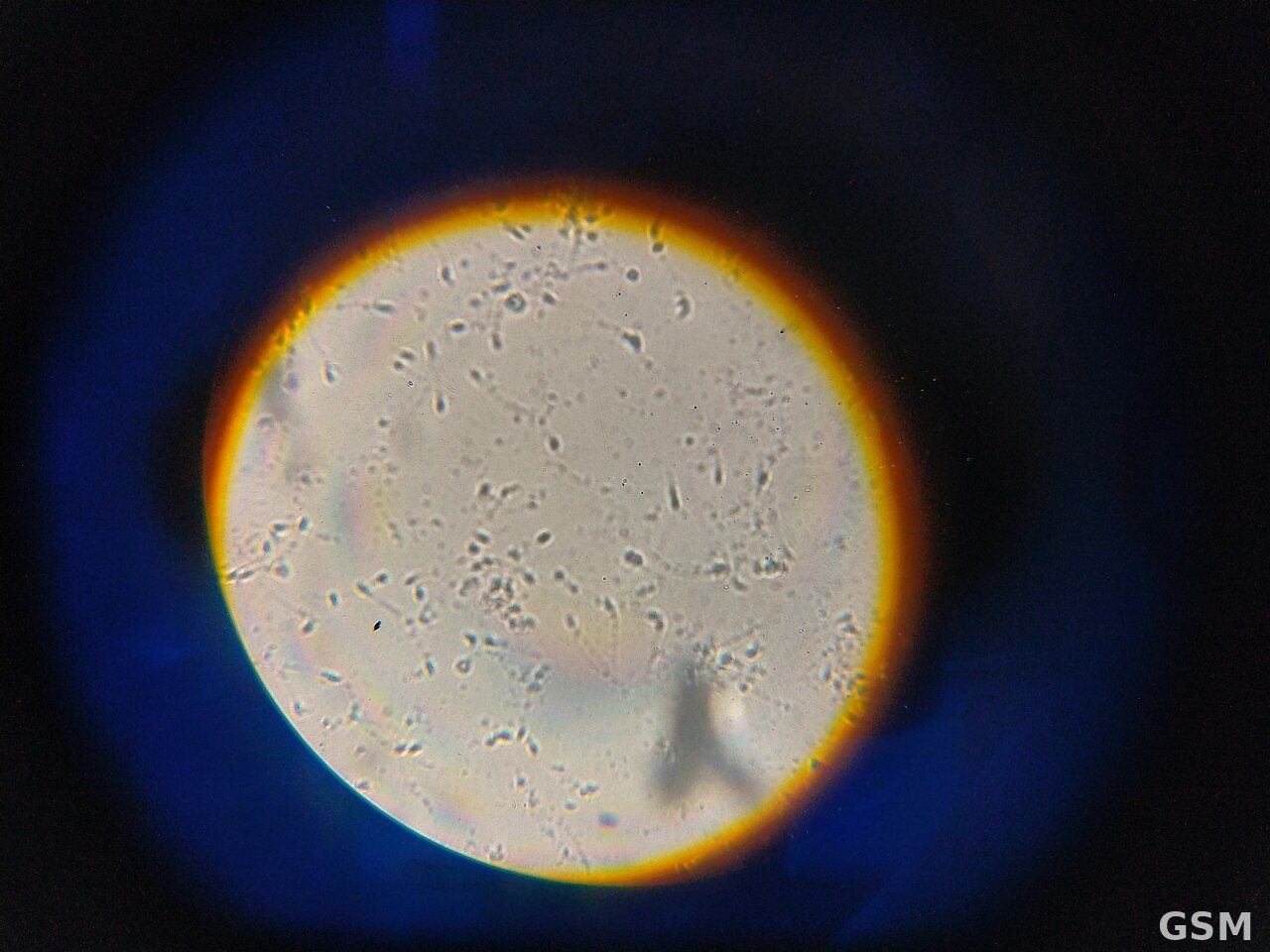
Photo: Wikimedia Commons, File:Human sperm under microscope.jpg — Author: Prof. Ideal. Licensing: CC0.