University of Tokyo and NTT Teach AI With Light, Slashing Computation
Today's AI calculates with electrical signals passing through vast numbers of transistors, using large amounts of electricity and generating heat. Light is very fast and can carry many signals at once, so researchers have long tried to calculate with light instead. A team at the University of Tokyo and NTT has now made progress on the learning side, in a study published in Nature Computational Science.
The researchers simplified both the learning method and the network design. Their training method, called SS-DFA (state-skipping direct feedback alignment), barely inspects the intermediate values inside the network and learns mainly from the final error; the network itself uses a simpler "single-map" architecture. The team tested the approach in computer simulations and on an optical device built around a 200-metre loop of optical fibre. The simplified design matched complex neural networks and in some tests outperformed them, while requiring far less computation; integrated into modern architectures, it cut computational resource needs by about 40 percent.
Associate Professor Kohei Nakajima of the University of Tokyo, who led the work, said the team combined the new training method with the simpler architecture into a single overall approach. The researchers caution that the method has not yet been tested on today's largest language or multimodal models, having been tried only in fairly basic neural networks, and that making the device smaller, more stable and mass-producible is still to come. Saving electricity is also a hoped-for benefit, not a proven result.
(Source: The University of Tokyo)
Source: The University of Tokyo
Published by GSM · USA (original Chinese edition)
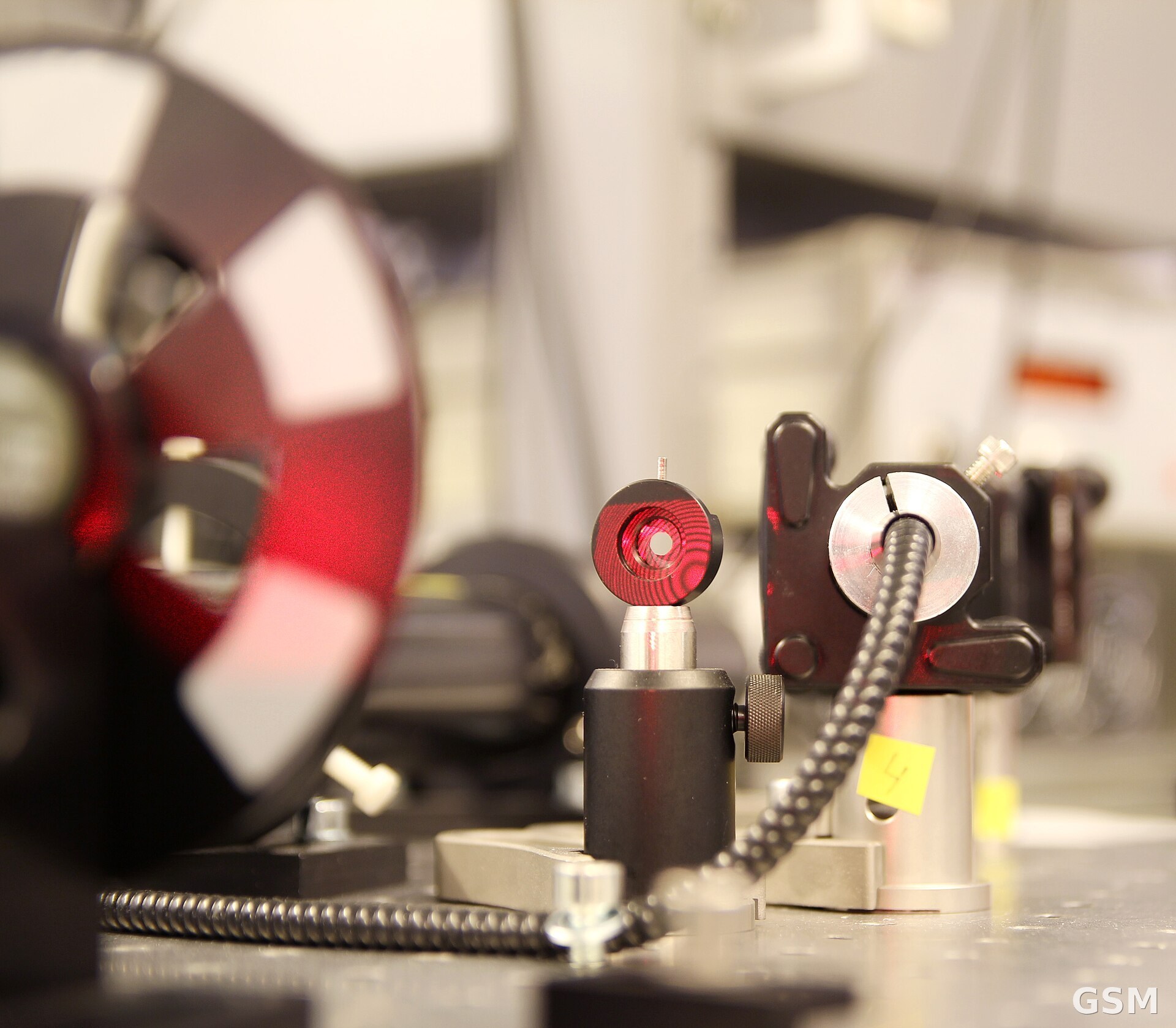
Photo: 图:传输激光的光纤(挪威科技大学激光物理实验室)。An optical fiber carrying a laser beam. (NTNU, Wikimedia Commons, CC BY 2.0)