Czechia: 296 Corded Ware Burials in Bohemia Show Inequality Emerging Gradually Over 400 Years, Copenhagen Study Finds
A University of Copenhagen archaeologist has developed a multi-proxy method called QuantWealth that uses evidence from graves to reconstruct social status, wealth display and inequality thousands of years ago, applying it to almost 300 graves dating back 4,000 to 5,000 years in present-day Bohemia, Czechia. The study was published in the Journal of Neolithic Archaeology and reported on November 14, 2026.
Main author Mikkel Nørtoft and Adam B. Rohrlach analysed 296 burials of the Corded Ware culture in Bohemia dating between approximately 2,900 and 2,300 B.C., comparing them with genetic ancestry, Y-chromosome paternal lineages, pathologies, age and gender. In the first roughly 400 years after steppe migrations reached the region, wealth differences were small and mostly age-related, status appears to have been achieved through life actions more than inheritance, and gender inequality was limited, Nørtoft said.
Between about 2,700 and 2,500 B.C., after a new lineage appeared, funerary competition intensified, with growing concentrations of prestige items and meat offerings, expanding exchange networks and increasing gender inequality. In the final phase, about 2,500 to 2,300 B.C., a few rich child graves appear — including a girl's grave at Čachovice, the richest among all Bohemian graves in the study, with an extremely rare copper neck ring — suggesting inherited wealth and more persistent inequality may have been emerging. More DNA data are needed to confirm the pattern at family level, the team said.
Source: University of Copenhagen
Published by GSM · USA (original Chinese edition)
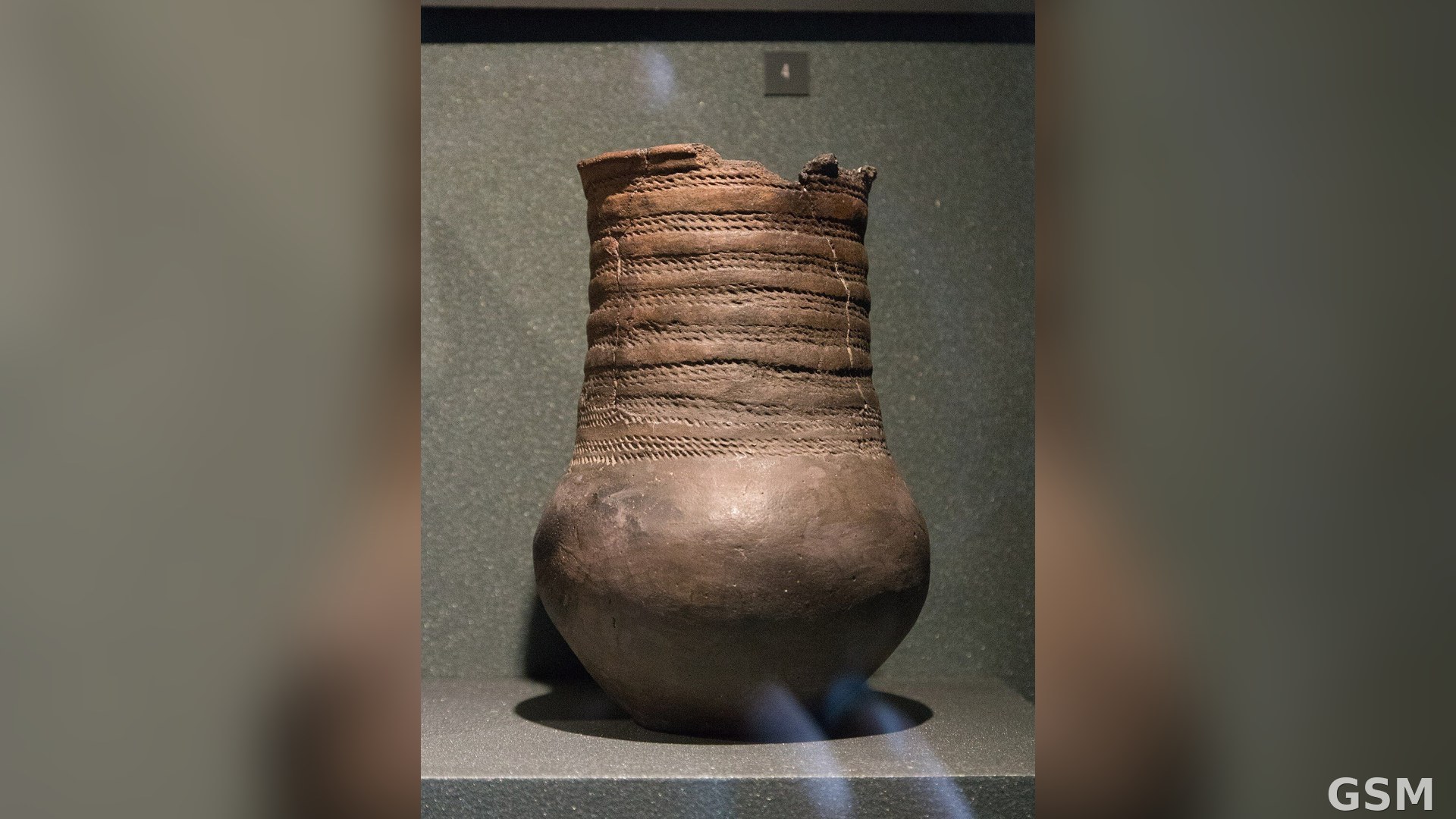
Photo: 图中是布拉格城市博物馆收藏的一件绳纹陶文化陶杯,这类随葬器物正是 QuantWealth 方法量化的财富证据之一。来源:Wikimedia Commons, File:Corded Ware culture beaker, Copper Age, City of Prague Museum, P0000486, 175584.jpg, Zde, CC BY-SA 4.0。