Japan: Digital Twin Achieves Predictive Control of Fusion Plasma on the LHD, Using Up to 10,000 CPU Cores on a Supercomputer 1,000 km Away
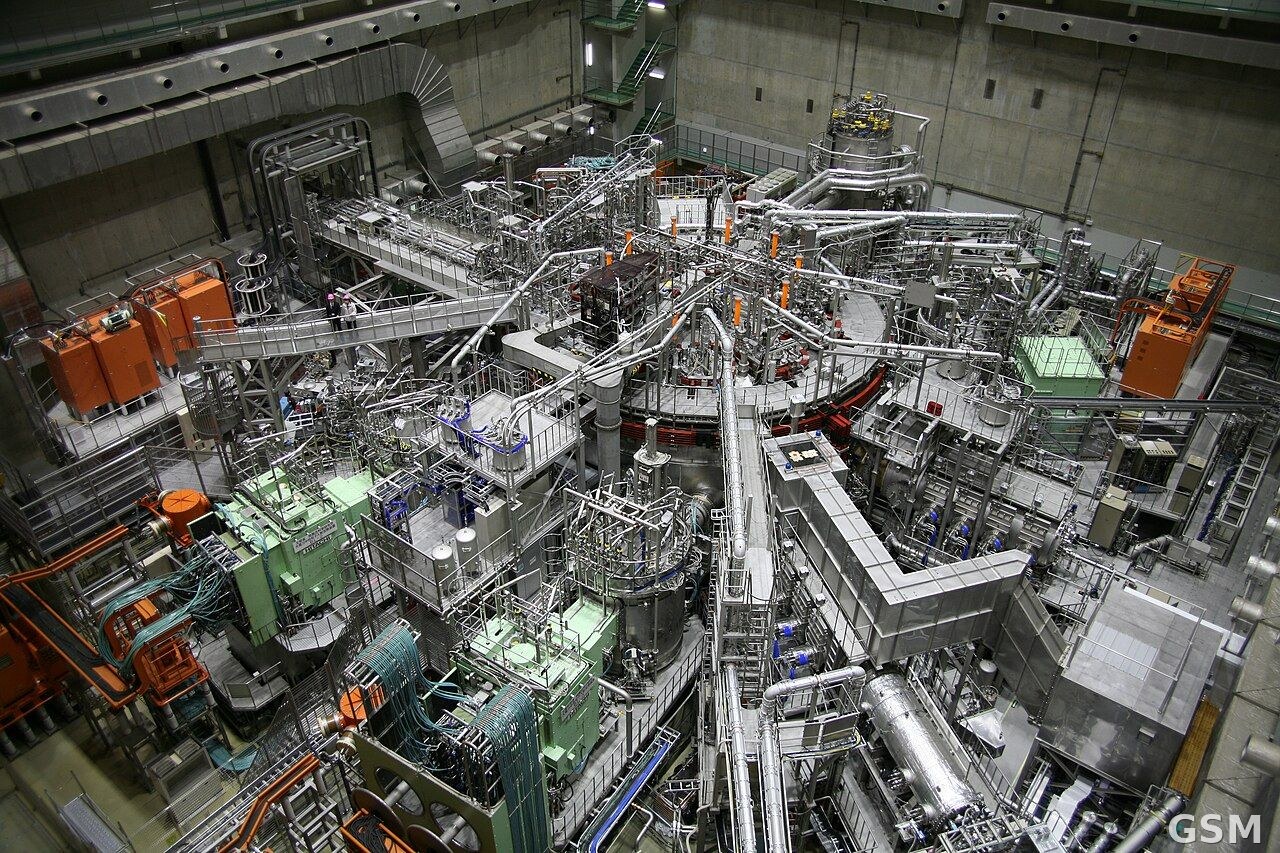
A team from Kyoto University, Japan's National Institute for Fusion Science and partner institutes demonstrated predictive control of a fusion plasma on the Large Helical Device using an adaptive digital-twin system, in a paper published in Scientific Reports on November 15, 2026, by Yuya Morishita, Sadayoshi Murakami and colleagues.
The system combines data assimilation with physics-based integrated modeling: the digital twin was dynamically synchronized with experimental observations, while heating and fueling inputs were optimized from its predictions to drive the plasma toward target states. Real-time adaptation and control estimation were performed on a remote supercomputer located approximately 1,000 km from the experimental device, using up to 10,000 CPU cores.
Multivariate control of electron density, electron temperature and ion temperature was demonstrated in five representative target cases, establishing a closed loop between an adaptive digital twin and a physical fusion plasma. The researchers said the result is the first demonstration of predictive control of a fusion plasma by a data-assimilation digital twin, and that the approach is expected to become fundamental to fusion reactor control.
Source: Kyoto University
Published by GSM · USA (original Chinese edition)
Photo: 图中是日本核融合科学研究所的大型螺旋装置(LHD),本研究的数字孪生预测控制正是在这台装置上完成的。来源:Wikimedia Commons, File:Large Helical Device 2014.jpg, National Institute for Fusion Science, CC BY-SA 4.0。