A study published in Nature and reported on November 14, 2026, analysed health data from more than 844,000 adults across four countries, in the first major test of a framework distinguishing clinical obesity — where excess body fat impairs organ function or everyday activities — from preclinical obesity, where excess fat is present but function remains intact.
Compared with the new framework, body mass index (BMI) both overestimated and underestimated obesity in certain groups, the researchers found. They estimated that just 22.7 to 31.3 percent of people who met the BMI criteria for obesity had clinical obesity, with the remainder classified as preclinical. Most people with preclinical obesity did not go on to develop clinical obesity over a decade, while those with clinical obesity faced a substantially higher risk of death.
The framework was first proposed in January 2025 by an international group in The Lancet Diabetes & Endocrinology, which recommended supplementing BMI with measures such as waist circumference and waist-to-height ratio and assessing whether fat is causing measurable organ dysfunction. Francesco Rubino, chair of metabolic and bariatric surgery at King's College London and a senior author, said at a press briefing that the work shows the BMI system is not accurate in identifying an individual's health status. Co-lead author An Pan, a professor of epidemiology at Huazhong University of Science and Technology, said more work is needed before the framework might be implemented in clinical practice.
Published by GSM · USA (original Chinese edition)
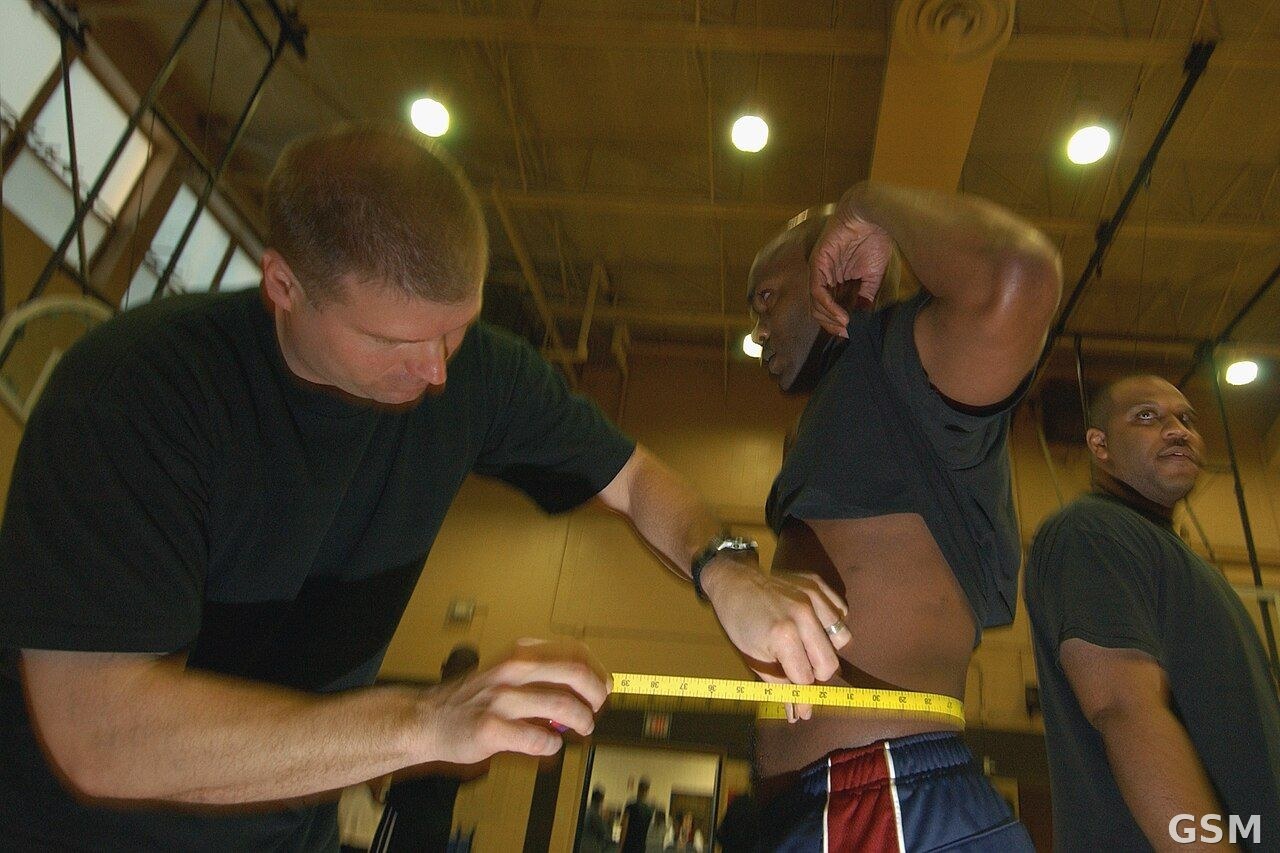
Photo: 图中是一名美军体能训练负责人为受测者测量腰围,腰围正是新肥胖框架建议用来补充BMI的指标之一。来源:Wikimedia Commons, File:US Air Force (USAF) Lieutenant (LT) Jason Wood, Physical Training Leader (PTL), 347th Communications Squadron (CS), Moody Air Force Base (AFB), Georgia (GA), measures the waist of a - DPLA - cf4b437ae7a07ff4e2f83e8647b3c22b.jpeg, Department of Defense. American Forces Information Service. Defense Visual Information Center. 1994, Public domain。