Bank and Government Impersonation by Phone and Text: FTC Data Show $948 Million in Phone-Channel Losses and a $1,500 Median Loss
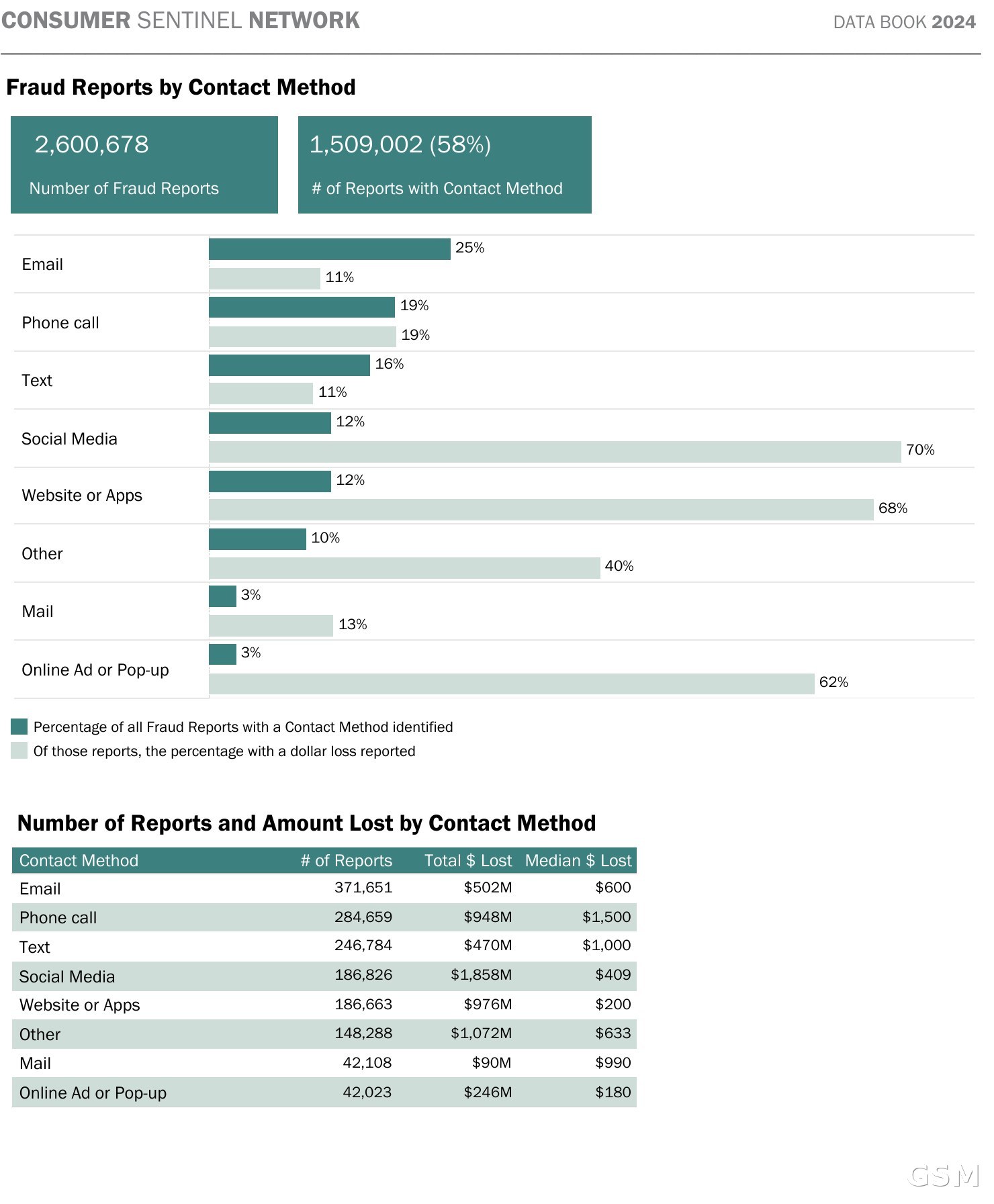
Among fraud reports that identified a contact method, the telephone was the costliest traditional channel in 2024: 284,659 reports and $948 million in losses, with a median loss of $1,500 — the highest of any contact method — according to the FTC's Consumer Sentinel Network Data Book 2024. Text messages accounted for 246,784 reports and $470 million in losses. Imposter scams caused $2.952 billion in total losses, of which government impersonation accounted for $789 million. GSM previously reported that a court permanently shut down a debt-relief scheme that impersonated banks and government agencies, with a judgment of $106.8 million.
The many faces of impersonation: banks, government, the IRS, delivery services
The FTC defines imposter scams to include criminals posing as the government, well-known businesses, or technical support experts. In 2024 the FTC also warned of a newer script: callers posing as officials claim the victim's mobile number is implicated in fraud, threaten to suspend the number, and demand a "security deposit." California's Department of Public Health has warned of callers posing as public health officials who cite prescription verification to harvest personal information, including fake police video calls. The IRS, for its part, released a tax education video, "Get Right With Your Taxes," explaining filing, refunds and fraud prevention for people reentering society. Postal and delivery text scams fall in the text channel, which saw 246,784 reports with a median loss of $1,000.
Caller ID can be faked
The FBI's warning to Chinese communities states plainly: a caller ID showing an official number does not make the call official, because numbers can be spoofed. The same warning prescribes the response: if a stranger calls accusing you of a crime or demanding payment, do not provide personal or financial information, do not send money, and break off contact immediately. If someone claiming to be a foreign authority contacts you, verify through your local FBI office, since foreign officials conducting lawful enforcement in the US must coordinate with US federal authorities.
Risk by payment method
FTC data show bank transfers or bank payments as the costliest payment method at $2.089 billion in 2024, followed by cryptocurrency at $1.417 billion. Payment apps accounted for $391 million, cash $308 million, wire transfers $287 million and gift cards $212 million. Any phone call or text demanding instant payment by bank transfer, cryptocurrency or gift card falls squarely into these high-loss payment methods.
Official red flags, consolidated
From FTC and FBI public guidance: caller ID can be spoofed and is not proof of identity; verify any claimed bank or government identity by calling back through officially published channels, never a number supplied in the call or text; any demand for immediate payment, gift cards or personal information under pretexts such as "your number is implicated," "your account is frozen" or "a package problem" should be cut off first and verified second. Report imposter scams at the FTC's ReportFraud site, and internet crime at the FBI Internet Crime Complaint Center (IC3).
Source: GSM·USA
Related: FTC Warns of Impostor Scam Claiming Phone Numbers Were Used for Fraud
Related: IRS Posts "Get Right With Your Taxes" Education Video for People Re-Entering Society
Source: GSM · USA (original Chinese edition)
Photo: FTC 数据图表:《消费者哨兵网络数据手册 2024》第 12 页「按联系方式统计的诈骗报告与损失」(美国联邦贸易委员会 FTC,公共领域)/ FTC data chart: "Fraud Reports by Contact Method," Consumer Sentinel Network Data Book 2024, p. 12 (U.S. Federal Trade Commission, public domain)
- 2026-10-25US Fraud Losses Reported in 2024 Hit $12.5 Billion: FTC and FBI Data Show Why Chinese Communities Are Being Targeted
- 2026-10-25The Four-Step Consulate and Police Impersonation Script: FBI Breaks Down the Intimidation Scam Targeting Chinese Residents in the US
- 2026-10-25Crypto Investment Fraud Cost $5.8 Billion in 2024: 76 Percent of Victims Notified by the FBI Did Not Know They Were Being Scammed
- 2026-10-25Business Email Compromise Cost $2.77 Billion in 2024: How Closing Wires Are Diverted and Deeds Are Forged
- 2026-10-25Bank and Government Impersonation by Phone and Text: FTC Data Show $948 Million in Phone-Channel Losses and a $1,500 Median LossThis story
- 2026-10-25Americans Over 60 Reported $4.885 Billion in Fraud Losses in 2024: 'Grandchild in Trouble,' Gift Cards and Cash Pickups Targeting Seniors
- 2026-10-25Online Shopping and Prize Scams Reported $783 Million in Losses in 2024: Small Individual Losses, Enormous Totals
- 2026-10-25Already Wired Money to a Scammer? IC3's Fraud Kill Chain Processed 3,020 Cases in 2024 With a 66 Percent Success Rate