When a Founder's Private Life Becomes a Public Company's Business
Sunday, November 8, 2026. In a memo to all employees, Nvidia chief executive Jensen Huang wrote: "I was unfaithful to my wife. My actions hurt her and our children. There is no excuse for what I did." The same day, Nvidia's board announced an independent investigation, overseen by a committee of independent directors and outside independent counsel, into whether Huang had been targeted by a foreign intelligence service. The board said it had no reason to believe that U.S. national security or Nvidia's secrets had been compromised, and that it retained "full confidence in Mr. Huang and his leadership team."
The storm began with a Financial Times report on November 6: the U.S. intelligence community believes Huang had a romantic relationship with Alice Huang, an executive at Singapore chip company Megaspeed, whom U.S. officials say is suspected of working for Chinese intelligence. The allegation has not been independently verified. The chairs of three House committees, Brian Mast of Foreign Affairs, John Moolenaar of the Select Committee on China and Rick Crawford of Intelligence, have written to Huang asking him to confirm by November 11 and to attend a closed-door briefing on November 18, the day after Nvidia reports quarterly earnings.
In Chinese technology and investment circles, Huang has long stood for steadiness: he met his wife Lori at university, the marriage has lasted 41 years, and the two names are routinely mentioned together in public. Before today, that marriage was part of his public image; after today, it is in a board statement and a congressional letter. Today is Sunday and U.S. markets are closed. The stock market's first real pricing of the matter comes at Monday's open, November 9.
Huang is not the first public-company boss to reach this point. Read through the public record, and a chief executive's exposed private life tends to end in one of three ways: a divorce settlement, a lost job, or an investigation that reaches regulators. Huang's is the newest case of the third kind, and a rare one in the public record: an allegation about a private relationship placed directly inside a framework of foreign intelligence and national security. What follows is drawn from public reporting, public court records and company statements.
1. The divorce settlements: property is divided; whether control moves depends on the paperwork
The marriage of Amazon founder Jeff Bezos and MacKenzie Scott began before Amazon existed. They married in 1993; Amazon was founded the following year. On January 9, 2019, they issued a joint statement announcing the end of their 25-year marriage. Soon after, the National Enquirer published reports about Bezos and former television anchor Lauren Sánchez. In February 2019, Bezos published an open letter on Medium accusing the tabloid's parent company, AMI, of attempted blackmail and extortion over private photographs, and published the company's emails in full. The confrontation became a landmark case in American media-ethics debates.
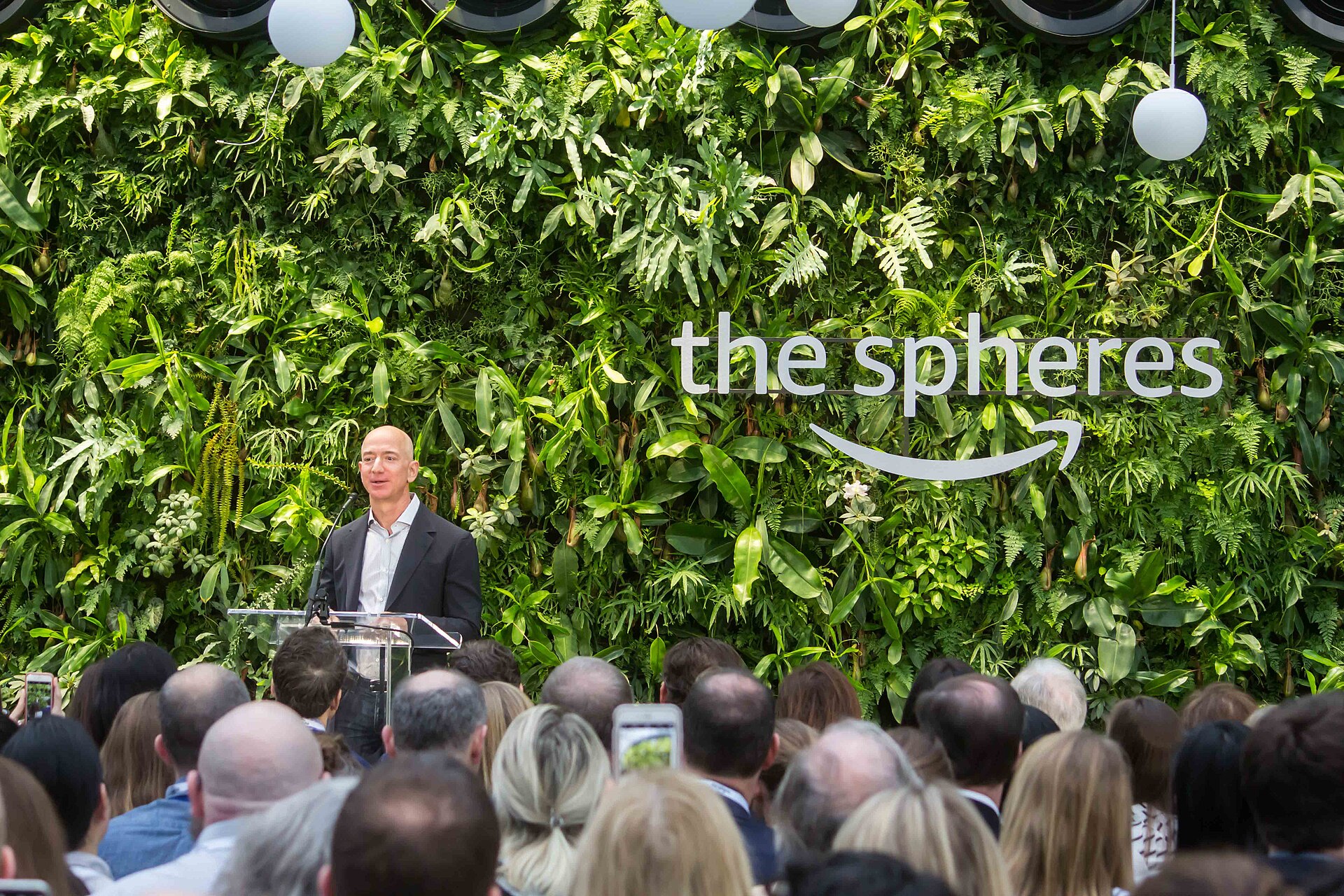
The financial terms were announced in April 2019: MacKenzie kept 25 percent of the couple's combined Amazon shares, about 19.7 million shares or roughly 4 percent of the company, and granted Bezos the voting rights over those shares (unless she later donated them to nonprofits or sold them on the open market); Bezos kept 75 percent of the shares and all interests in The Washington Post and the space company Blue Origin. On July 5, 2019, a King County judge in Washington State approved the divorce; the shares were then worth about $38.3 billion, among the largest divorce settlements on public record (Reuters and Bloomberg reported).
The market's verdict on that $38.3 billion is in the price chart: on the trading day after the announcement, Amazon shares swung and were down about 0.5 percent by the afternoon (Reuters reported); on the day the settlement terms were announced, the stock closed down 0.1 percent (Reuters reported). Morningstar analyst R.J. Hottovy told Bloomberg the voting arrangement "should alleviate investor concerns about ownership." What was divided was property; control did not move by a single vote, and Amazon's share price paid no price for the divorce. In 2025, Bezos married Sánchez in Venice, Italy.
Bill and Melinda French Gates, married in 1994, presented a different public image. For nearly three decades they ran the world's largest private charitable foundation as a couple, signing its annual letter together and giving interviews together; the model philanthropic couple was an image they built in public, together.
On May 3, 2021, they announced the end of their 27-year marriage. There was no prenuptial agreement; the property was divided under a separation contract that remains private, and the divorce became final on August 2, 2021, its terms still undisclosed. On the day of the announcement, Gates's investment firm Cascade Investment transferred more than $1.8 billion in listed shares to Melinda (U.S. Securities and Exchange Commission filings show); transfers recorded during 2021 totaled at least $5.6 billion. In January 2026, The New York Times' DealBook, citing tax filings, reported the largest publicly disclosed payment under the divorce arrangements: in 2024, Gates transferred about $7.88 billion to Melinda's charitable foundation under their agreement. Microsoft's share price showed no notable movement around the announcement: Gates had left Microsoft's board in March 2020, held about 1.3 percent of the company at the time of the divorce and had long since stepped away from daily operations. The divorce could not move any lever inside the company.
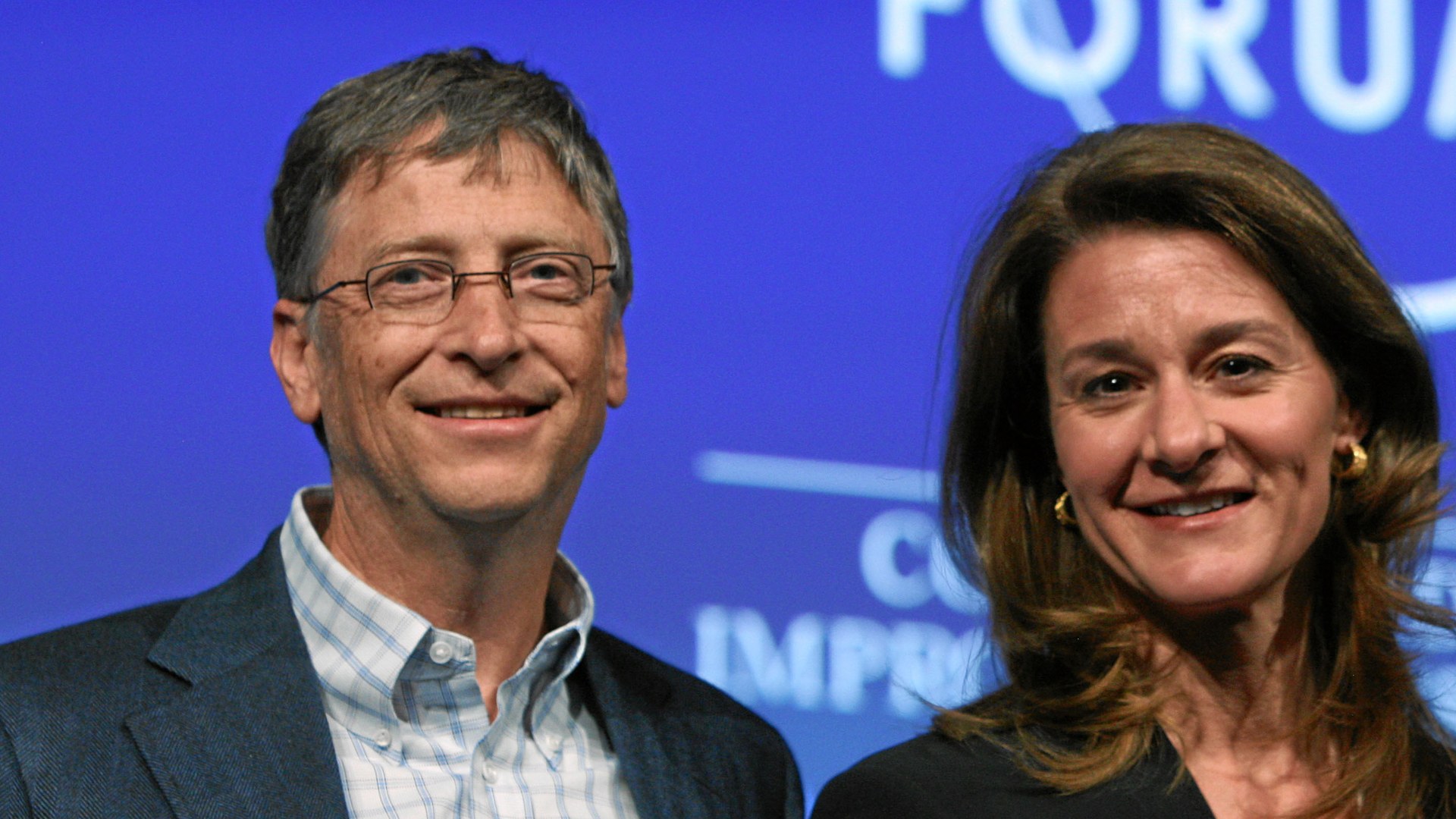
What the divorce did rewrite was the foundation the two had built together. At the divorce, they agreed to a two-year trial of continuing as co-chairs before deciding. On June 7, 2024, Melinda resigned as co-chair and left the foundation, taking $12.5 billion under their agreement to fund her own philanthropy, focused on women and families. In January 2025, the foundation was formally renamed the Gates Foundation, with Bill Gates as sole chair.
The turn in his public image is also a matter of record. In May 2021, The Wall Street Journal reported that in 2019 Microsoft's board had hired a law firm to investigate a letter from an engineer describing a relationship with Gates that began in 2000; a spokesperson for Gates acknowledged to The New York Times that there had been an affair almost 20 years earlier which "ended amicably." His repeated meetings after 2011 with convicted sex offender Jeffrey Epstein were reported by multiple outlets as one of the matters Melinda could not accept. In January 2025, Gates told The Times of London that the divorce was "the mistake I most regret." In 2026, The Wall Street Journal reported, he told foundation staff that he had had affairs during the marriage and apologized for his dealings with Epstein.
Oracle founder Larry Ellison has married six times and divorced five, all in the public record: Adda Quinn (married 1967, divorced 1974); Nancy Wheeler Jenkins (married 1977, divorced the following year, when Jenkins sold her shares in Oracle's predecessor back to Ellison for $500, before the company went public); Barbara Boothe (married 1983, divorced 1986), with whom he had a son and a daughter, David Ellison, later the founder of Skydance, and Megan Ellison, founder of Annapurna; novelist Melanie Craft (married in 2003 at his Woodside estate, with Steve Jobs as wedding photographer, divorced 2010); Nikita Kahn (married 2015, divorce finalized 2020); and his current wife, Jolin Zhu.
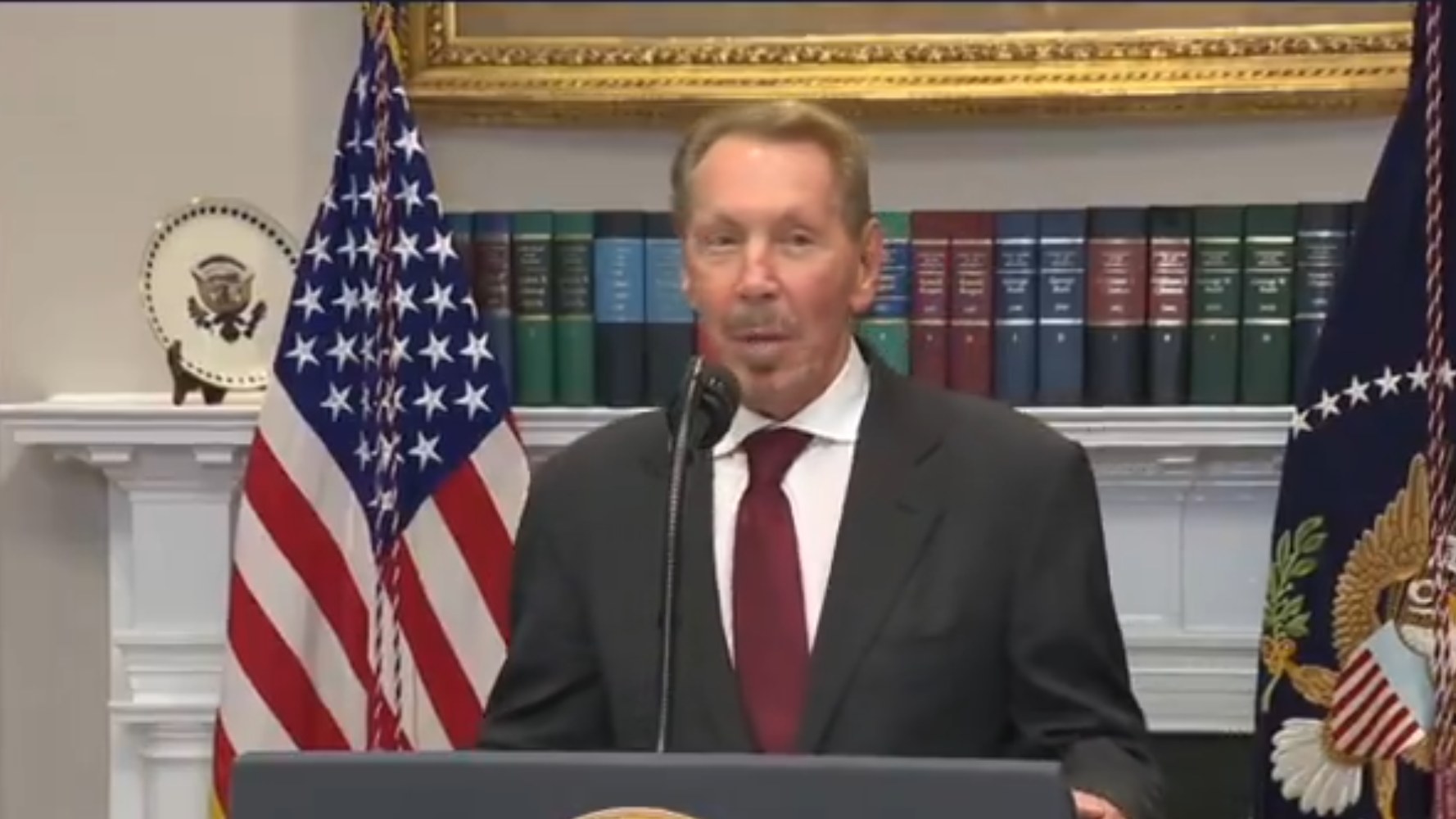
None of the five divorces prompted public action by Oracle's board, and none was followed by a notable Oracle share-price reaction in public reporting. The reason sits in the share register: under Oracle's 2026 proxy statement, Ellison holds about 38 percent of the company and serves as executive chairman and chief technology officer; control was never on the table in any divorce. The same proxy discloses that he has pledged about 413 million Oracle shares as collateral for personal loans and credit lines, binding his personal finances to the share price in a different way. What rewrites his personal ledger has never been divorce: on September 10, 2025, Oracle's stock rose about 36 percent in a day to a record close, and his personal fortune grew by nearly $90 billion, briefly passing Elon Musk's at the top of the global rich list intraday (Bloomberg reported).
The 2026 developments bind his personal finances tighter to the share price rather than loosening them. Under Oracle's 2026 proxy statement, the shares he has pledged rose from about 346 million a year earlier to about 413 million, an increase tied to financing support for the Paramount Skydance acquisition of Warner Bros. Discovery led by his son David Ellison; in June 2026 he adopted a prearranged plan to sell up to 50 million shares, and in September the plan was cancelled with no shares sold (according to public reports).
Elon Musk has married three times and divorced three times. He married Canadian writer Justine Wilson in 2000 and divorced in 2008: Wilson challenged the couple's postnuptial agreement, the courts upheld it, and Musk later stated publicly that Wilson received about $20 million after taxes, including the house in Bel-Air. He married British actor Talulah Riley in 2010 and divorced in 2012, with Riley reported to have received about $4.2 million; they remarried in 2013 and divorced a second time in 2016, with a reported settlement of about $16 million.
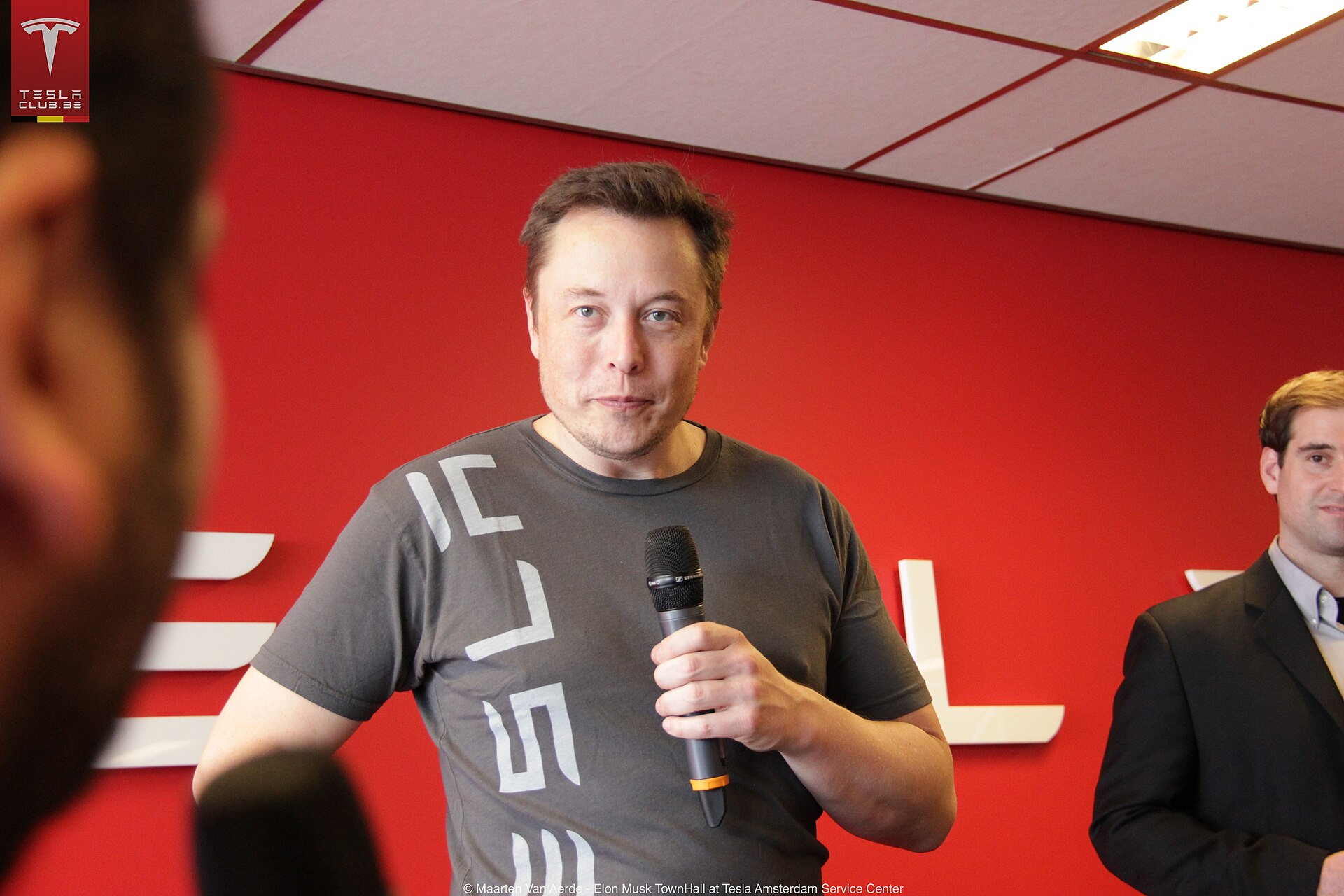
Measured against Tesla's later market value, those sums are too small to enter the share price: none of the three divorces triggered a board inquiry or a reported share-price reaction. Allegations about Musk's personal conduct are another matter. On May 19, 2022, Business Insider reported that SpaceX had paid $250,000 in 2018 to settle a sexual-harassment claim by a former private-jet flight attendant against Musk; Musk called the report "utterly untrue" on social media. The next day, Tesla shares fell more than 10 percent intraday and closed down about 6.4 percent, erasing about $66 billion in market value (Reuters reported). That same week also brought Tesla's removal from the S&P Dow Jones ESG index, the turmoil over his Twitter acquisition and a broad market decline; Reuters wrote that investors worried the allegations and his statements were damaging Tesla's brand and sales.
The public record on the family dimension is equally specific. Musk has spoken often about his working hours: during the Model 3 production ramp in 2018 he told The New York Times he had worked as much as 120 hours a week and slept at the factory; he also wrote publicly that "nobody ever changed the world on 40 hours a week." His children number at least 14 by public counts in outlets including People magazine. In November 2021, Neuralink executive Shivon Zilis gave birth to twins fathered by Musk (Texas court records show; Business Insider reported from the court file in July 2022); weeks later, in December 2021, his daughter with singer Grimes was born via surrogate (Grimes disclosed this in a March 2022 interview). From 2023, he and Grimes litigated custody of their three children in Texas and California courts; a Texas judge issued a final ruling in August 2024, with the terms sealed (Business Insider reported).
Google co-founder Sergey Brin's second marriage ran a shorter course. It was his second divorce: his marriage to 23andMe co-founder Anne Wojcicki ended in 2015. He married legal-tech entrepreneur Nicole Shanahan in 2018; they separated in December 2021, he petitioned for divorce in January 2022 citing irreconcilable differences, and the divorce was finalized in May 2023, with the settlement and custody terms sealed. In July 2022, The Wall Street Journal reported that Shanahan and Musk had had a brief relationship in December 2021; Musk publicly called the report "total bs," Shanahan later denied it publicly as well, and the Journal said it stood by its reporting. Brin holds Alphabet Class B shares with super-voting rights; no change to his stake or voting power as a result of the divorce has been publicly disclosed.
The divorce that wrote itself into corporate-governance history belongs to media magnate Rupert Murdoch. He has married five times and divorced four: Patricia Booker (1956 to 1967); Anna Torv (1967 to 1999); Wendi Deng (married 1999, divorced 2013); Jerry Hall (2016 to 2022); and Elena Zhukova, whom he married in 2024. The divorce from Anna was finalized in June 1999 with a settlement widely reported at about $1.7 billion, including $110 million in cash, among the most expensive divorces of its time (BBC and other outlets reported).
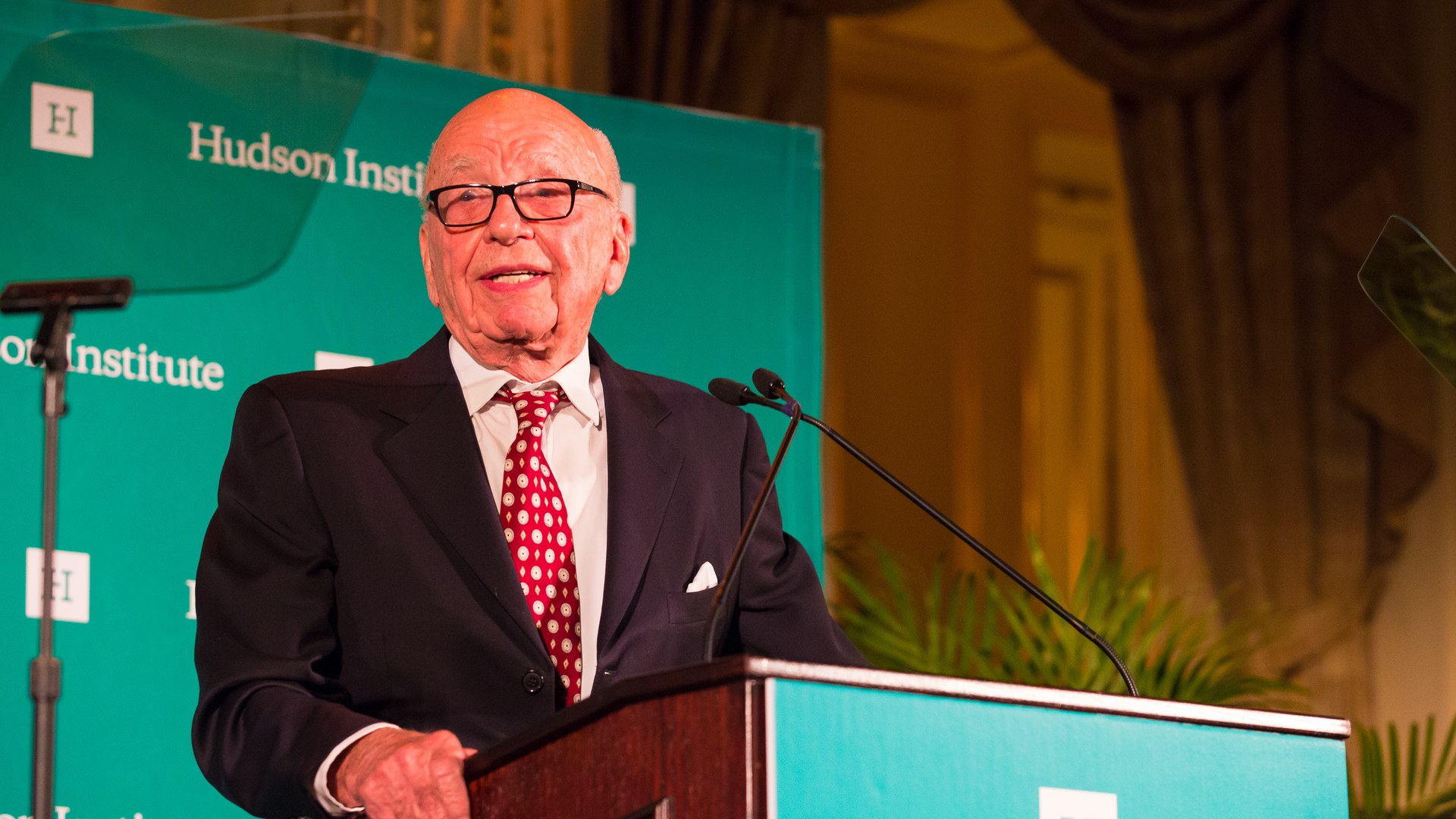
The lasting legacy of that divorce sits inside the companies. The settlement established the irrevocable Murdoch Family Trust: the trust holds roughly 40 percent of the voting power in the two listed companies, News Corp and Fox; Murdoch himself holds four votes, each of his four eldest children, Prudence, Elisabeth, Lachlan and James, holds one, and on his death his four votes pass equally to them; his two daughters with Wendi Deng hold economic interests in the trust but no votes. In late 2023, Murdoch petitioned a Nevada court to amend the trust to give Lachlan sole control; a probate commissioner rejected the attempt, finding it was made in bad faith. On September 8, 2025, the parties settled: a new trust keeps Lachlan's control in place through 2050, and Prudence, Elisabeth and James each received about $1.1 billion to exit the trust (Reuters reported), about $3.3 billion in total. A rule written by a 1999 divorce took until 2025 to fully settle.
Wendi Deng's marriage to Murdoch lasted 14 years: they married in June 1999, 17 days after the divorce from Anna was finalized; Murdoch filed for divorce in June 2013, and the two settled in New York that November. Governed by a prenuptial agreement and two postnuptial agreements, the settlement left Deng with the Fifth Avenue penthouse in Manhattan (bought in 2005 for about $44 million) and a residence in Beijing, and no company shares. In July 2011, at a British parliamentary hearing, a protester threw a shaving-foam pie at Murdoch; Deng, seated behind him, rose and swatted it away, a moment broadcast live around the world and still the best-known frame of her public image.
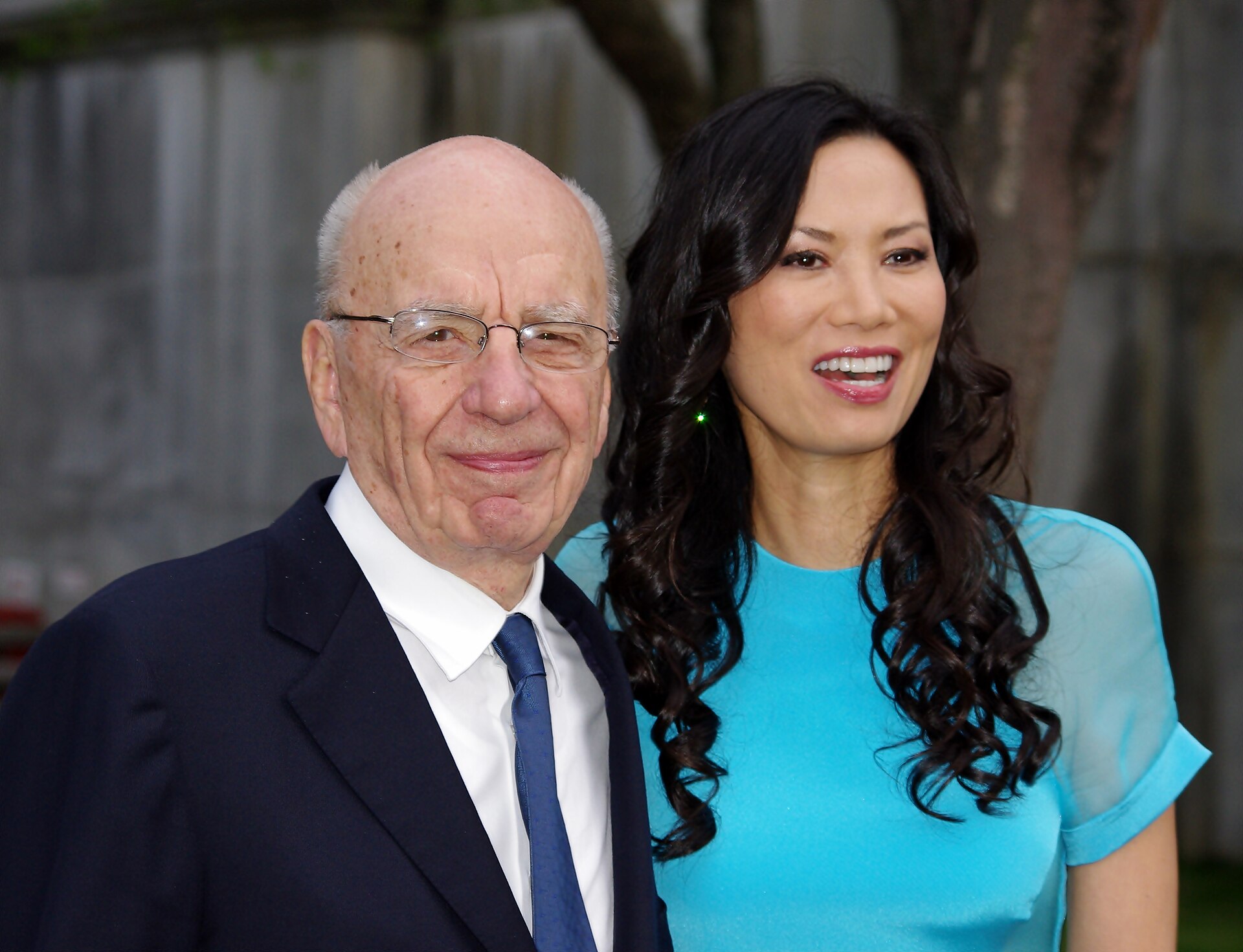
In Chinese-language public discussion, Deng is a different kind of symbol. For years she has been a standing subject of jokes and memes in Chinese internet culture, most of them circling her marriages and social path; in public discussion she has been cast as an emblem of "changing one's fate through marriage," with criticism and envy coexisting, a public mood some commentary has summed up as "scolding her while wanting to be her." These are internet jokes and a phenomenon of public discussion, not statements of fact; a rumor involving a specific third party was reported at the time, was publicly denied by both sides involved, and has never been substantiated.
On August 1, 2026, Joe Tsai and Clara Wu Tsai issued a joint statement announcing the end of their nearly 30-year marriage. They married in New York in October 1996 and have three children. The statement answered every question the market would ask, in advance: neither side currently planned to sell any Alibaba shares; Tsai's position as chairman of Alibaba was unaffected; Tsai would continue as chairman of Brooklyn Sports & Entertainment (BSE) and governor of the Brooklyn Nets, Clara Wu Tsai as BSE vice chair and governor of the New York Liberty, with both teams run by professional management as before; the two would maintain a "close and professional working relationship" and involve their adult children more in the family's ventures. The marriage ended; in the statement, not a single line of the shareholding, the offices or the governance arrangements changed.
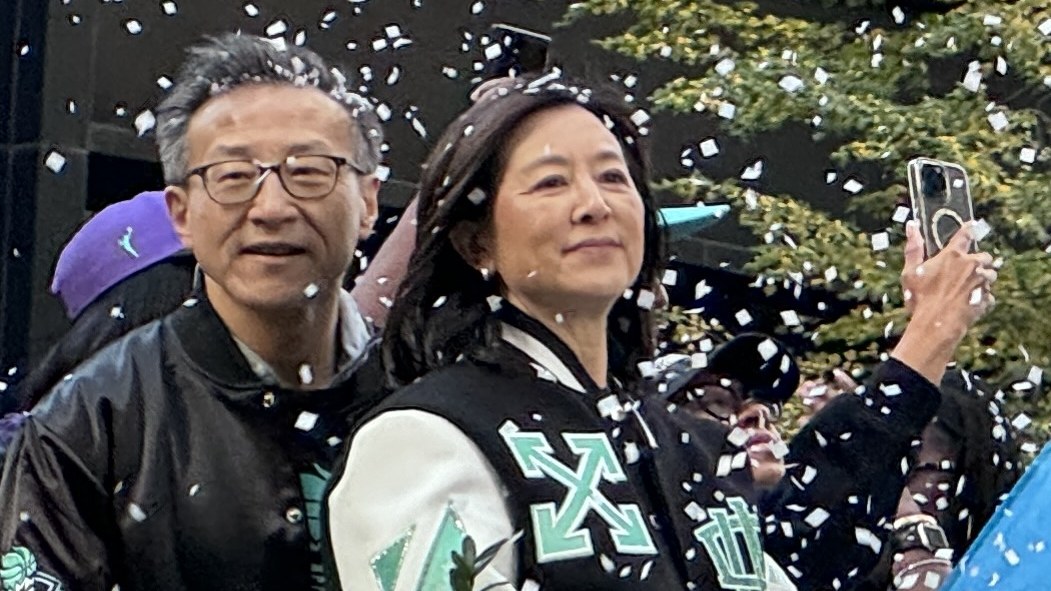
Tsai's dual identity keeps every public statement of his in the spotlight. Born in Taiwan and a Canadian citizen, educated at Yale and Yale Law School, he is an Alibaba co-founder and became the group's chairman in September 2023; in 2019 he acquired full control of the Brooklyn Nets for about $2.35 billion and became chairman of Barclays Center. In October 2019, after Houston Rockets general manager Daryl Morey posted in support of the Hong Kong protests, Tsai published an open letter to NBA fans calling the Hong Kong protests a "separatist movement" and writing that 1.4 billion Chinese citizens were united on territorial integrity, a matter with no room for discussion. The letter drew polarized reactions in the United States: several members of Congress and Hong Kong activists criticized it publicly, while Tsai told The Wall Street Journal he was acting as a cultural translator between two worlds and that he was "in the eye of the storm." In the years since, his public judgments on markets and super intelligence (SI) have repeatedly become global financial-media stories.
The couple's philanthropy is likewise on the public record: the Joe and Clara Tsai Foundation committed $50 million in 2020 to a Social Justice Fund supporting racial and economic equity programs in Brooklyn, and in 2021 the two pledged $220 million to establish the Wu Tsai Human Performance Alliance, a research consortium anchored at Stanford and other institutions. After the divorce statement, no public change to the governance of these joint ventures has been announced.
2. The ousters: where the job, not the property, was the price
In June 2010, former Hewlett-Packard marketing contractor Jodie Fisher, through her lawyer, accused chief executive Mark Hurd of sexual harassment before HP's board. The board's investigation concluded that the harassment claim was not substantiated, but that Hurd had filed inaccurate expense reports to conceal his personal relationship with Fisher. Hurd resigned on August 6, 2010. On the first trading day after the announcement, HP lost about $9 billion in market value (the Associated Press reported); that December, the U.S. Securities and Exchange Commission opened an inquiry into the circumstances of the departure. A month after the resignation, Oracle hired Hurd as co-president, and Ellison publicly attacked the HP board's decision as "the worst personnel decision since the idiots on the Apple board fired Steve Jobs."
On April 10, 2012, Best Buy chief executive Brian Dunn resigned while the board's audit committee was investigating him. The independent investigation report published the following month (conducted by the law firm WilmerHale) found that Dunn had engaged in an "extremely close personal relationship" with a 29-year-old female employee, violating company policy and damaging the work environment, though it found no misuse of company resources; it also found that founder and chairman Richard Schulze had learned of the matter in December 2011, confronted Dunn directly, and failed to report it to the audit committee. Schulze then resigned as chairman. Dunn's separation package was reported at about $6.6 million.
On June 21, 2018, Intel announced the resignation of chief executive Brian Krzanich: the company had recently learned that he had had a past consensual relationship with an employee, and an investigation by internal and external counsel confirmed a violation of the company's non-fraternization policy for managers; the board accepted his resignation and named chief financial officer Bob Swan interim CEO. Intel's shares fell about 2.4 percent that day (Reuters reported); based on company filings, his departure package was estimated at about $38 million.
In November 2019, McDonald's board found that chief executive Steve Easterbrook had engaged in a consensual relationship with an employee in violation of company policy and fired him, but treated the separation as "without cause," leaving him with about $44 million in equity that continued to vest. On the first trading day after the news, McDonald's shares fell about 3 percent (Reuters reported). In 2020, after new tips, the company reopened its inquiry, alleged that he had concealed further relationships with employees, destroyed evidence and improperly approved a stock grant, and sued to claw back his pay. On December 16, 2021, the parties settled: Easterbrook returned more than $105 million in cash and equity and apologized publicly. In January 2023, the SEC fined him $400,000 and barred him for five years from serving as an officer or director of a public company, and found disclosure violations by McDonald's, which, given its cooperation, was not fined.
Android founder Andy Rubin belongs to the same type, though he was no longer a sitting CEO when his case surfaced. He left Google in 2014; in October 2018, The New York Times reported that Google's internal investigation had found an employee's sexual-misconduct allegation against him credible, yet the company had given him a $90 million exit package and a further $150 million stock grant. Rubin denied the allegation and called the report misleading. A week after the report, on November 1, 2018, more than 20,000 Google employees in 50 cities walked out in protest over the company's handling of sexual-harassment claims, and Google promptly ended forced arbitration in sexual-harassment cases. In September 2020, parent company Alphabet settled shareholder suits: it committed $310 million over ten years to diversity and inclusion programs and formally barred severance payments to executives fired for sexual misconduct or under investigation for it.
3. The investigations: when a private matter leaves the boardroom
In the ouster cases, investigations mostly stopped at the board, with exceptions: at HP, the SEC later examined the departure process itself; at McDonald's, the SEC imposed a penalty even after the settlement; at Alphabet, shareholders sued the board itself and won changes to the governance rules; and Microsoft's board investigation of Gates's past conduct in 2019 remained entirely internal. The Huang case is different in kind: the alleged relationship itself has been framed as a counterintelligence question, with the other party described by U.S. officials as linked to a foreign intelligence service, so the far end of the process is not a boardroom but a closed-door briefing before three House committees, scheduled one day after the earnings report of one of the world's most valuable chip companies. Under the board's statement, the investigation continues and Huang remains chief executive.
4. Where the impact lands: four ledgers, each with its numbers
The first ledger is control and voting rights. Bezos kept the voting rights in his own hands through his divorce, Amazon's governance never changed, and the share price closed the episode calmly; Murdoch's divorce wrote the control rules into a trust whose effects ran for 26 years; Ellison's roughly 38 percent stake meant his marriages never became a governance issue, though the roughly 413 million shares he has pledged bind his personal finances to Oracle's stock; and the Tsais' statement put "no share sales, no change of office" at its very front. In the recent wave of billionaire divorces, some market commentary has jokingly called such arrangements "technical divorces," meaning precisely this practice of structuring voting rights, equity and offices in advance, inside the divorce documents and statements. The phrase is market banter; this article cannot, and does not attempt to, assert any individual's motive for divorcing.
The second ledger is the market. Where control and succession are clear, share prices mostly stay put: Amazon's moves at both key moments were within 0.5 percent, Microsoft showed no fluctuation because Gates had already left operations, and Intel fell about 2.4 percent on the day of Krzanich's resignation. Once an allegation goes to conduct itself and binds itself to the company's brand, the bill grows at once: HP lost about $9 billion in market value on the first trading day after Hurd's resignation, and Tesla lost about $66 billion in a single day on May 20, 2022. Nvidia's entry in this ledger starts with Monday's open.
The third ledger is succession, governance and institutional footprint. Board investigations, independent committees, outside counsel, codes of conduct and morals clauses, and clawback provisions are now standard equipment at listed companies: McDonald's recovery of $105 million is the landmark clawback case, and Alphabet's settlement wrote "no severance for misconduct" into company rules. Charitable and institutional footprints are rewritten too: three years after the divorce, the Gates foundation split in two, Melinda left with $12.5 billion to work independently, and the foundation took a new name; the Tsais' joint ventures, by contrast, were preserved intact in their statement.
The fourth ledger is the public. The images these people had built in the public mind, set beside the later public record, are the source of public discussion: the Gateses were philanthropy's model couple, the Bezoses the prototype of a founding couple who built a company from a garage, Huang is known in Chinese technology circles for 41 years of marriage and a low-key steadiness, and Deng has been discussed for years as a symbol in Chinese internet culture. After the events, mainstream coverage and named commentary mostly settled on the same fact: an image is an asset its owner spends decades building, and its repricing, like a share price, can take a single day.
Is founders' married life really more fragile? Rigorous research is scarce. A study by Aarhus University researcher Tünde Cserpes, based on Danish national registry data and featured in the January-February 2023 issue of Harvard Business Review, found that people who joined a startup were about 15 percent more likely to separate or divorce than those who worked at established organizations; when both partners worked at startups, the rate was instead below average. The study's subjects were mainly startup employees, not founders themselves. University of Washington sociologist Pepper Schwartz has told GeekWire plainly that the popular claim of higher entrepreneur divorce rates has no hard data behind it, since defining who counts as an entrepreneur is itself difficult. The cases in this article support counting, not rates: Ellison has divorced five times, Murdoch four, Musk three, Brin twice, and Bezos, Gates and Tsai once each.
Set the five dimensions side by side, career, family, life, intimate relationships and public image, and each person's public record takes a different shape. Huang: on the career dimension he remains CEO while entering an investigation and a congressional process; on the family dimension, a 41-year marriage is now part of an investigation's background; on the life and intimate-relationship dimensions, there is no public record beyond the admission in his memo. Bezos: the family dimension cost about $38.3 billion, the career and control dimensions lost not a single vote, and the public-image dimension closed with an open letter confronting a blackmail attempt head-on. Gates: the career dimension had already exited, and the cost fell on the institutional footprint and the public image. Ellison: five divorces touched no company dimension at all; his binding to the share price runs only through wealth. Musk: the financial cost of divorce is negligible against his holdings; the life dimension is his self-described extreme working hours, the family dimension holds a public record of at least 14 children and custody litigation in two states, and the public-image dimension was repriced on the same day as the stock in May 2022. Murdoch: one decision on the family dimension took the governance dimension 26 years and about $3.3 billion to settle. Tsai: the marriage ended, but a single joint statement locked down the equity, the offices, the joint ventures and the public communication at once, the only case in this article whose ending was written as "everything stays the same."
5. Back to Huang: what comes next is scrutiny at the national level
Most of the other cases in this article already have their endings: divorces finalized, jobs lost, settlements reached, penalties imposed. Huang's chapter has only reached the start of the process. What he faces next is three lines of scrutiny running in parallel, each with a different body, timetable and open question.
The first sits inside Nvidia's boardroom. On November 8, the board announced an independent investigation, overseen by a committee of independent directors and assisted by outside independent counsel. Its core questions are whether Huang was targeted by a foreign intelligence service, and whether U.S. national security or Nvidia's secrets were compromised as a result. The board said it had no reason to believe national security or company secrets had been compromised, and retained full confidence in Huang and his leadership team; Huang said he fully supported the review and would cooperate, and remains chief executive while it runs. What remains open is the investigation's conclusion and the board's response to it; the company says it will provide further updates in due course. Nvidia has no publicly announced succession plan; its market value approached $5.8 trillion in October before falling back below $5 trillion.
The second sits in Congress. The chairs of three House committees, Brian Mast of Foreign Affairs, John Moolenaar of the Select Committee on the Chinese Communist Party and Rick Crawford of Intelligence, have written to Huang asking him to account for his dealings with Alice Huang: a reply confirming by November 11, and a closed-door briefing on November 18, the day after Nvidia's quarterly earnings on November 17. What remains open is whether Huang appears as asked, and whether the three committees take further steps after the briefing.
The third sits inside the intelligence system itself. According to the Financial Times, U.S. officials earlier this year prepared a memorandum, based on intelligence reporting, recording their assessment of Huang's relationship with Alice Huang, and circulated it among a small group of senior officials; U.S. officials say Alice Huang is believed to have been recruited by China's Ministry of State Security to collect intelligence. The allegation has not been independently verified, and Alice Huang faces no espionage charge; Huang has said his dealings with her were ordinary business contact, and a spokesperson for the Chinese embassy in Washington has said the reporting is baseless and a smear against China. What remains open is whether the intelligence assessment produces any conclusion in public, and when.
The timetable is set: the November 11 deadline for his reply, earnings on November 17, the closed-door briefing on November 18, and a board investigation with no published schedule. The market's first pricing of all of it comes at the open on Monday, November 9. As this article is published, none of the three lines has reached a conclusion.
Related: Jensen Huang Admits Infidelity to Staff as Nvidia Board Launches Independent Investigation
This article was compiled by the editorial desk from public reporting and offers no comment on any of the persons named above.
Reference: Reuters, Bloomberg, The Wall Street Journal, Financial Times, The New York Times, The Associated Press, BBC, Harvard Business Review, Business Insider, Intel and McDonald's company statements, U.S. SEC public filings
Published by GSM · USA (original Chinese edition)
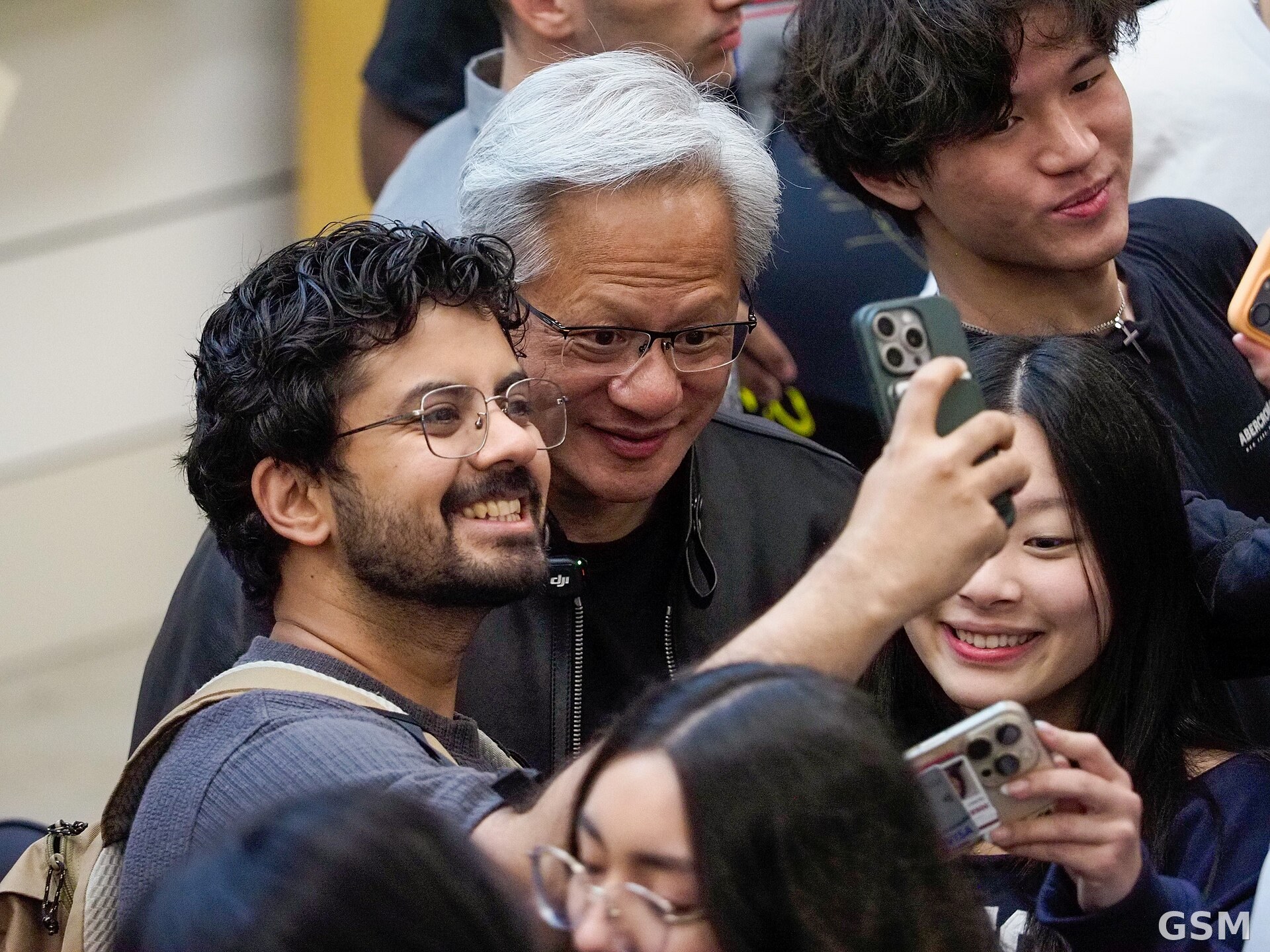
Photo: 图:黄仁勋2026年4月在斯坦福大学与学生自拍合影。图片来源:Wikimedia Commons(Jensen huang stanford 2026-04-30 003.jpg),Anderseidesvik 摄,CC BY-SA 4.0。 / Photo: Jensen Huang taking selfies with students at Stanford University, April 2026. Source: Wikimedia Commons (Jensen huang stanford 2026-04-30 003.jpg), photo by Anderseidesvik, CC BY-SA 4.0.
- 2026-10-29A Bar Photo Fuels 'Spy' Buzz Online: Jensen Huang and Alice Huang Seen Together Twice in Taipei as Huang Calls the Dealings Normal
- 2026-10-30Nvidia Rejects Report of a Chinese Spy Near Jensen Huang, Saying Singapore Cloud Executive Had Only Ordinary Business Contact
- 2026-11-04Three House Committee Chairs Ask Nvidia's Jensen Huang to Give a Closed-Door Briefing on November 18 on His Contacts With Alice Huang
- 2026-11-08Jensen Huang Admits Infidelity to Staff as Nvidia Board Launches Independent Investigation
- 2026-11-08When a Founder's Private Life Becomes a Public Company's BusinessThis story