
Eisenkot Accepts the Mandate to Form Israel's Next Government and Sets Four Conditions: His Four Parties Hold Only 48 Seats
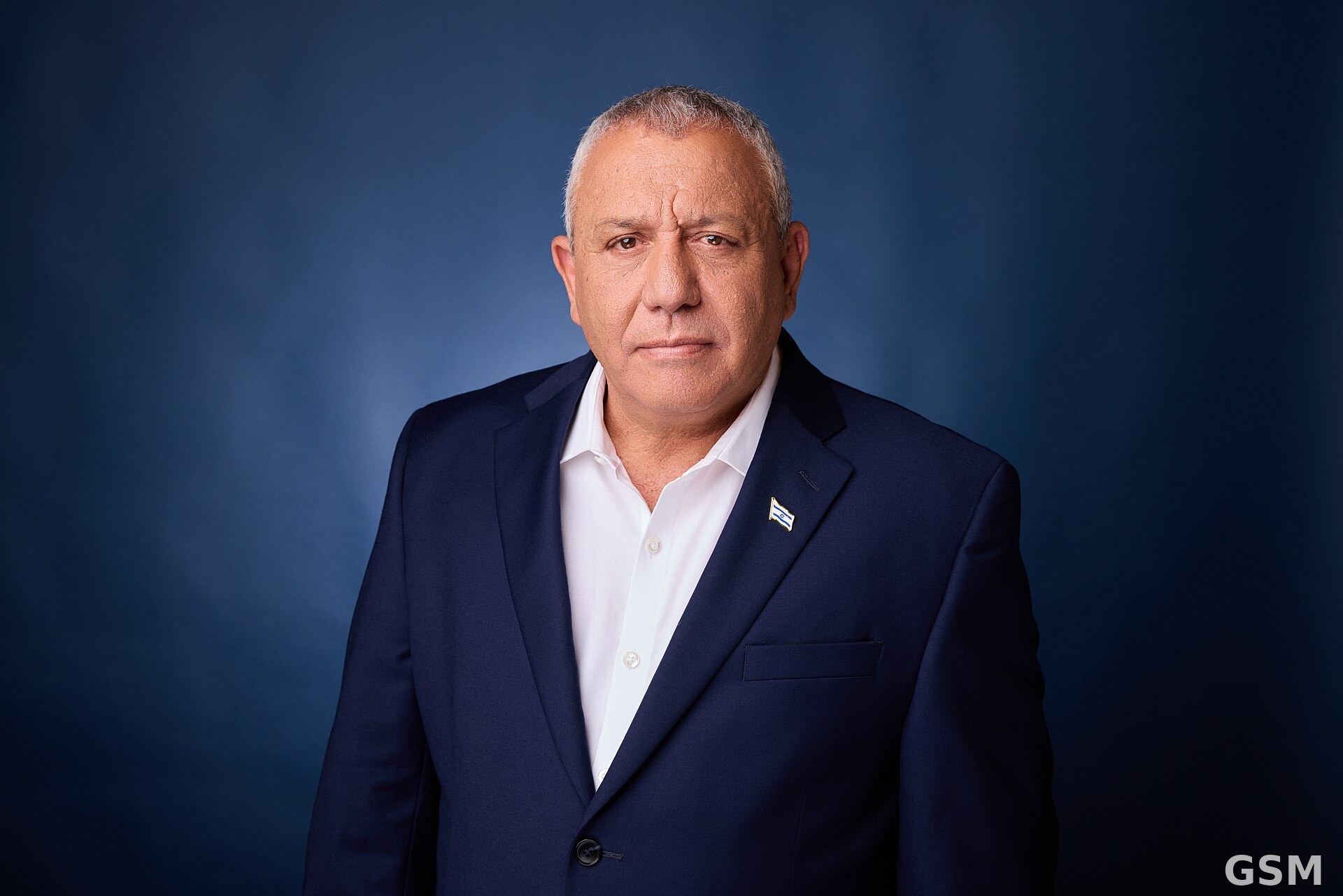
President Isaac Herzog officially gave Gadi Eisenkot, a retired military chief who led the centrist Yashar party in the October 27 election, the mandate to form Israel's next government on Sunday, November 8. His decision followed two days of consultations last week with all parties elected to the Knesset. Eisenkot secured the support of 67 members of the incoming 120-seat Knesset, including 19 from the two Arab parties. Prime Minister Benjamin Netanyahu received just 46 recommendations, and a crack in his bloc appeared when United Torah Judaism, a traditional Netanyahu ally, declined to recommend him.
"The challenges facing the State of Israel are immense," Herzog said as he gave Eisenkot the mandate. "We must deal with building the political horizon in the region and the day after the war," he said, adding that Israel must also deal with a new political situation in the United States — a reference to the U.S. midterm elections in which Democrats swept to power in Congress.
Accepting the mandate, Eisenkot said his "hand is extended" and his door open to anyone who understands the magnitude of the hour, and warned that anyone who tried to undermine a new government "will be remembered in history as someone who did not save Israel in a time of emergency." He is pushing to form what he calls a "national emergency government" and to swear in a minority government as soon as possible. It would comprise the four Jewish opposition parties, which together hold 48 seats: his own Yashar; Together, led by former prime ministers Naftali Bennett and Yair Lapid; Avigdor Liberman's Yisrael Beiteinu, and the left-wing Democrats, led by Yair Golan.
He has set four conditions for joining: recognizing Israel as a Jewish, democratic, liberal, and egalitarian state; commitment to the values of the Declaration of Independence; universal service — whether military, national, or civilian — and recognition of Hamas as a terrorist organization. The last condition effectively rules out the Arab parties from sitting in the Cabinet, but they could still support the government from outside, providing a parliamentary safety net. Israeli law requires only a simple majority to establish a government; removing one requires an absolute majority of 61 votes supporting an alternative government.
Eisenkot's central obstacle is Liberman, who has ruled out any government dependent on the Arab parties, arguing a minority government will be short-lived and will only strengthen Netanyahu. Instead, Liberman proposed making a maximum effort to form a coalition of 61 lawmakers with the two ultra-Orthodox parties, Shas and United Torah Judaism, without the Arab parties. That plan clashes with one of the opposition's core commitments: to end the blanket draft exemption for ultra-Orthodox men from mandatory military service — the very issue addressed by Eisenkot's universal-service condition. The ultra-Orthodox parties are pressing for legislation that would enshrine the exemption.
Netanyahu, who lost his parliamentary majority, is challenging the election results and, in a video statement Saturday, called for a national unity government with his entire bloc. The Yashar party responded that if Likud wants a broad unity government, it is welcome to announce the dissolution of its alliance with the extremists and enter a government under Eisenkot.
Eisenkot's first test comes Tuesday with the swearing-in of the new Knesset, where the opposition intends to replace Netanyahu's Knesset speaker. Starting Sunday, Eisenkot will have 28 days to negotiate with other parties over Cabinet posts, budgets and policies, with a possible 14-day extension. If he fails, the mandate passes to Netanyahu for another four weeks.
Source: Office of the President of Israel
Published by GSM · USA (original Chinese edition)
Photo: 图:亚沙尔党领袖加迪·艾森科特肖像。照片:Yahav Trudler(Yahav Studio),经 Wikimedia Commons(CC BY-SA 3.0)。 / Photo: Yashar leader Gadi Eisenkot. Yahav Trudler (Yahav Studio), via Wikimedia Commons (CC BY-SA 3.0).
- 2026-10-19Ahead of Next Week's Israeli Election, Polls Put Eisenkot's Bloc at 52 Seats to Netanyahu's 50; Arab Turnout Could Decide Who Governs
- 2026-10-19Hegseth Meets Netanyahu on Unannounced Israel Visit, as Vance Declines to Endorse Netanyahu the Same Day
- 2026-10-20Trump Gives Netanyahu His Complete and Total Endorsement Ahead of Israel's Oct. 27 Election, With a Warning to Iran
- 2026-10-21Bank of Israel Holds Benchmark Rate at 3.25%, Pausing After Three Straight Cuts a Week Before the Election; 2026 Growth Forecast at 5.6%
- 2026-10-26Follow-up: On Election Eve, Netanyahu Touts Trump's Endorsement and Says He Ordered Mossad and IDF to Bring Down Iran's Regime; Rival Cites Fear-Mongering
- 2026-10-27Israel Holds Knesset Election on October 27: 7.33 Million Voters, 12,018 Polling Stations Open Until 10 p.m.
- 2026-10-27Follow-Up: Israel Election Turnout Fastest in 49 Years as 31.5% Vote in First Five Hours; Shekel Jumps Nearly 1% to a Three-Week High
- 2026-10-27Follow-Up: Israel Exit Polls Put Likud First With 25 Seats, but Neither Bloc Reaches the 61 Seats Needed to Govern
- 2026-10-28Follow-up: With Over 70% of Votes Counted in Israel's Election, Netanyahu Bloc Projected at 54 Seats, Still Short of a Majority; Shekel Falls About 2%
- 2026-10-28Follow-Up: With About 86% Counted, Likud Leads Israel Election With 26 Seats but Neither Bloc Has a Majority; Herzog Urges Parties to Avoid Another Election
- 2026-10-29Follow-Up: Israel's Election Chief Asks Shin Bet to Probe Suspected Foreign Interference Within a Week Amid Qatar Funding Claims
- 2026-10-30Israel's Final Election Results: Netanyahu's Bloc Falls Short at 53 Seats, Arab Parties Hold the Balance With 19
- 2026-11-02Follow-Up: Israel's Arab Parties Set to Back Eisenkot to Form a Government, Lifting His Support to 67 Seats
- 2026-11-02Netanyahu Proposes a Broad National Government Under His Leadership: Open to Dialogue, but No Reliance on Arab Parties
- 2026-11-03Follow-Up: Israel's Five Opposition Parties Agree to Recommend Eisenkot to Form the Government
- 2026-11-04President Herzog Receives Israel's Official Election Results and Opens Coalition Consultations, Smallest Parties First
- 2026-11-04Follow-Up: Security Alert at Israel's President's Residence on First Day of Coalition Consultations: Foreign Journalist Flagged for Suspicious Substance Traces, Entry Briefly Halted
- 2026-11-04Israel's Herzog Backs Attorney General as Shin Bet Bid to Question Arab Lawmakers Over Election Interference Is Rejected
- 2026-11-04Follow-Up: Israel's Attorney General Blocks Shin Bet Bid to Question Arab Party Leaders, Citing Lack of Evidence
- 2026-11-05Follow-Up: Ultra-Orthodox Party Withholds Recommendation as Arab Party Backs Eisenkot, Weakening Netanyahu
- 2026-11-05Follow-Up: Joint List Backs Eisenkot, Taking His Endorsements to 67 Against Netanyahu's 46
- 2026-11-05Israel's President Herzog Puts Off Choice of Premier-Designate Until Sunday Despite Eisenkot's 67 Endorsements to Netanyahu's 46
- 2026-11-06Follow-Up: Eisenkot Says Government-Formation Talks Have Made 'Significant Progress,' With 74 Lawmakers Against Netanyahu Staying On
- 2026-11-07Follow-Up: Israeli President Picks Eisenkot to Form the Next Government, Mandate to Be Handed Over on Sunday
- 2026-11-08Follow-Up: Eisenkot Formally Receives Mandate, Vows National Emergency Government and Swift Broad Coalition
- 2026-11-08Eisenkot Accepts the Mandate to Form Israel's Next Government and Sets Four Conditions: His Four Parties Hold Only 48 SeatsThis story
 COP31 Climate Talks Open November 9 in Antalya: More Than 190 Countries Meet Through November 20, While New National Plans Point to Just a 6% Emissions Cut by 2035 Against the 60% a 1.5°C Pathway Requires2026-11-08
 New Zealand Faces a Three-Week Wait for a Government: Coalition Holds 67 Seats, One Above the Majority Line, With the Final Result Due November 272026-11-08