Sixty Votes and the Government Is Still Closed: What the Deal on the Longest Shutdown Settled, and What It Pushed to December
WASHINGTON, November 10 — On the first working day after the federal government shutdown became the longest in American history, now on its 41st day, the government's doors are still closed.
The Senate gave final passage late on Monday, November 9, to the funding package that would end the shutdown, by 60 votes to 40, and sent the bill to the House of Representatives. The House Rules Committee advanced the measure overnight, and Speaker Mike Johnson has told members, out of session since September 19, to return to Washington. A full House vote is expected on Wednesday evening. The bill must pass the House and be signed by the President before the government can reopen.
Washington therefore holds two facts at once this week: the deadlock has broken politically, and the shutdown continues administratively. This special report sets out what the deal settled, what it did not settle, and which two fights it moved to December and to next January.
First, the facts: two votes of 60 to 40 in two days
The shutdown began on October 1. Before this weekend, Senate attempts built on the House-passed stopgap bill had failed in 14 procedural votes, and the stalemate had lasted six weeks.
The turn came over the weekend. On Sunday evening, November 8, the Senate voted 60 to 40 on the procedural step that cleared the way forward. Late on Monday, November 9, the Senate completed final passage by the same 60 to 40. The cross-party combination was identical in both votes: eight members of the Senate Democratic caucus voted with Republicans, namely Dick Durbin of Illinois, John Fetterman of Pennsylvania, Maggie Hassan and Jeanne Shaheen of New Hampshire, Tim Kaine of Virginia, Catherine Cortez Masto and Jacky Rosen of Nevada, and independent Angus King of Maine. Senate Democratic leader Chuck Schumer voted no, as did most of his caucus.
The deal was brokered over the weekend by Senate Majority Leader John Thune, Hassan, Shaheen and King, Senate Appropriations Chair Susan Collins, and White House negotiators. Republican Senator Rand Paul of Kentucky was the only Republican vote against.
What the package contains
The vehicle is the stopgap bill the House passed earlier, combined with three full-year spending bills and an updated continuing resolution.
Most federal agencies are funded through January 30, 2027, giving Congress more time to negotiate the remaining full-year bills. The Department of Agriculture and the Food and Drug Administration, the Department of Veterans Affairs and military construction, and the legislative branch receive full-year funding through September 30, 2027.
The Supplemental Nutrition Assistance Program, known as SNAP, is funded in full for the full year, through September 30, 2027. The program serves about 42 million lower-income Americans and was among the most directly hit household programs of the shutdown.
The federal workforce provisions have three parts: back pay for pay withheld during the shutdown, reversal of the firings carried out through reductions in force during the shutdown with affected employees restored to their jobs, and a bar on new reductions in force through January 30, 2027. About 1.4 million federal employees were furloughed or working without pay during the shutdown.
What the package does not contain: health care was traded for a vote
The central dispute of the shutdown was the Affordable Care Act subsidies, which expire on December 31 of this year. Senate Democrats had demanded a guaranteed extension of the subsidies as the price of reopening the government.
The final package does not extend them. What Democrats received instead is a commitment from Thune that the Senate will hold a vote on extending the subsidies no later than the second week of December. The commitment guarantees a vote, not an outcome, and it carries no undertaking that the House will follow.
In short, the fight the shutdown was about has not been finished. It has been moved, whole, to December.
What 41 days left behind
The daily cost of the shutdown peaked this week. In air travel, the Federal Aviation Administration, citing air traffic control staffing shortages, has imposed flight reductions at 40 of the nation's busiest airports. The Associated Press reported on November 8 that more than 2,100 flights were canceled across the United States on Sunday, the first day above 2,000 cancellations since the reductions began, with more than 7,000 further flights delayed; more than 1,000 flights were canceled on Friday and more than 1,500 on Saturday. Under the published reduction schedule, the cut was due to rise to 10 percent on November 14. Transportation Secretary Sean Duffy warned before November 9 that if the shutdown were dragged into the Thanksgiving travel season, United States air traffic could slow to a trickle.
In food assistance, November SNAP benefits were not issued in full on schedule, and the federal government and the states litigated whether full benefits could be paid during a shutdown. On November 7, the administration asked an appeals court to block an order requiring full November benefits, and the Supreme Court then issued a temporary stay allowing the government to withhold about 4 billion dollars, while the Department of Agriculture directed states to undo steps taken to issue full benefits. The legal whiplash left about 42 million recipients with interrupted benefits for weeks.
In federal services, economic data releases were delayed and agency backlogs accumulated, as widely reported during the shutdown. This report introduces no backlog figure that has not been verified against a primary source. It records only the undisputed point that reopening and clearing backlogs take time and will not be completed on the day of a signature.
GSM's reading: what the structure of this deal shows
The following is this newsroom's analysis, based on the verified facts above. Speculation is marked as such.
First, what broke the deadlock was not a new argument but the distribution of pain. Across 14 failed votes, the public arguments of both sides barely changed. What changed was the visibility of the cost: flight cancellations passed 2,100 in a single day on the weekend and directly threatened the Thanksgiving travel season, SNAP benefits entered litigation and interruption, and about 1.4 million federal employees faced a second month of withheld pay. When the cost stopped being Washington procedure news and became a daily disruption felt in every district, the cross-party combination formed within 48 hours. The implication (analysis) is that in appropriations politics, votes are moved less by persuasion than by who bears the cost of interruption, and when that cost becomes unbearable.
Second, the composition of the eight crossovers deserves attention. They were not the two party leaderships but a negotiator group built around appropriators and moderates, and they settled the text directly with White House negotiators, while caucus leader Schumer voted no. It was a deal built around the leadership layer: the people who could assemble 60 votes wrote the text first, and the text then became the fact. It worked this time. It also leaves an open question (analysis): the December health care vote has no equivalent negotiating structure underneath it, and its outcome is harder to predict than this week's.
Third, what Democrats actually obtained is more concrete than the headlines suggest. On the surface, their central demand, a guaranteed subsidy extension, failed, and they received only an unguaranteed vote. But the package locks in three immediate protections: full-year SNAP funding, which removes food assistance from the hostage list of the next shutdown; reinstatement with back pay for workers fired during this one; and a ban on new reductions in force until January 30. For federal employees and food assistance recipients, those are protections that take effect at once, not procedural promises. Reading the deal as a one-sided concession misses this layer.
Fourth, the Republican side of the price is equally clear. Republicans accepted the reversal of the shutdown-period firings, a freeze on reductions in force until the end of January, and a formally scheduled December vote on the subsidies. If that December vote extends the subsidies, the core dispute of the shutdown will have been partly resolved in the form Democrats originally demanded, two months later and with far more uncertainty. This shutdown therefore looks less like a complete victory for either side than a deferred settlement.
The two cliffs that follow
The first cliff is in December. The Senate must hold its subsidy vote by the second week of December, and the subsidies themselves expire on December 31. If the vote fails, or the House does not follow, families insured through the marketplace will face changed premiums in the new year. The timing is concrete for Chinese American households as well: families who buy coverage through the marketplace and rely on the subsidies to offset premiums will need to recalculate next year's coverage costs once the December result is known. This is a statement of fact about timing, not insurance advice.
The second cliff is January 30, 2027, when the stopgap funding for most agencies expires. If the remaining full-year bills are still unsettled by then, a new shutdown is procedurally entirely possible. But the leverage structure will have changed (analysis): SNAP now holds full-year funding and would not be interrupted in the first month of a new shutdown, and federal employees are protected from reductions in force until that same January 30 date. The two most effective pain points of this round have, in part, been dismantled in advance by this very deal. If January's negotiation stalls again, both sides will need new pressure points, or a longer stalemate.
One nearer variable sits in the House. The Rules Committee's overnight action signals an intent to move quickly, but the House has been out of session since September 19, and the outcome of Wednesday evening's expected vote is not predicted here before it happens. Even if the Senate text passes the House and is signed (speculation), the unwinding of flight reductions, the reloading of SNAP beneficiary files by the states, and the clearing of agency backlogs will still take days or longer. Whether the Thanksgiving travel season fully normalizes depends on the speed of that recovery, not on the date of a signature.
Key timeline
October 1: the federal government shutdown begins, becoming the longest in United States history.
Late October: the Department of Agriculture states that November SNAP benefits cannot be issued in full on schedule, and food assistance becomes one of the central issues of the shutdown.
Around November 1: November SNAP benefits are not issued in full on schedule.
November 7: Federal Aviation Administration flight reductions at 40 of the busiest airports continue; the administration appeals the full SNAP benefits order, and the Supreme Court issues a temporary stay.
Sunday, November 8: the Associated Press reports more than 2,100 flight cancellations nationwide that day; that evening, the Senate votes 60 to 40 on the procedural step, and the stalemate breaks.
Monday, November 9: the Senate gives final passage to the funding package, 60 to 40, and sends it to the House; the House Rules Committee advances it overnight, and the Speaker tells members to return to Washington.
November 10: the shutdown reaches its 41st day, and the government remains closed.
Wednesday evening, November 11: a full House vote is expected, subject to the House's formal schedule.
By the second week of December: the Senate is committed to vote on extending the Affordable Care Act subsidies, which expire on December 31.
January 30, 2027: stopgap funding for most agencies expires, while the full-year departments and SNAP continue through September 30, 2027.
In summary
The longest shutdown, at 41 days, is ending not because either side persuaded the other, but because the cost of interruption reached every district first.
The Senate's 60 votes bought three certain things: a government likely to reopen this week, food assistance removed from the next round of brinkmanship, and reinstatement with back pay guaranteed for federal workers. They did not buy an answer to the question the shutdown began with. What happens to the health care subsidies has been postponed, intact, to an unguaranteed vote in December.
When the government formally reopens depends on the House vote on Wednesday and on a presidential signature. But the second half of this shutdown is already scheduled: one fight in December, and one on January 30. Sixty votes can close a shutdown. They do not settle the annual argument over money and health care.
Source: 美联社
Published by GSM · USA (original Chinese edition)
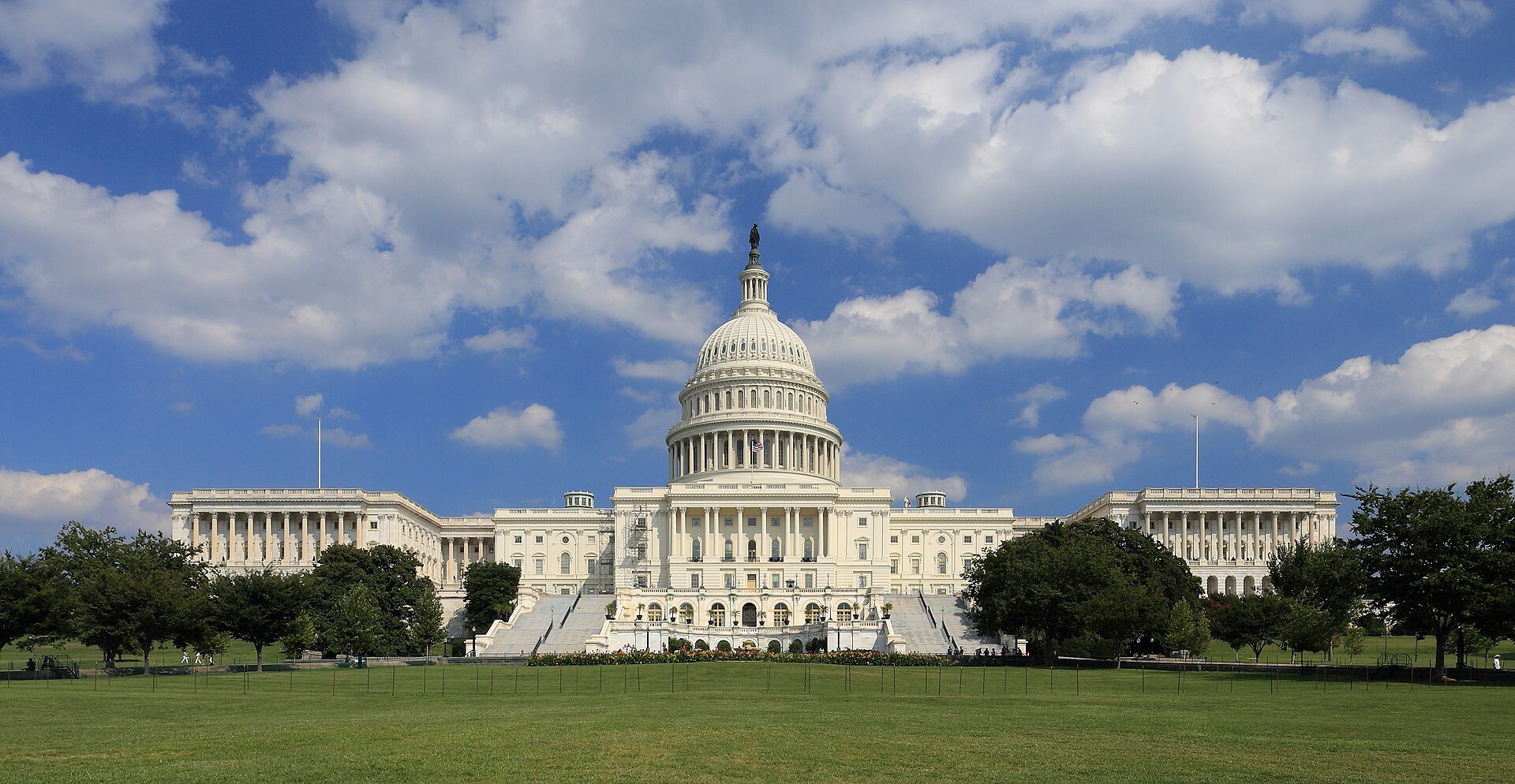
Photo: 美国国会大厦西侧(Wikimedia Commons)
- 2026-11-05Shutdown Hits Record Day 36: FAA to Cut Flights at 40 Busy Airports
- 2026-11-06Shutdown Day 37: FAA Flight Cuts Take Effect November 7, Starting at 4% at 40 Busy Airports
- 2026-11-06Senate Passes Homeland Security Budget Plan 50-48, With $70 Billion for Immigration Enforcement and Border Patrol
- 2026-11-08Senate Clears 60-40 Procedural Vote on Sunday, Raising Hopes of Ending the Government Shutdown
- 2026-11-09U.S. Airlines' Daily Cancellations Top 2,100 for First Time Since Shutdown Cuts Began
- 2026-11-09FAA Data on November 9: Newark Liberty Departure Delays of 46 Minutes to One Hour and Rising, While Boston and JFK Stay at 15 Minutes or Less
- 2026-11-10Senate Passes Funding Deal 60-40 to End 41-Day Shutdown; House to Vote Wednesday
- 2026-11-10Fourth Day of Shutdown Flight Cuts: More Than 2,200 Flights Cancelled on Monday as the FAA Expands Restrictions on Private Flights
- 2026-11-10Sixty Votes and the Government Is Still Closed: What the Deal on the Longest Shutdown Settled, and What It Pushed to DecemberThis story
- 2026-11-10America's Government Has Been Shut for 41 Days: Why It Closed, How It Reopens, and What Comes Next