Follow-Up: USDA Continues Phased Reopening of Southern Border Ports, With Columbus, New Mexico Resuming Cattle Imports From Mexico on October 26
The U.S. Department of Agriculture's Animal and Plant Health Inspection Service (APHIS) said in a program update on October 20 that it is continuing its phased reopening of southern border ports for livestock imports from Mexico. Under the update, the Columbus, New Mexico, port of entry will reopen to cattle imports on October 26, supported by enhanced safeguards against New World screwworm and ongoing evaluations of animal health conditions.
If conditions continue to support safe trade and all required inspection arrangements and infrastructure are in place, the next port scheduled to reopen to cattle imports will be Nogales, Arizona, on November 30, USDA said. The department said it will continue to assess conditions at additional ports, with further reopening decisions based on animal health risks, operational readiness, and the continued effectiveness of mitigation measures.
Equine imports resume the same day: on October 26, APHIS will resume the importation of equines from Mexico via land crossing through the Santa Teresa, New Mexico, port of entry. Under APHIS' updated protocols, horses and other equines imported from Mexico will undergo a rigorous inspection and treatment process prior to export, followed by a seven-day quarantine before being released into the United States. Equines entering through Santa Teresa will complete quarantine at a USDA-approved facility on the U.S. side of the border, while quarantine facilities on the Mexican side of that port remain closed at this time. USDA said it is taking a measured approach: beginning operations at Santa Teresa will let the agency evaluate whether the updated safeguards are working as intended before expanding to other approved ports and quarantine facilities, including USDA-approved facilities in Mexico.
The phased reopening comes as New World screwworm spreads northward through Mexico. According to Reuters, USDA said it has confirmed 56 U.S. screwworm cases since June, five of them active; the United States halted livestock shipments from Mexico last year to keep out the flesh-eating parasite, southern ports were closed from May 2025, and cattle trade resumed at Douglas, Arizona, in August and at Santa Teresa, New Mexico, in September. The block on Mexican cattle helped push U.S. ground beef prices to record highs this year. USDA directed readers to Screwworm.gov for the latest information on New World screwworm and the phased reopening.
GSM reported on October 18 that USDA is investing $750 million in a sterile fly facility in Edinburg, Texas, to suppress the screwworm population, with production expected to begin in spring 2027: New World Screwworm Returns to the Southern U.S. as USDA Builds $750 Million Sterile Fly Plant in Edinburg, Texas
According to Reuters, USDA says it has confirmed 56 U.S. screwworm cases since June, five of which are active. Last year's halt to Mexican cattle imports, imposed to keep out the flesh-eating New World screwworm, helped push U.S. ground beef prices to record highs this year, adding to voter concerns about food affordability. USDA previously resumed livestock trade at Douglas, Arizona, in August and at Santa Teresa, New Mexico, in September.
Source: GSM · USA (original Chinese edition)
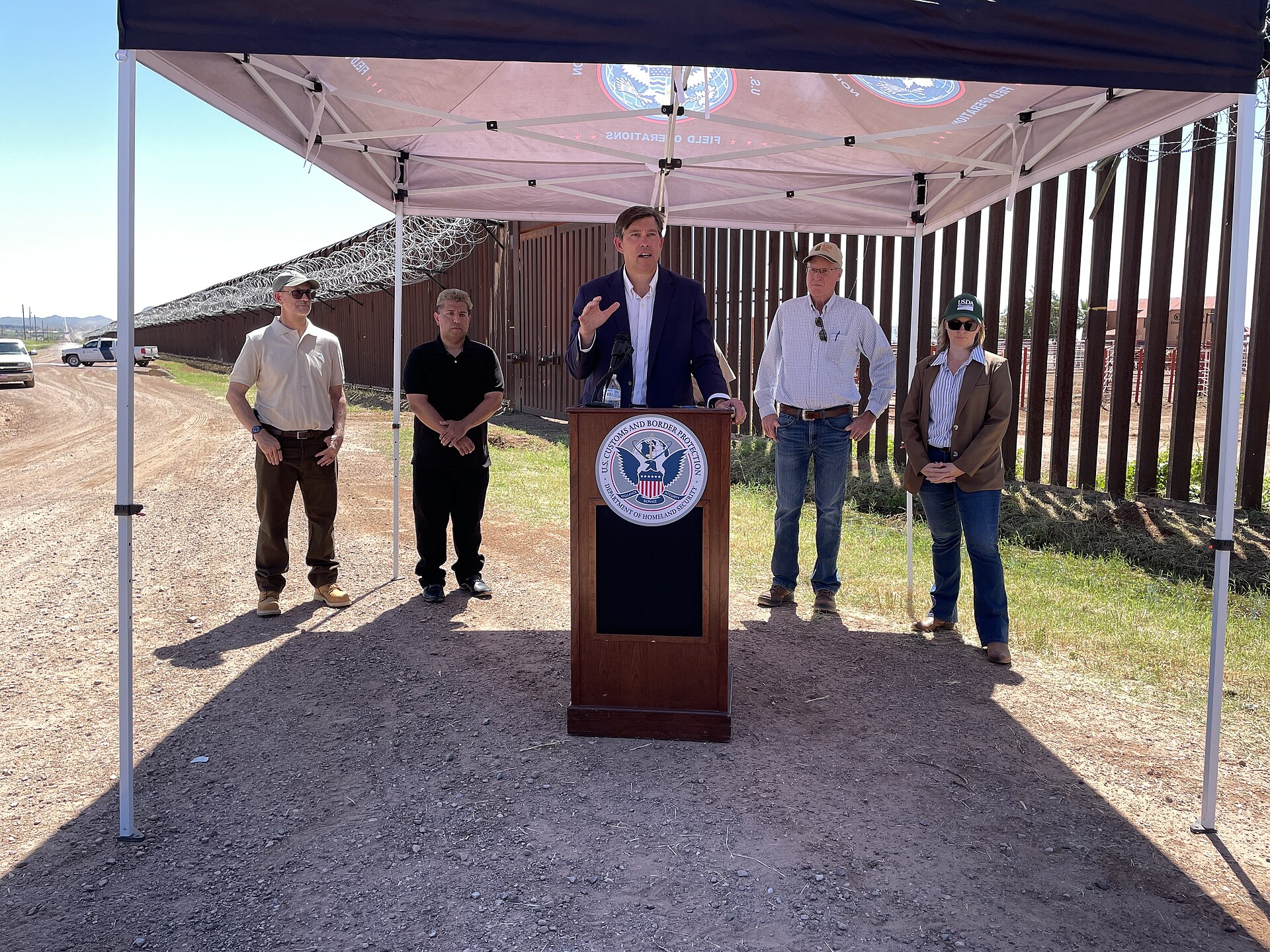
Photo: 图:2026年8月24日,农业部副部长 Hoskins 与动植物卫生检验局(APHIS)负责人在 Arizona 州 Douglas 口岸介绍防范新世界螺旋蝇的多层检验规程,该口岸当天恢复自墨西哥进口牛只。照片:Lance Cheung 摄,美国农业部(USDA),公共领域,经 Wikimedia Commons 发布/On August 24, 2026, USDA Under Secretary Hoskins joined APHIS leadership at the Douglas, Arizona port of entry to spotlight the multi-layered inspection protocols against New World screwworm as the port reopened to cattle imports from Mexico. Photo by Lance Cheung, U.S. Department of Agriculture, public domain, via Wikimedia Commons
- 2026-10-18New World Screwworm Returns to the Southern U.S. as USDA Builds $750 Million Sterile Fly Plant in Edinburg, Texas
- 2026-10-20Follow-Up: USDA Continues Phased Reopening of Southern Border Ports, With Columbus, New Mexico Resuming Cattle Imports From Mexico on October 26This story
- 2026-10-21Follow-Up: New World Screwworm Confirmed in a Pecos County, Texas Elk, a First Detection in U.S. Wildlife
- 2026-10-22Follow-Up: New World Screwworm Confirmed in a Beef Cow in Otero County, New Mexico; Infested Zone of at Least 20 km Set Around the Site
- 2026-10-23Follow-Up: Texas Modifies New World Screwworm Infested Zone 12.A, Easing Livestock and Pet Movement Rules in Parts of the Zone
- 2026-10-24Follow-up: New Mexico Confirms New World Screwworm in a Hidalgo County Calf on Oct. 23, Setting a 12.4-Mile Infested Zone
- 2026-10-27Follow-Up: Two New World Screwworm Cases Confirmed in Doña Ana County, New Mexico; Livestock Board Expands Surveillance and Trapping
- 2026-10-28Follow-Up: First New World Screwworm Detection in Arizona Confirmed in a Cochise County Dog, USDA Sets 20-km Infested Zone