Follow-Up: New World Screwworm Confirmed in a Pecos County, Texas Elk, a First Detection in U.S. Wildlife
WASHINGTON — The U.S. Department of Agriculture's Animal and Plant Health Inspection Service (APHIS) confirmed on October 21 the first detection of New World screwworm (NWS) in wildlife in the United States, in an elk in Pecos County, Texas. The elk was located on a game ranch and was reported after being harvested by a hunter.
APHIS said the Texas Animal Health Commission will modify a previously established infested zone, and USDA and the Texas Parks and Wildlife Department are conducting additional wildlife surveillance in the area. The agency said the detection highlights the critical role hunters, landowners, outdoor enthusiasts and wildlife professionals play in helping detect and stop the spread of NWS, and that early reporting is one of the most important tools to protect wildlife, livestock and pets in the United States.
As hunting seasons continue across Texas and other states, APHIS urged hunters and others outdoors near infested areas to watch for visible maggots (larvae) in wounds or body openings; open, draining or enlarging wounds; foul-smelling injuries; animals that appear weak, lethargic, isolated or in distress; and signs of infestation around the nose, mouth, ears, eyes or genital areas. Anyone who sees anything suspicious should report it immediately, APHIS said, adding that its wildlife resources at Screwworm.gov provide identification signs and reporting guidance.
New World screwworm is a parasitic fly whose larvae feed on the living tissue of warm-blooded animals, threatening livestock and wildlife. USDA has previously announced a $750 million investment to build a sterile fly production facility in Edinburg, Texas, to counter the pest's northward spread, with operations expected to begin in spring 2027.
Source: GSM · USA (original Chinese edition)
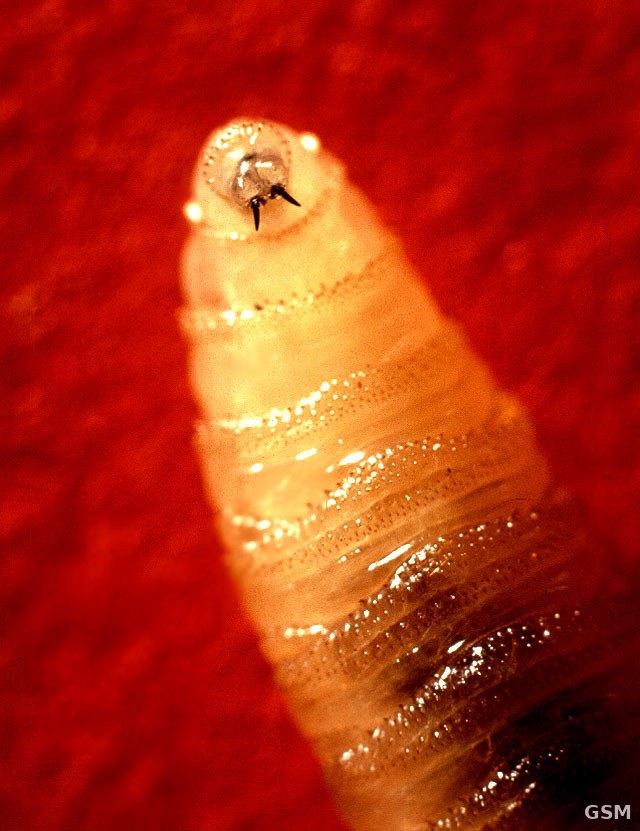
Photo: 图:新世界螺旋蝇幼虫特写,其口器上的獠状颚刺会啃食温血动物的活体组织。John Kucharski 摄,美国农业部农业研究局(ARS)公共领域图片(编号 K7576-1),经 Wikimedia Commons 发布。 / Close-up of a New World screwworm larva, whose tusklike mandibles rasp the flesh of living warm-blooded animals. Photo by John Kucharski, Agricultural Research Service, U.S. Department of Agriculture, public domain (image K7576-1), via Wikimedia Commons.
- 2026-10-18New World Screwworm Returns to the Southern U.S. as USDA Builds $750 Million Sterile Fly Plant in Edinburg, Texas
- 2026-10-20Follow-Up: USDA Continues Phased Reopening of Southern Border Ports, With Columbus, New Mexico Resuming Cattle Imports From Mexico on October 26
- 2026-10-21Follow-Up: New World Screwworm Confirmed in a Pecos County, Texas Elk, a First Detection in U.S. WildlifeThis story
- 2026-10-22Follow-Up: New World Screwworm Confirmed in a Beef Cow in Otero County, New Mexico; Infested Zone of at Least 20 km Set Around the Site
- 2026-10-23Follow-Up: Texas Modifies New World Screwworm Infested Zone 12.A, Easing Livestock and Pet Movement Rules in Parts of the Zone
- 2026-10-24Follow-up: New Mexico Confirms New World Screwworm in a Hidalgo County Calf on Oct. 23, Setting a 12.4-Mile Infested Zone
- 2026-10-27Follow-Up: Two New World Screwworm Cases Confirmed in Doña Ana County, New Mexico; Livestock Board Expands Surveillance and Trapping
- 2026-10-28Follow-Up: First New World Screwworm Detection in Arizona Confirmed in a Cochise County Dog, USDA Sets 20-km Infested Zone