A White House History of America (1): After Columbus — How the Thirteen Colonies Took Root, 1492–1763
[Series note] The White House has published A People's History of the United States, an official chronological account of how the nation came to be. GSM retells it here chapter by chapter. For Chinese readers living in the United States, understanding where this country came from is the first step to understanding many of its rules and ideas today. This is Chapter One: 1492 to 1763, the colonial era.
[Key dates]
1492 — Columbus reaches the Americas
1565 — Spain founds St. Augustine
1607 — England founds Jamestown
1619 — Virginia forms the colonies' first elected assembly
1620 — The Mayflower reaches Plymouth
1754–1763 — Britain and France fight a seven-year war for North America
1. Opening the Door to a New World
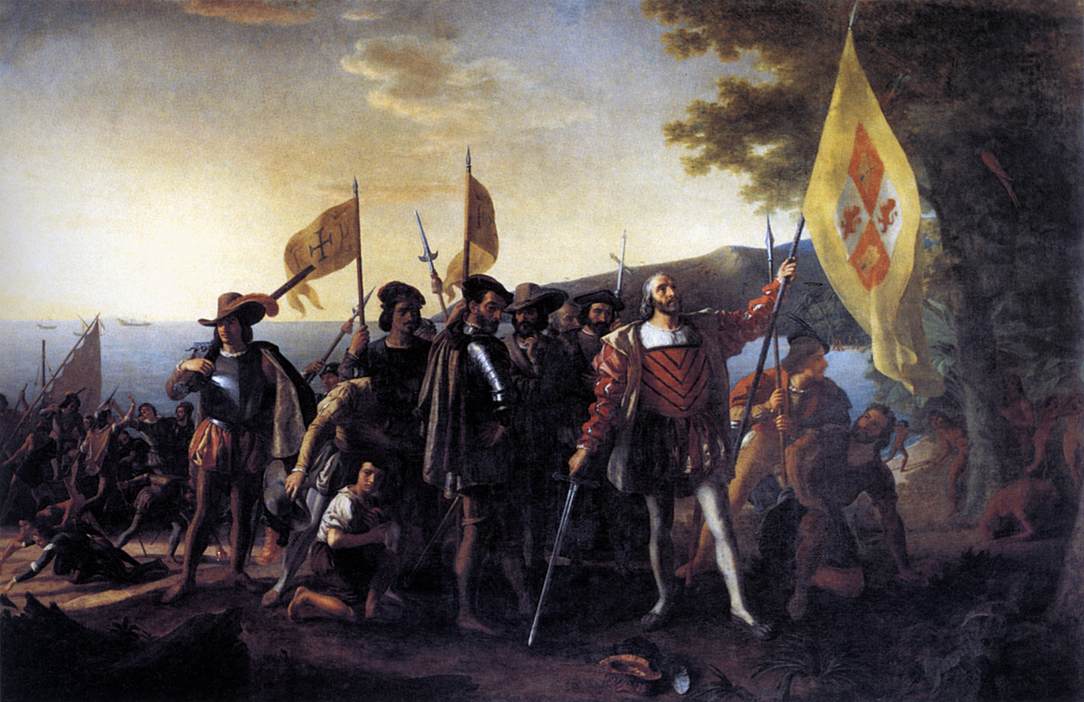
In 1492 Christopher Columbus, financed by the Spanish Crown, crossed the Atlantic and reached the Americas, opening an era of sustained European exploration and settlement.
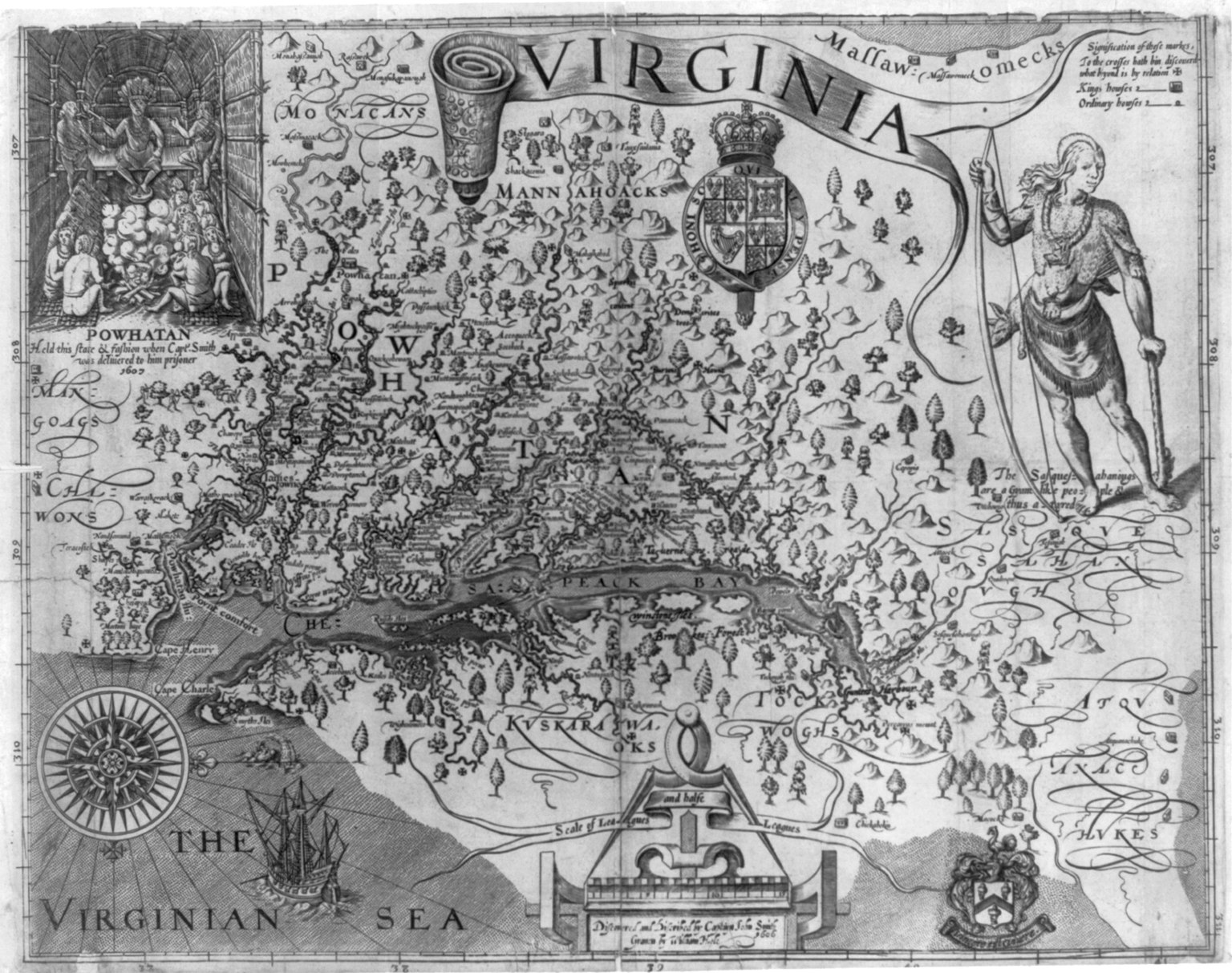
Spain founded St. Augustine, Florida, in 1565 — the oldest continuously occupied European settlement in the continental United States — as a military outpost guarding treasure fleets sailing from the Caribbean back to Europe. English settlers founded Jamestown in 1607, the start of permanent English colonization. France and the Netherlands also gained footholds, the French trading furs and allying with Native nations in the north, the Dutch settling around present-day New York.
2. Thirteen Colonies, Each Its Own
Over the following century and more, England established thirteen colonies along the Atlantic coast, each with its own character. Virginia was settled largely for profit, built on cash crops such as tobacco; Massachusetts was settled largely by Puritans seeking to worship by their conscience.
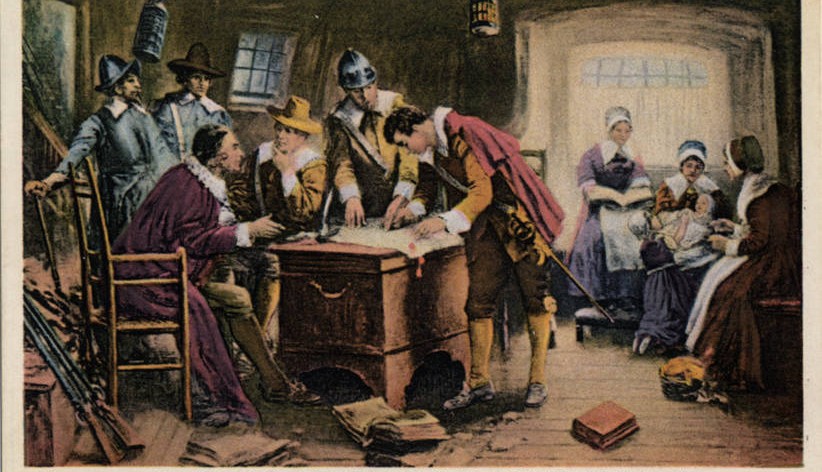
In 1620 the Mayflower reached Plymouth, and before coming ashore its passengers signed the Mayflower Compact, agreeing to govern themselves by mutual consent — an early seed of the idea that government rests on the consent of the governed. That first winter, disease, exposure and malnutrition killed roughly half of them. The survivors endured with help from the Wampanoag people, who taught them to grow corn, fish local waters and fertilize the region's soil; the next year's harvest became the basis of the first Thanksgiving.
3. Triangular Trade and Three Economies
Colonial economies were bound into the triangular trade, the Atlantic network exchanging colonial raw materials, European manufactured goods and enslaved Africans — and slavery took root in the South, where plantation agriculture rested on forced labor.
Regions diverged: New England leaned on shipbuilding, fishing and small farms; the Middle colonies became the "breadbasket" for their grain; the South ran plantation economies of tobacco, rice and indigo. Governance mixed royal oversight with local self-rule: colonial assemblies, beginning with Virginia's House of Burgesses in 1619, the first representative legislative body in the colonies, gave settlers a political voice even under British authority.
4. A War That Planted the Seeds of Revolution
From 1754 to 1763, Britain and France fought over North America, above all the Ohio River Valley. Britain won, gaining Canada and the land east of the Mississippi — and an enormous war debt.
Parliament then imposed new taxes on the colonies to help pay it, which colonists saw as a violation of their rights as Englishmen, since they had no say in the matter. The Proclamation of 1763, forbidding settlement west of the Appalachians, deepened the anger of many who had fought expecting access to that land. In these years the conviction hardened that legitimate government must rest on the consent of the governed — and the stage was set for revolution.
(Next chapter: 1763–1789, Revolution and Founding.)
Source: GSM · USA (original Chinese edition)
Photo: 图:约翰·范德林油画《哥伦布在瓜纳哈尼登陆,1492年》。图片来源:Wikimedia Commons(公共领域)。Painting: John Vanderlyn, Columbus Landing at Guanahani, 1492. Source: Wikimedia Commons (public domain).
- 2026-10-17A White House History of America (9): A New Century — From the Internet Age to Super Intelligence, 1990s–Today
- 2026-10-17A White House History of America (8): Cold War, Civil Rights and the Moon — From the Truman Doctrine to the Fall of the Berlin Wall, 1945–1991
- 2026-10-17A White House History of America (7): World Wars and the Great Depression — From the Argonne to Normandy, 1914–1945
- 2026-10-17A White House History of America (6): Steel, Immigrants and Reformers — From the Transcontinental Railroad to Women's Suffrage, 1870s–1920
- 2026-10-17A White House History of America (5): Civil War and Reconstruction — From Fort Sumter to Three Amendments, 1861–1877
- 2026-10-17A White House History of America (4): Industry, Reform and Division — From Canals and Mills to the Dred Scott Case, 1815–1861
- 2026-10-17A White House History of America (3): A Republic Expands — From the First President to Manifest Destiny, 1789–1840s
- 2026-10-17A White House History of America (2): Revolution and Founding — From Tea Party Protests to the Philadelphia Convention, 1763–1789
- 2026-10-17A White House History of America (1): After Columbus — How the Thirteen Colonies Took Root, 1492–1763This story