A White House History of America (7): World Wars and the Great Depression — From the Argonne to Normandy, 1914–1945
[Series note] Chapter Seven of GSM's "A White House History of America" series: 1914–1945 — America is drawn into two world wars with a Great Depression between them, and emerges in 1945 as the world's leading power.
[Key dates]
1917 — The United States declares war on Germany and enters World War I
1918 — The First World War ends in armistice
1929 — The Wall Street crash; the Great Depression begins
1933 — Franklin D. Roosevelt takes office; the New Deal begins
1941 — Pearl Harbor; the United States enters World War II
1944 — The Normandy landings
1945 — World War II ends; the United Nations is founded
1. The First World War
When Europe went to war in 1914, America held to neutrality — until German U-boats sank passenger ships and, in 1917, the Zimmermann Telegram surfaced, Germany's secret bid to bring Mexico into war against the United States. Congress declared war that April.
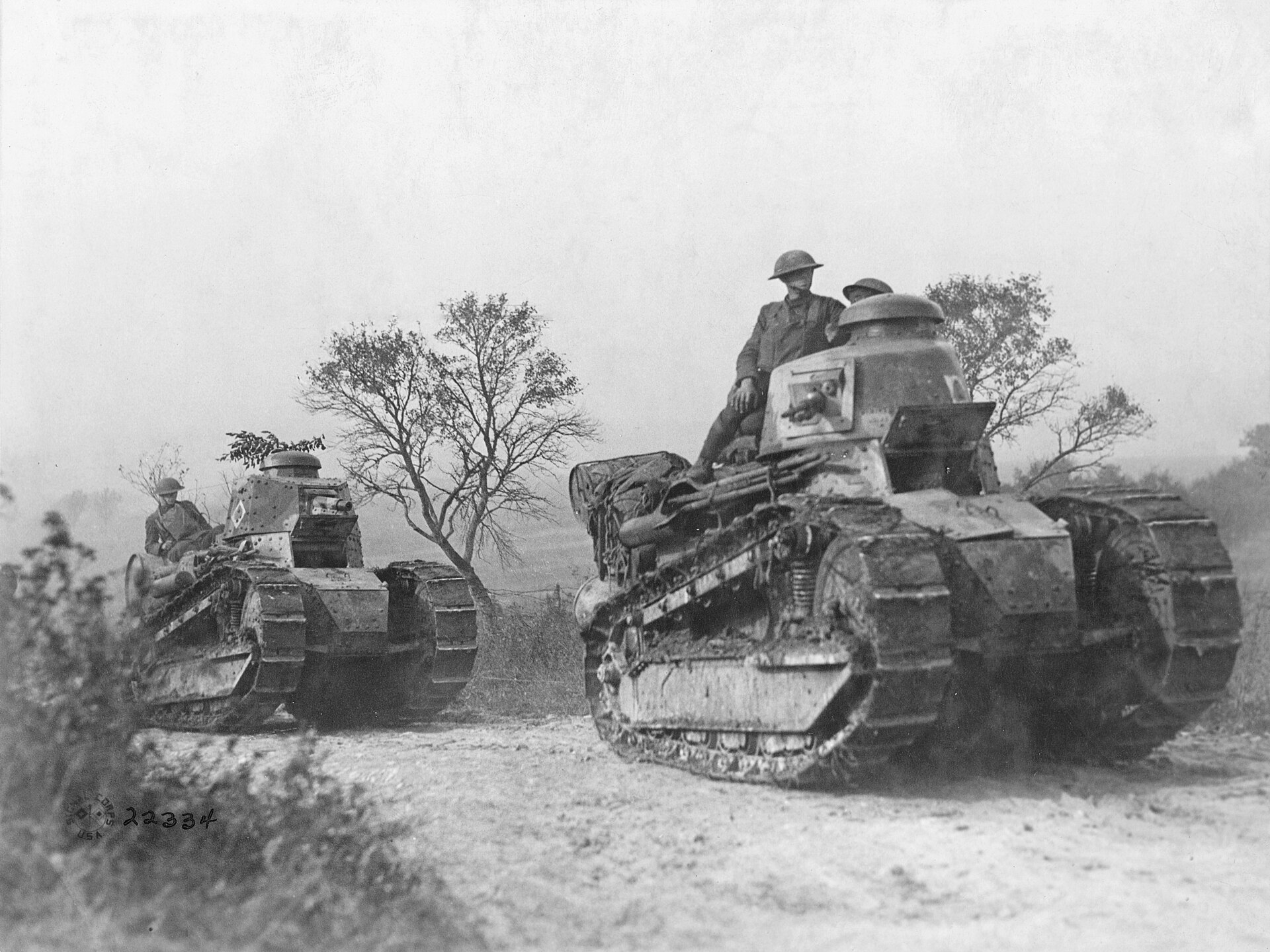
More than two million American soldiers crossed the Atlantic. The Meuse-Argonne offensive of autumn 1918 engaged some 1.2 million of them, then the largest battle in American history; the armistice came on November 11. About 116,000 Americans had died.
President Wilson carried his Fourteen Points to Paris and championed a League of Nations — but the Senate refused the treaty, and the United States never joined the League it had proposed.
2. The Roaring Twenties
The postwar decade glittered: automobiles reached ordinary households, radio and movies built the first national popular culture, jazz traveled from New Orleans to northern cities, and the Harlem Renaissance put Black writers and musicians on the national stage.
The shadows were real too: Prohibition fed a bootlegging underworld; the Ku Klux Klan revived; and in 1925 Tennessee's Scopes Trial turned the teaching of evolution into a national courtroom drama.
3. The Great Depression and the New Deal
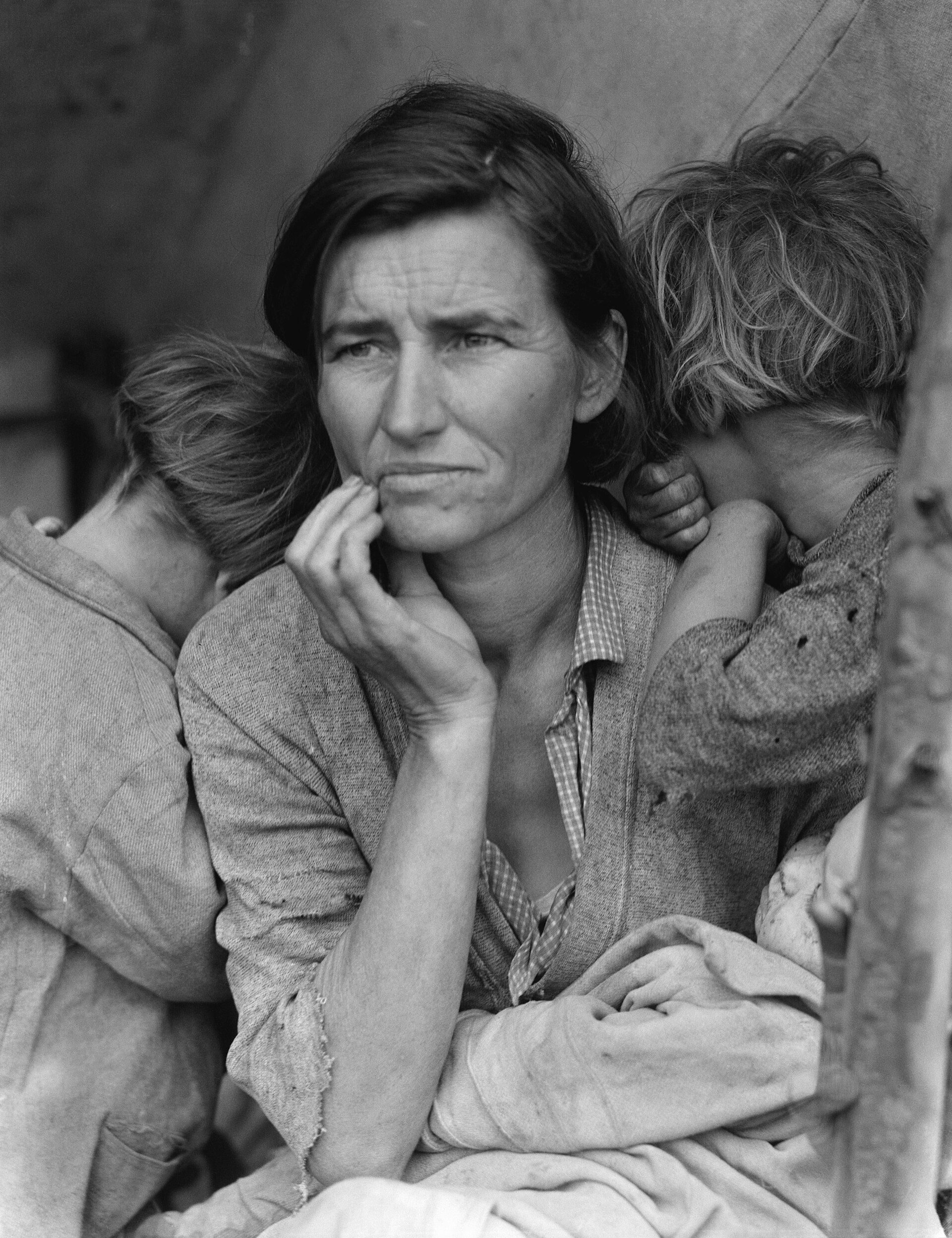
In October 1929 the stock market crashed. By 1933 about a quarter of the workforce was unemployed and more than 9,000 banks had failed; the homeless built "Hoovervilles" on city edges, while drought and dust storms on the Great Plains drove hundreds of thousands of families west to California.
Franklin D. Roosevelt, inaugurated in 1933, answered with the New Deal: banks were closed, inspected and reopened; the Civilian Conservation Corps put some three million young men to work planting trees and building parks; the Works Progress Administration employed millions more on roads and bridges — and hired artists and writers too.
The Social Security Act of 1935 created old-age pensions and unemployment insurance; the Wagner Act protected workers' right to unionize. The New Deal did not end the Depression, but it remade the federal government's role — Washington now answered directly for ordinary livelihoods.
4. The Second World War
On December 7, 1941, Japan attacked Pearl Harbor; the United States declared war on Japan and Germany. Sixteen million Americans served in uniform; factories ran at full tilt and millions of women entered industrial work — "Rosie the Riveter" became an emblem of the home front.
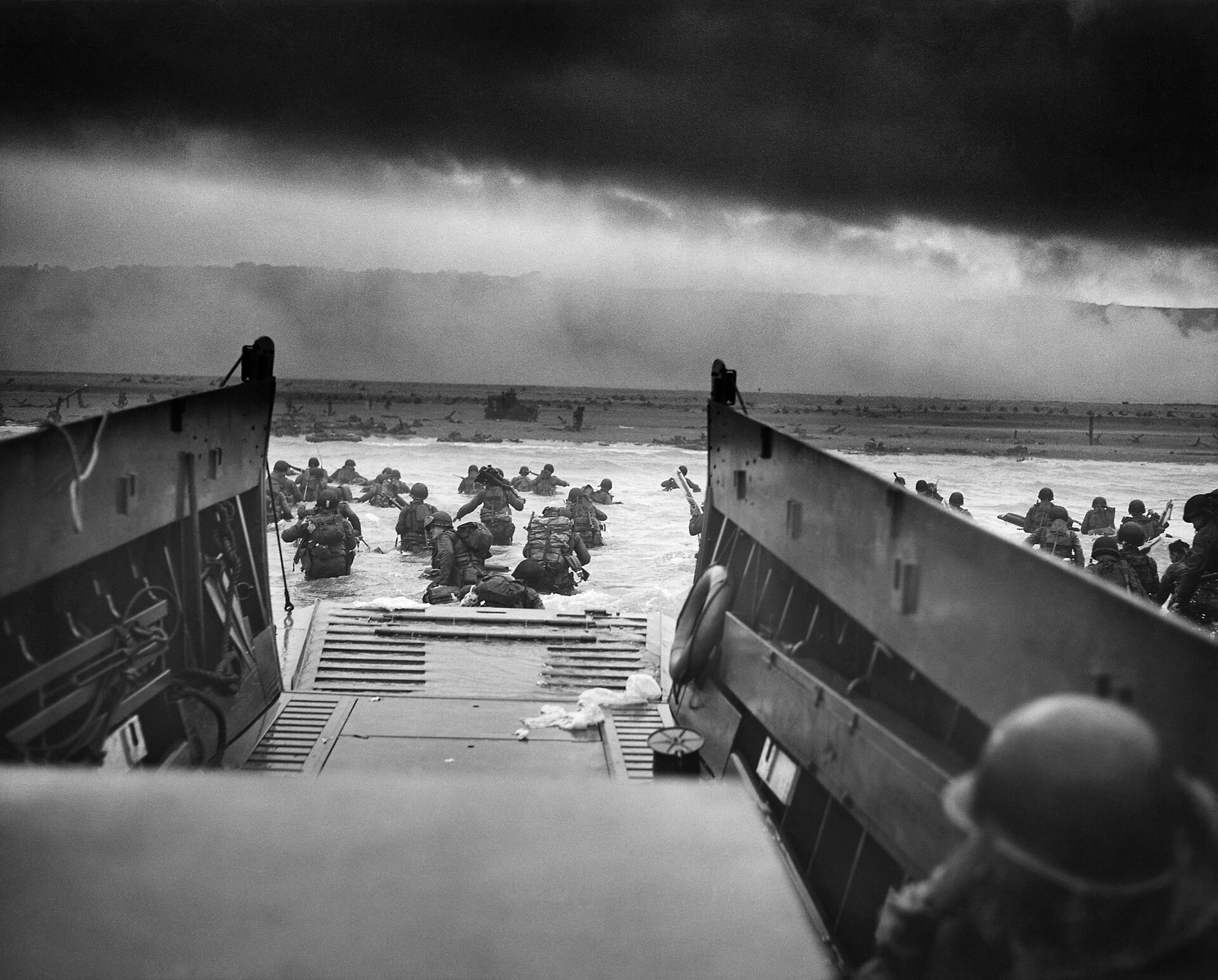
On June 6, 1944, some 156,000 Allied troops landed in Normandy, opening the second front in Europe; Germany surrendered the following May. In the Pacific, American forces advanced island by island through the brutal fighting of Iwo Jima and Okinawa.
The war ended with the atomic bombings and Japan's surrender; about 405,000 Americans died. The shadows were deep: some 120,000 Japanese Americans were forcibly removed to incarceration camps, and after the war the full truth of the Holocaust emerged — six million Jews murdered.
In 1945 the United Nations was founded at San Francisco. The United States entered the next era as the world's foremost economic and military power.
(Next chapter: 1945–1991, The Cold War, Civil Rights and the Moon.)
Source: GSM · USA (original Chinese edition)
Photo: 图:1944年6月6日清晨,诺曼底登陆——一艘美军登陆艇在「犹他」海滩放下士兵。海岸警卫队摄影师罗伯特·F·萨金特称此作《踏入死神之口》。图片来源:美国国家档案馆(公共领域)。'Into the Jaws of Death' — troops of the U.S. Army's 1st Infantry Division disembark from a Coast Guard landing craft at Utah Beach, Normandy, on the morning of June 6, 1944. Photograph by Robert F. Sargent, USCG. Source: U.S. National Archives (public domain).
- 2026-10-17A White House History of America (9): A New Century — From the Internet Age to Super Intelligence, 1990s–Today
- 2026-10-17A White House History of America (8): Cold War, Civil Rights and the Moon — From the Truman Doctrine to the Fall of the Berlin Wall, 1945–1991
- 2026-10-17A White House History of America (7): World Wars and the Great Depression — From the Argonne to Normandy, 1914–1945This story
- 2026-10-17A White House History of America (6): Steel, Immigrants and Reformers — From the Transcontinental Railroad to Women's Suffrage, 1870s–1920
- 2026-10-17A White House History of America (5): Civil War and Reconstruction — From Fort Sumter to Three Amendments, 1861–1877
- 2026-10-17A White House History of America (4): Industry, Reform and Division — From Canals and Mills to the Dred Scott Case, 1815–1861
- 2026-10-17A White House History of America (3): A Republic Expands — From the First President to Manifest Destiny, 1789–1840s
- 2026-10-17A White House History of America (2): Revolution and Founding — From Tea Party Protests to the Philadelphia Convention, 1763–1789
- 2026-10-17A White House History of America (1): After Columbus — How the Thirteen Colonies Took Root, 1492–1763