A White House History of America (6): Steel, Immigrants and Reformers — From the Transcontinental Railroad to Women's Suffrage, 1870s–1920
[Series note] Chapter Six of GSM's "A White House History of America" series: the 1870s to 1920 — railroads and steel raise an industrial giant, fourteen million immigrants pour into the cities, and reformers declare war on monopoly, corruption and inequality.
[Key dates]
1869 — The transcontinental railroad is completed in Utah
1882 — Congress passes the Chinese Exclusion Act
1890 — The Sherman Antitrust Act
1898 — The Spanish-American War; the U.S. takes Puerto Rico, Guam and the Philippines
1906 — The Pure Food and Drug Act
1913 — The Federal Reserve System is created
1920 — The Nineteenth Amendment: women's suffrage
1. A Continent Knit by Steel and Rail
After the Civil War, railroads stitched the continent together: in 1869 the Central Pacific and Union Pacific met at Promontory, Utah; by 1900 the United States had more than 190,000 miles of track — more than all of Europe.
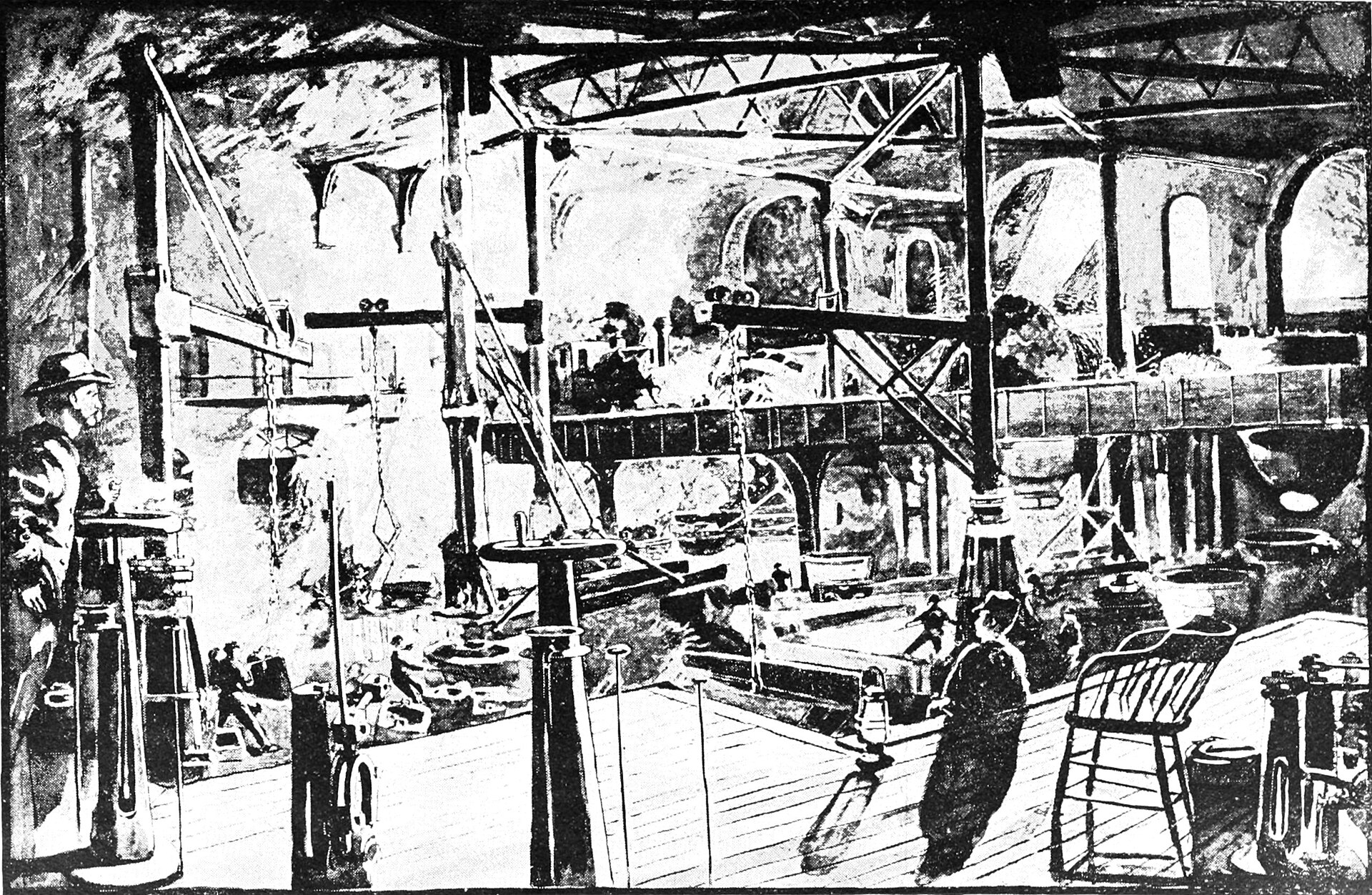
Andrew Carnegie drove Bessemer steelmaking to its limit, making America the world's top steel producer; steel remade skylines in rails, bridges and towers. Rockefeller's Standard Oil controlled some 90 percent of refining, and J.P. Morgan used finance to consolidate railroads and steel into giant corporations.
Inventions came in clusters: Bell's telephone (1876), Edison's light bulb (1879), elevators and steel-frame skyscrapers. Wealth piled up at unprecedented speed — Mark Twain named the era the "Gilded Age."
2. The Immigrant Tide and the Cities
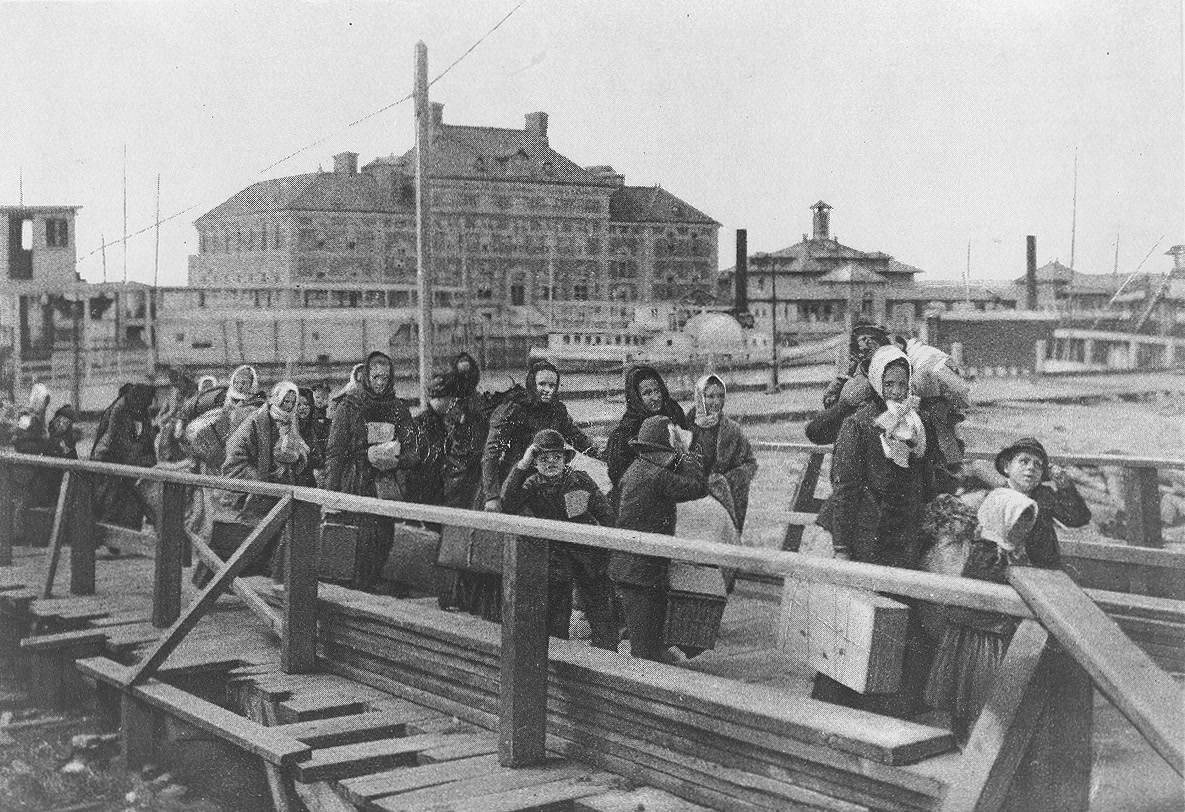
Industry needed people. Between 1900 and 1915, some 14 million immigrants arrived; most Europeans entered through Ellis Island in New York, while the West Coast received large Chinese, Japanese and Mexican communities. In 1882 Congress passed the Chinese Exclusion Act — America's first law barring immigration by race.
Cities swelled beyond their means: tenements were dangerously crowded, factory girls and children worked days of ten hours or more; about two million children labored in mines and mills nationwide.
Workers organized for the eight-hour day, and strikes and clashes followed. In Chicago, Jane Addams founded Hull House, offering immigrants schools, clinics and legal aid — a model of urban reform.
3. The Frontier Closes, the Nation Steps Overseas
The continental frontier closed in these decades: railroads and cavalry pushed onto the Great Plains and Native nations were confined to reservations; after Wounded Knee in 1890, armed resistance effectively ended. Homesteaders settled the West even as the prairies and buffalo herds vanished.
In 1898, war with Spain brought Puerto Rico, Guam and the Philippines, and a dominant position in Cuba — the republic became, for the first time, an empire across two oceans.
4. The Progressive Reformers
At the new century's turn, "muckraking" journalists exposed the underside: Upton Sinclair's novel The Jungle laid bare Chicago's meatpacking plants and led directly to the Pure Food and Drug Act and meat inspection laws of 1906.
Theodore Roosevelt sued more than forty monopolies under the Sherman Act and placed some 230 million acres into national forests and parks. Taft and Wilson continued: the Federal Reserve (1913), the income tax, and direct election of senators.
5. Women Win the Vote
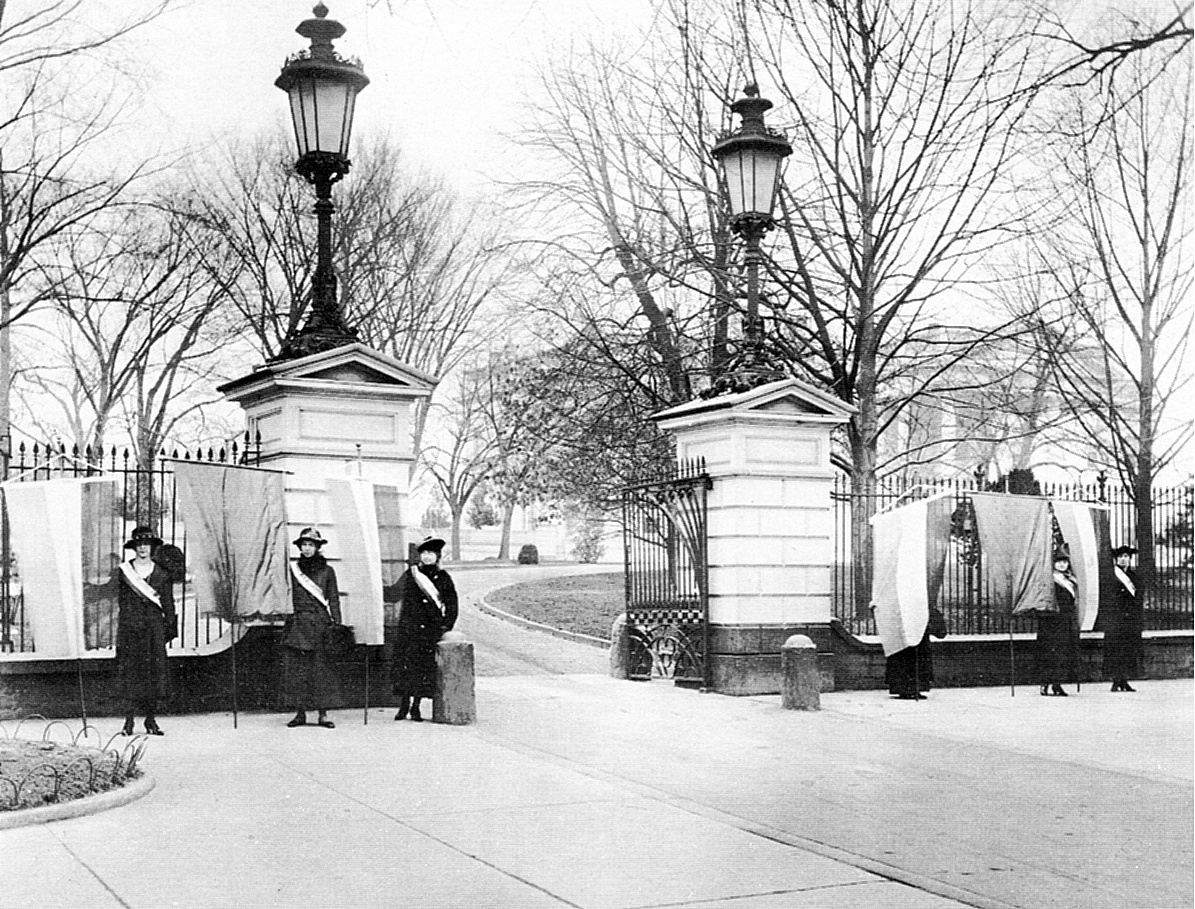
From Seneca Falls in 1848, the campaign for women's suffrage ran seventy years. Susan B. Anthony was put on trial for voting in 1872; from 1917, pickets — the "Silent Sentinels" — stood with banners at the White House gates, and many were arrested and jailed.
In 1920 the Nineteenth Amendment took effect: the right to vote "shall not be denied on account of sex." American democracy's boundary moved outward once more.
(Next chapter: 1914–1945, World Wars and the Great Depression.)
Source: GSM · USA (original Chinese edition)
Photo: 图:1902年,抵达纽约埃利斯岛的移民在移民站主楼前列队等候检查。图片来源:美国国家公园管理局/Wikimedia Commons(公共领域)。Immigrants newly arrived at Ellis Island, New York, waiting in line outside the main building, 1902. Source: U.S. National Park Service / Wikimedia Commons (public domain).
- 2026-10-17A White House History of America (9): A New Century — From the Internet Age to Super Intelligence, 1990s–Today
- 2026-10-17A White House History of America (8): Cold War, Civil Rights and the Moon — From the Truman Doctrine to the Fall of the Berlin Wall, 1945–1991
- 2026-10-17A White House History of America (7): World Wars and the Great Depression — From the Argonne to Normandy, 1914–1945
- 2026-10-17A White House History of America (6): Steel, Immigrants and Reformers — From the Transcontinental Railroad to Women's Suffrage, 1870s–1920This story
- 2026-10-17A White House History of America (5): Civil War and Reconstruction — From Fort Sumter to Three Amendments, 1861–1877
- 2026-10-17A White House History of America (4): Industry, Reform and Division — From Canals and Mills to the Dred Scott Case, 1815–1861
- 2026-10-17A White House History of America (3): A Republic Expands — From the First President to Manifest Destiny, 1789–1840s
- 2026-10-17A White House History of America (2): Revolution and Founding — From Tea Party Protests to the Philadelphia Convention, 1763–1789
- 2026-10-17A White House History of America (1): After Columbus — How the Thirteen Colonies Took Root, 1492–1763