A White House History of America (2): Revolution and Founding — From Tea Party Protests to the Philadelphia Convention, 1763–1789
[Series note] Chapter Two of GSM's "A White House History of America" series: 1763–1789 — how a quarrel over taxes became a war for independence, and how the new nation then gave itself a constitution.
[Key dates]
1765 — Parliament passes the Stamp Act; "no taxation without representation"
1773 — The Boston Tea Party
1776 — The Declaration of Independence is adopted
1781 — American and French forces win at Yorktown
1783 — The Treaty of Paris; Britain recognizes American independence
1787 — The Philadelphia Convention drafts the U.S. Constitution
1791 — The Bill of Rights takes effect
1. A Quarrel Over Taxes
After 1763, Britain taxed the colonies to pay its war debts. The Stamp Act of 1765, Parliament's first direct tax on the colonies, raised the cry of "no taxation without representation."
The tax was repealed, but the Declaratory Act asserted Parliament's right to legislate for the colonies; the Townshend duties of 1767 brought boycotts. In 1770, British troops in Boston fired on a crowd, killing five.
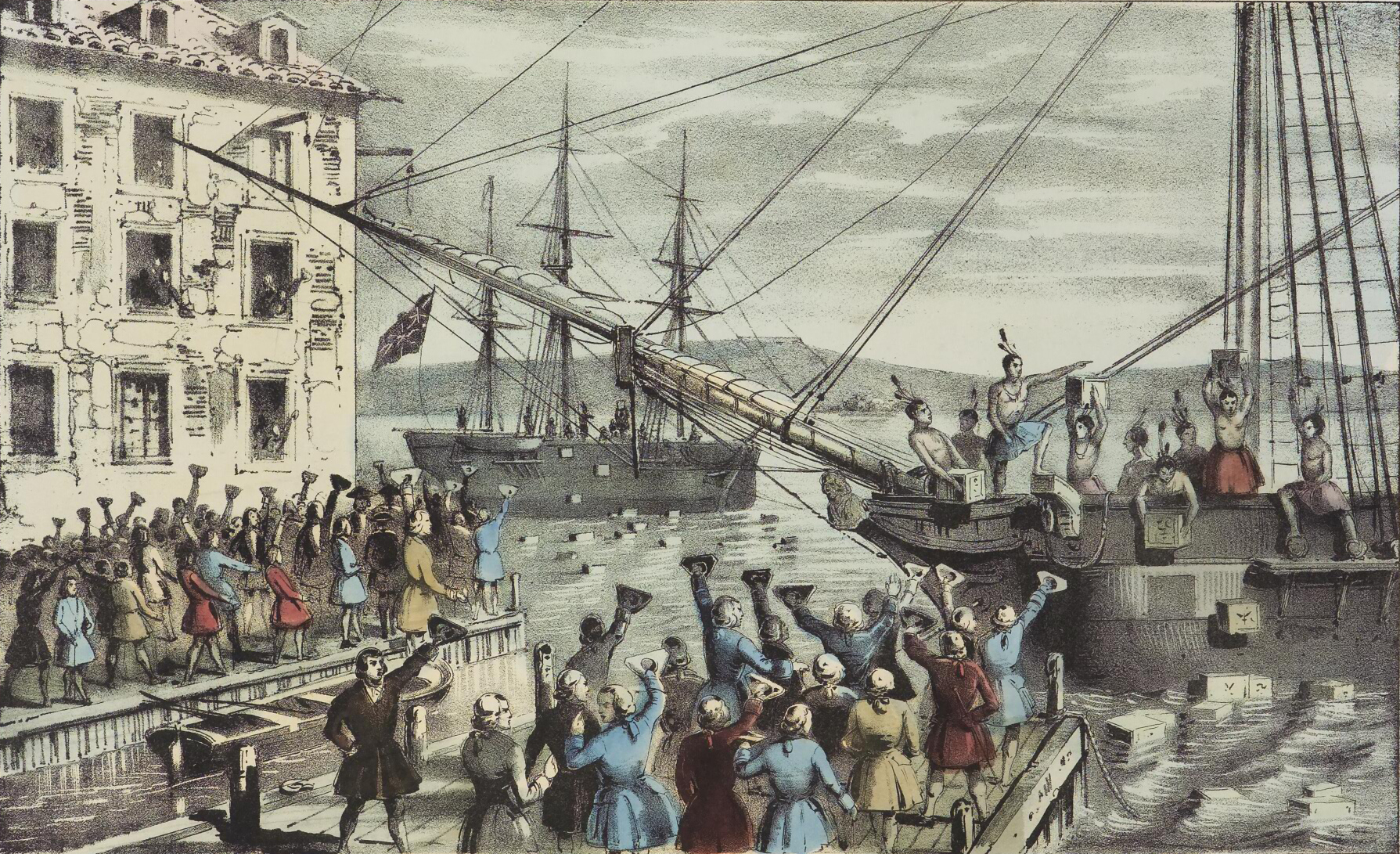
In 1773 the Tea Act was read as a bailout for the East India Company and a reassertion of Parliament's taxing power. That December, members of the Sons of Liberty boarded ships in Boston Harbor and dumped 342 chests of tea into the water.
Parliament answered with the Coercive Acts of 1774, closing Boston's port and curbing Massachusetts self-government. Scattered grievances became united resistance.
2. The Declaration of Independence
In 1774, twelve colonies sent delegates to the First Continental Congress in Philadelphia to boycott British goods and petition the king. After the fighting at Lexington and Concord in 1775, the Second Continental Congress became a government in practice.
It named George Washington of Virginia to command the Continental Army. Step by step, the colonies moved from demanding rights to demanding independence.
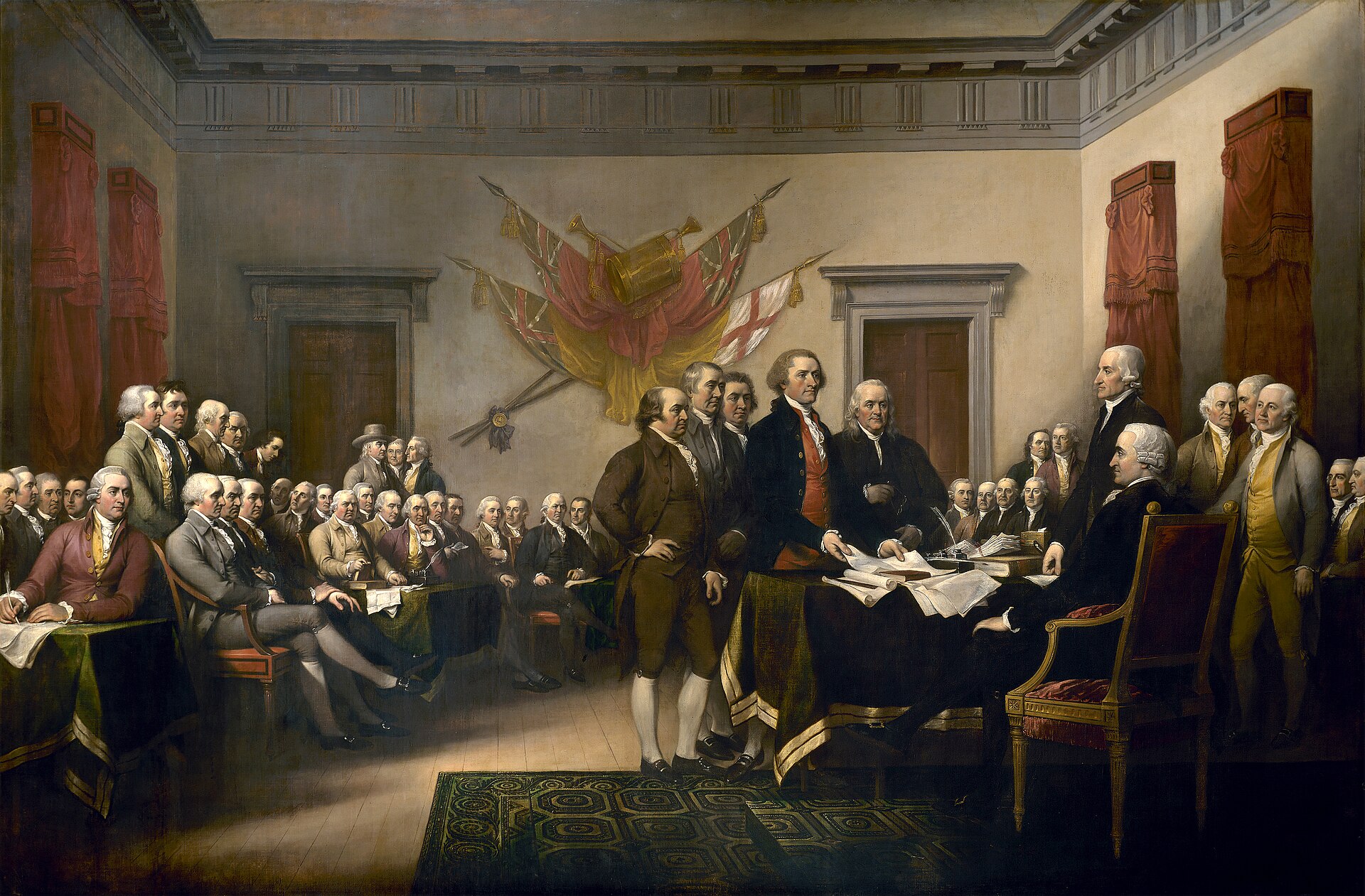
On July 4, 1776, Congress adopted the Declaration of Independence, drafted mainly by Thomas Jefferson and revised with John Adams and Benjamin Franklin among others.
It proclaimed unalienable rights to life, liberty and the pursuit of happiness. The signers knew that if the Revolution failed, their signatures meant execution for treason.
3. The War for Independence
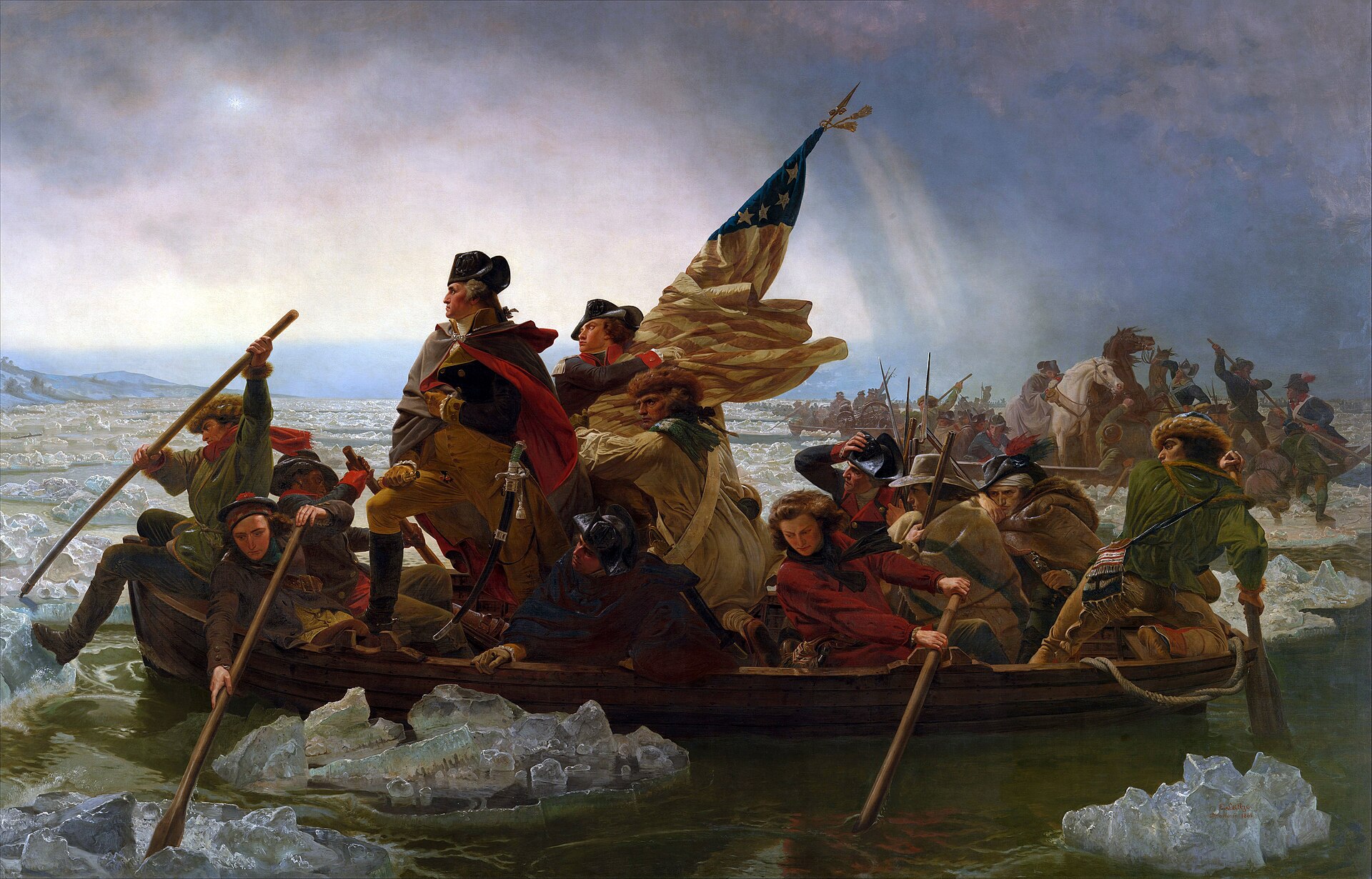
Early on, the Continental Army lost battle after battle to better-trained, better-supplied British forces. On Christmas night 1776, Washington crossed the ice-choked Delaware River and struck Trenton, reviving a collapsing cause.
The winter of 1777–78 at Valley Forge was the low point: disease, hunger and cold killed many soldiers, while Prussian officer Baron von Steuben drilled the survivors into a disciplined army.
Victory at Saratoga in 1777 was the turning point. France formally allied with the United States, sending money, supplies and a navy.
In 1781, American and French forces trapped the British at Yorktown, Virginia, and Cornwallis surrendered. The Treaty of Paris (1783) won British recognition of independence, with territory stretching to the Mississippi.
4. From Confederation to Constitution
The first frame of government, the Articles of Confederation, kept the central government deliberately weak: no power to tax, to regulate trade between the states, or to enforce its own laws.
When indebted Massachusetts farmers rose in Shays' Rebellion (1786–87), the government could not respond. The cost of weakness was plain to everyone.
In the summer of 1787, delegates from twelve states met in Philadelphia to revise the Articles — and instead wrote a new Constitution: a federal system of three branches, separated and checking one another.
The fight between large and small states was settled by a two-house legislature: a House apportioned by population and a Senate with two seats per state. Ratification was hard-fought, with Hamilton, Madison and Jay arguing the case in The Federalist Papers.
To answer fears that individual liberty was unprotected, the first ten amendments — the Bill of Rights — were added in 1791, spelling out freedoms of speech, religion and the press, and the right to bear arms. The skeleton of the republic was in place.
(Next chapter: 1789–1840s, A Republic Expands.)
Source: GSM · USA (original Chinese edition)
Photo: 图:约翰·特朗布尔油画《独立宣言》(1819年),描绘起草委员会向大陆会议提交《独立宣言》草案的场景。图片来源:Wikimedia Commons(公共领域)。Painting: John Trumbull, Declaration of Independence (1819), showing the drafting committee presenting the Declaration to the Continental Congress. Source: Wikimedia Commons (public domain).
- 2026-10-17A White House History of America (9): A New Century — From the Internet Age to Super Intelligence, 1990s–Today
- 2026-10-17A White House History of America (8): Cold War, Civil Rights and the Moon — From the Truman Doctrine to the Fall of the Berlin Wall, 1945–1991
- 2026-10-17A White House History of America (7): World Wars and the Great Depression — From the Argonne to Normandy, 1914–1945
- 2026-10-17A White House History of America (6): Steel, Immigrants and Reformers — From the Transcontinental Railroad to Women's Suffrage, 1870s–1920
- 2026-10-17A White House History of America (5): Civil War and Reconstruction — From Fort Sumter to Three Amendments, 1861–1877
- 2026-10-17A White House History of America (4): Industry, Reform and Division — From Canals and Mills to the Dred Scott Case, 1815–1861
- 2026-10-17A White House History of America (3): A Republic Expands — From the First President to Manifest Destiny, 1789–1840s
- 2026-10-17A White House History of America (2): Revolution and Founding — From Tea Party Protests to the Philadelphia Convention, 1763–1789This story
- 2026-10-17A White House History of America (1): After Columbus — How the Thirteen Colonies Took Root, 1492–1763