A White House History of America (8): Cold War, Civil Rights and the Moon — From the Truman Doctrine to the Fall of the Berlin Wall, 1945–1991
[Series note] Chapter Eight of GSM's "A White House History of America" series: 1945–1991 — nearly half a century of U.S.–Soviet confrontation. In the same decades, America lands on the Moon and, in its own streets, begins to cash the Constitution's promises clause by clause.
[Key dates]
1947 — The Truman Doctrine; the Marshall Plan begins
1950 — The Korean War begins (armistice 1953)
1954 — Brown v. Board of Education: school segregation ruled unconstitutional
1964 — The Civil Rights Act passes
1969 — Apollo 11 lands on the Moon
1989 — The Berlin Wall falls
1991 — The Soviet Union dissolves; the Cold War ends
1. The Cold War Order
The wartime alliance collapsed as soon as the war ended. In 1947 President Truman proclaimed the Truman Doctrine — America would aid peoples resisting outside pressure — and the Marshall Plan poured some 13 billion dollars into Western Europe's recovery. "Containment" of Soviet expansion became the strategy for decades.
NATO was formed in 1949; the Soviets tested an atomic bomb; the People's Republic of China was founded. In 1950 war came to Korea; American forces fought under the UN flag until the 1953 armistice at the 38th parallel, with about 36,000 U.S. dead.
At home, fear of communism fed McCarthyism, costing many officials, teachers and artists their livelihoods on unproven charges. In 1962 the Cuban Missile Crisis brought the world to the edge of nuclear war — and stepped back after thirteen days.
2. Affluence and Anxiety in the Fifties
The war generation went to college and bought houses on the GI Bill; federal mortgages raised suburbs street by street, and the "baby boom" — some 76 million children — was born.
Television entered the living room; from 1956 the Interstate Highway System webbed the country in concrete; cars, fast food and shopping centers defined a new way of life.
Beneath the prosperity sat anxiety: schoolchildren drilled for nuclear attack, and in 1957 the Soviet Union's Sputnik pushed the rivalry into space.
3. The Civil Rights Movement
In 1954 the Supreme Court ruled unanimously in Brown v. Board of Education that segregation in public schools was unconstitutional. In 1955 Rosa Parks was arrested in Montgomery for refusing to give up her bus seat; the city's Black community answered with a bus boycott lasting 381 days.
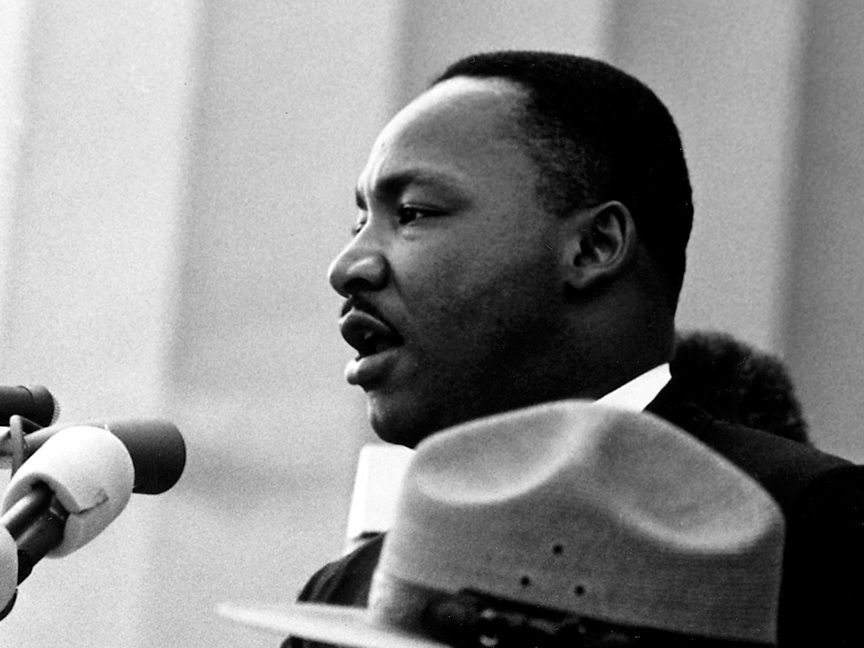
In 1960 students sat in at segregated lunch counters; in 1963 a quarter of a million people marched on Washington, where Martin Luther King Jr. delivered "I Have a Dream" before the Lincoln Memorial. The Civil Rights Act followed in 1964, barring discrimination in public accommodations and employment; the Voting Rights Act of 1965 swept away barriers to Black voting.
The movement widened: Mexican-American farmworkers, women, Native Americans and people with disabilities marched for the same equality.
4. The Moon, Turmoil, and the Cold War's End
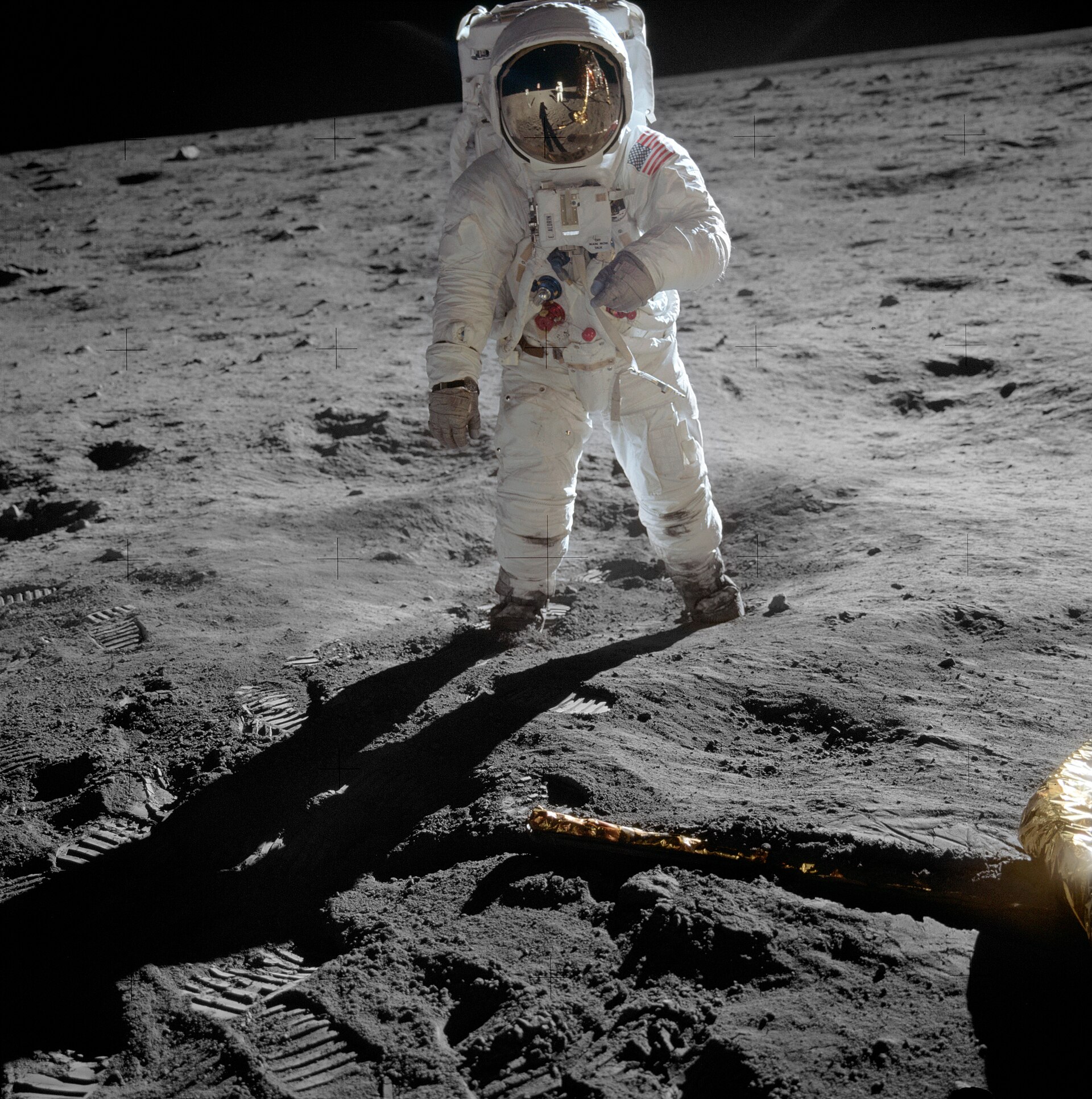
On July 20, 1969, Apollo 11 landed on the Moon; Armstrong and Aldrin walked on its surface as some 600 million people watched on television. This leg of the space race belonged to America.
The same decade tore at the country over Vietnam: more than 58,000 Americans died, protests filled the streets; U.S. forces withdrew in 1973 and Saigon fell in 1975. Watergate forced President Nixon's resignation in 1974 — the constitutional process survived a test set by a president himself.
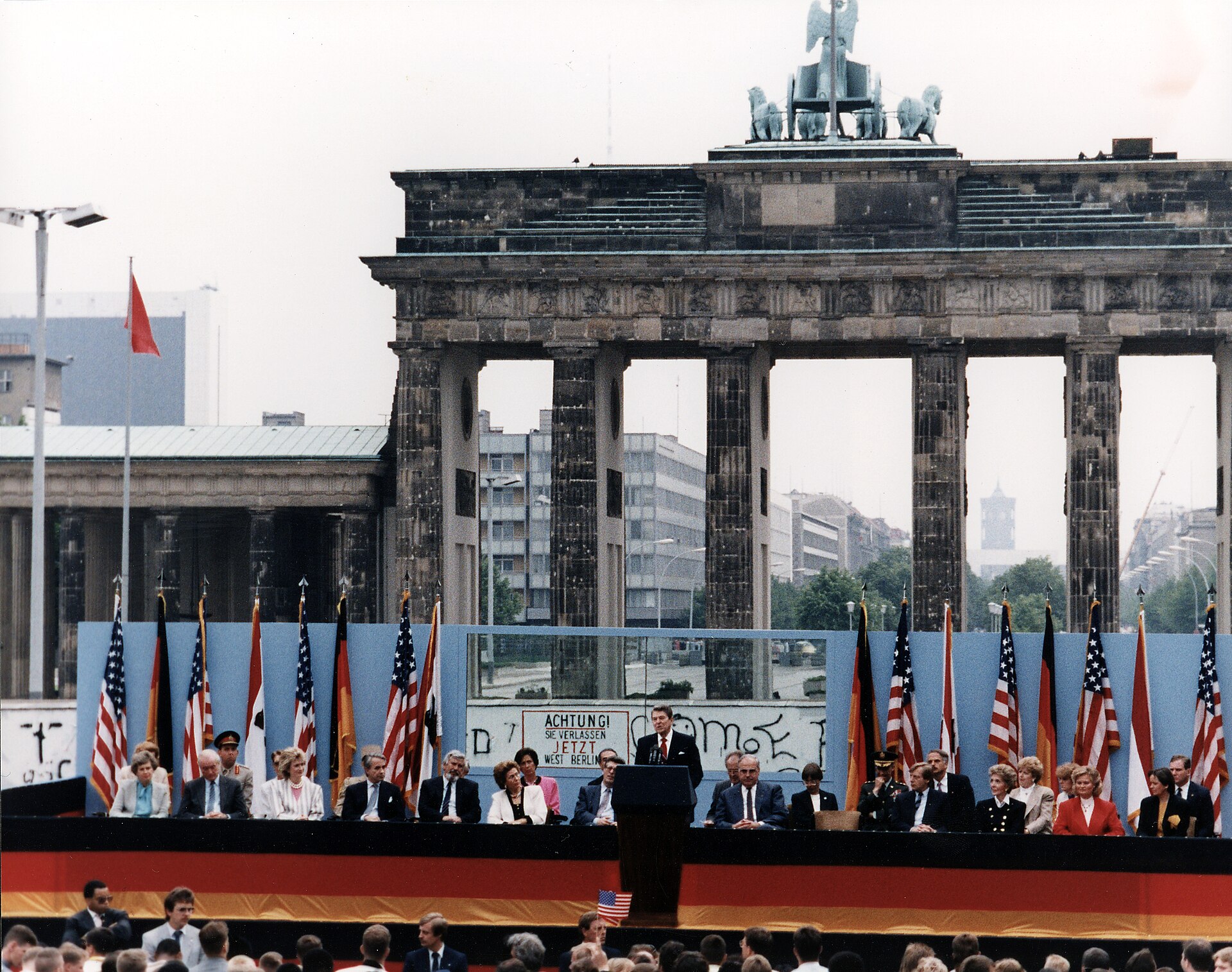
In the 1980s Reagan rebuilt the military and cut taxes. At the Berlin Wall in 1987 he called on Gorbachev: "Tear down this wall!" In 1989 the Wall fell; in 1991 the Soviet Union dissolved — and the Cold War ended with the United States as the sole superpower.
(Next chapter: 1990s to today, the Internet, the War on Terror and Super Intelligence.)
Source: GSM · USA (original Chinese edition)
Photo: 图:1969年7月20日,阿波罗11号宇航员巴兹·奥尔德林站在月球表面,由尼尔·阿姆斯特朗拍摄。图片来源:美国国家航空航天局(公共领域)。Apollo 11 astronaut Buzz Aldrin on the surface of the Moon, July 20, 1969, photographed by Neil Armstrong. Source: NASA (public domain).
- 2026-10-17A White House History of America (9): A New Century — From the Internet Age to Super Intelligence, 1990s–Today
- 2026-10-17A White House History of America (8): Cold War, Civil Rights and the Moon — From the Truman Doctrine to the Fall of the Berlin Wall, 1945–1991This story
- 2026-10-17A White House History of America (7): World Wars and the Great Depression — From the Argonne to Normandy, 1914–1945
- 2026-10-17A White House History of America (6): Steel, Immigrants and Reformers — From the Transcontinental Railroad to Women's Suffrage, 1870s–1920
- 2026-10-17A White House History of America (5): Civil War and Reconstruction — From Fort Sumter to Three Amendments, 1861–1877
- 2026-10-17A White House History of America (4): Industry, Reform and Division — From Canals and Mills to the Dred Scott Case, 1815–1861
- 2026-10-17A White House History of America (3): A Republic Expands — From the First President to Manifest Destiny, 1789–1840s
- 2026-10-17A White House History of America (2): Revolution and Founding — From Tea Party Protests to the Philadelphia Convention, 1763–1789
- 2026-10-17A White House History of America (1): After Columbus — How the Thirteen Colonies Took Root, 1492–1763